
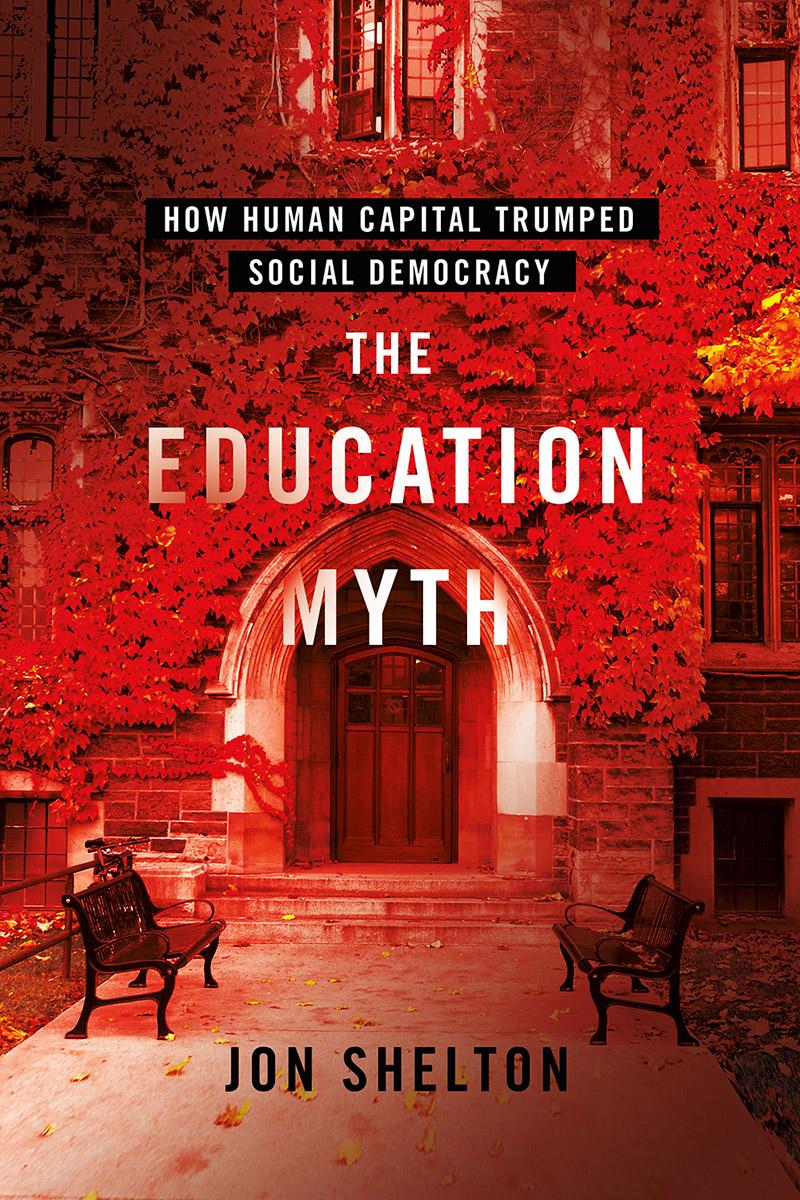
The Education Myth questions the idea that education represents the best, if not the only, way for Americans to access economic opportunity. As Jon Shelton shows, linking education to economic well-being was not politically inevitable. In the eighteenth and nineteenth centuries, for instance, public education was championed as a way to help citizens learn how to participate in a democracy. By the 1930s, public education, along with union rights and social security, formed an important component of a broad-based fight for social democracy.
Shelton demonstrates that beginning in the 1960s, the political power of the education myth choked off powerful social democratic alternatives like A. Philip Randolph and Bayard Rustin's Freedom Budget. The nation's political center was bereft of any realistic ideas to guarantee economic security and social dignity for the majority of Americans, particularly those without college degrees. Embraced first by Democrats like Lyndon Johnson, Jimmy Carter, and Bill Clinton, Republicans like George W. Bush also pushed the education myth. The result, over the past four decades, has been the emergence of a deeply inequitable economy and a drastically divided political system.
Paga facilmente con carta, Klarna, Apple Pay o Google Pay. Non sei soddisfatto? Hai sempre 14 giorni per il rimborso. Leggi di più nei nostri termini. Per qualsiasi domanda, scrivici a hello@memmo.org.
Memmo rende lo studio più facile, ovunque tu sia nel mondo. Qui trovi i tuoi libri di testo e strumenti di studio intelligenti, tutto in un unico posto: riassunti, quiz, podcast e flashcard. E poi c'è Ted, il tuo compagno di studio che risponde a ogni tua domanda. Oltre 50.000 studenti studiano già qui: è stato creato per aiutarti a imparare più velocemente e a stressarti meno.