
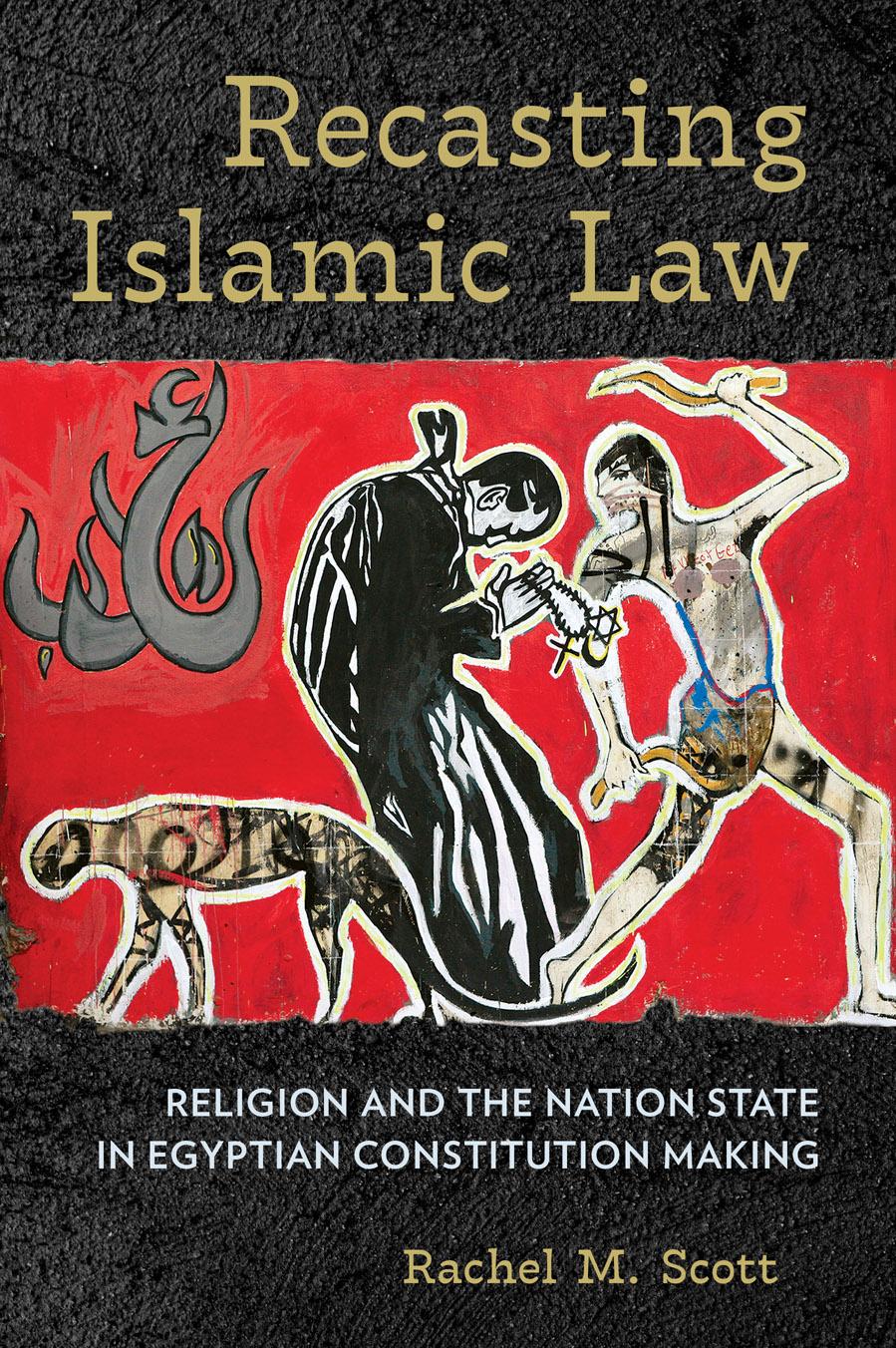
By examining the intersection of Islamic law, state law, religion, and culture in the Egyptian nation-building process, Recasting Islamic Law highlights how the sharia, when attached to constitutional commitments, is reshaped into modern Islamic state law.
Rachel M. Scott analyzes the complex effects of constitutional commitments to the sharia in the wake of the Egyptian Revolution of 2011. She argues that the sharia is not dismantled by the modern state when it is applied as modern Islamic state law, but rather recast in its service. In showing the particular forms that the sharia takes when it is applied as modern Islamic state law, Scott pushes back against assumptions that introductions of the sharia into modern state law result in either the revival of medieval Islam or in its complete transformation. Scott engages with premodern law and with the Ottoman legal legacy on topics concerning Egypt's Coptic community, women's rights, personal status law, and the relationship between religious scholars and the Supreme Constitutional Court. Recasting Islamic Law considers modern Islamic state law's discontinuities and its continuities with premodern sharia.
Thanks to generous funding from Virginia Tech and its participation in TOME (Toward an Open Monograph Ecosystem), the book editions of this book are available as Open Access volumes from Cornell Open (cornellpress.cornell.edu/cornell-open) and other repositories.
Paga facilmente con carta, Klarna, Apple Pay o Google Pay. Non sei soddisfatto? Hai sempre 14 giorni per il rimborso. Leggi di più nei nostri termini. Per qualsiasi domanda, scrivici a hello@memmo.org.
Memmo rende lo studio più facile, ovunque tu sia nel mondo. Qui trovi i tuoi libri di testo e strumenti di studio intelligenti, tutto in un unico posto: riassunti, quiz, podcast e flashcard. E poi c'è Ted, il tuo compagno di studio che risponde a ogni tua domanda. Oltre 50.000 studenti studiano già qui: è stato creato per aiutarti a imparare più velocemente e a stressarti meno.