
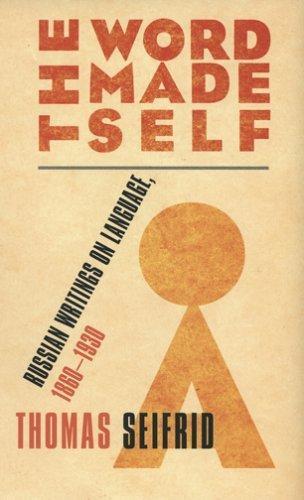
When Osip Mandelstam wrote that the Russian word was "sentient and breathing flesh," he voiced one of the most powerful themes in his culture. In The Word Made Self, Thomas Seifrid explores this Russian fascination with the power of the word as expressed in the work of philosophers, theologians, and artists of the Silver Age and early Soviet period. He shows that their diverse works (poems, novels, philosophical and religious tracts) share an attempt to articulate "a model of selfhood within the phenomenon of language."
The thinkers included in this book—among them Pavel Florenskii, Roman Jakobson, Aleksei Losev, and Gustav Shpet—frequently responded to the work of contemporary European philosophers even as they drew upon and revitalized powerful elements of early Russian religious thought. On Seifrid's view, this highly original body of writing about language was the essential context for the development of Russian Futurism, Formalism, and the work of Mikhail Bakhtin and the Soviet structuralists—movements and ideas whose influence has extended far beyond Russia and long past their years of efflorescence. This book will have a lasting impact among readers who will be fascinated to discover the richness of this long-suppressed chapter in the history of Russian culture.
Paga facilmente con carta, Klarna, Apple Pay o Google Pay. Non sei soddisfatto? Hai sempre 14 giorni per il rimborso. Leggi di più nei nostri termini. Per qualsiasi domanda, scrivici a hello@memmo.org.
Memmo rende lo studio più facile, ovunque tu sia nel mondo. Qui trovi i tuoi libri di testo e strumenti di studio intelligenti, tutto in un unico posto: riassunti, quiz, podcast e flashcard. E poi c'è Ted, il tuo compagno di studio che risponde a ogni tua domanda. Oltre 50.000 studenti studiano già qui: è stato creato per aiutarti a imparare più velocemente e a stressarti meno.