
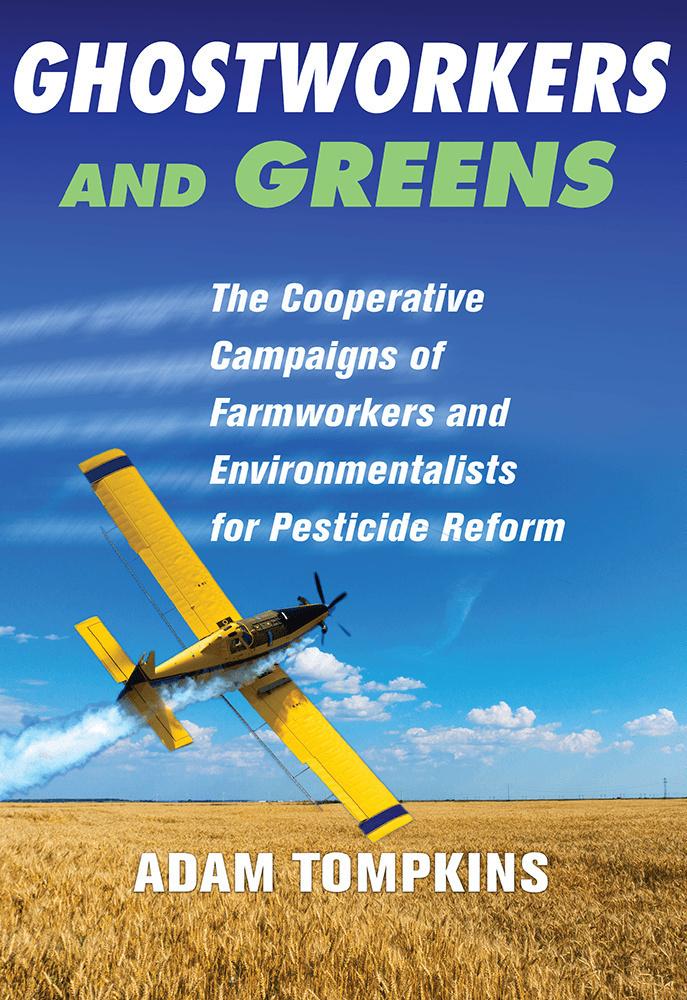
Throughout the twentieth century, despite compelling evidence that some pesticides posed a threat to human and environmental health, growers and the USDA continued to favor agricultural chemicals over cultural and biological forms of pest control. In Ghostworkers and Greens, Adam Tompkins reveals a history of unexpected cooperation between farmworker groups and environmental organizations. Tompkins shows that the separate movements shared a common concern about the effects of pesticides on human health. This enabled bridge-builders within the disparate organizations to foster cooperative relationships around issues of mutual concern to share information, resources, and support.
Nongovernmental organizations, particularly environmental organizations and farmworker groups, played a key role in pesticide reform. For nearly fifty years, these groups served as educators, communicating to the public scientific and experiential information about the adverse effects of pesticides on human health and the environment, and built support for the amendment of pesticide policies and the alteration of pesticide use practices. Their efforts led to the passage of more stringent regulations to better protect farmworkers, the public, and the environment. Environmental organizations and farmworker groups also acted as watchdogs, monitoring the activity of regulatory agencies and bringing suit when necessary to ensure that they fulfilled their responsibilities to the public. These groups served as not only lobbyists but also essential components of successful democratic governance, ensuring public participation and more effective policy implementation.
Paga facilmente con carta, Klarna, Apple Pay o Google Pay. Non sei soddisfatto? Hai sempre 14 giorni per il rimborso. Leggi di più nei nostri termini. Per qualsiasi domanda, scrivici a hello@memmo.org.
Memmo rende lo studio più facile, ovunque tu sia nel mondo. Qui trovi i tuoi libri di testo e strumenti di studio intelligenti, tutto in un unico posto: riassunti, quiz, podcast e flashcard. E poi c'è Ted, il tuo compagno di studio che risponde a ogni tua domanda. Oltre 50.000 studenti studiano già qui: è stato creato per aiutarti a imparare più velocemente e a stressarti meno.