
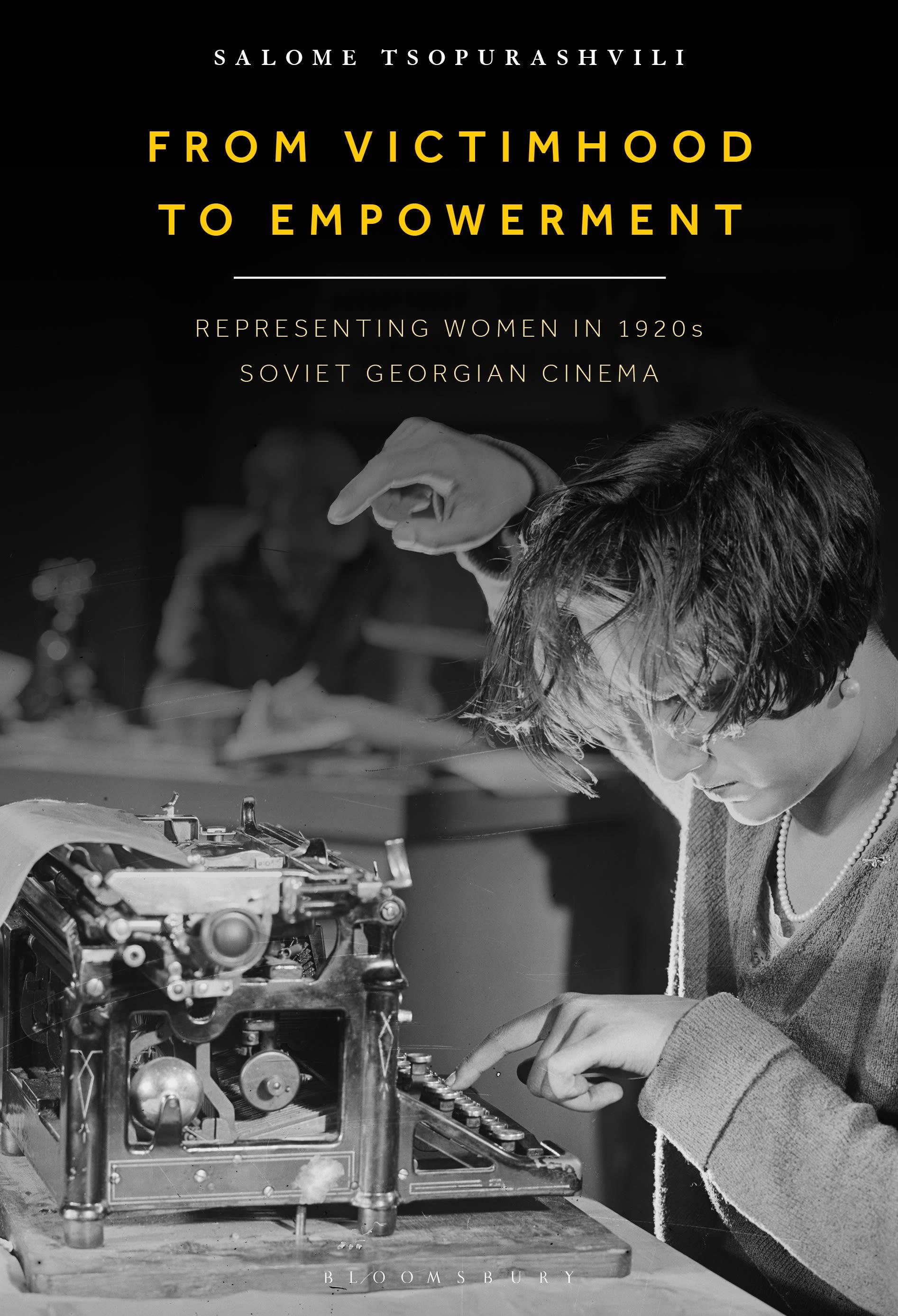
From Victimhood to Empowerment: Representing Women in 1920s Soviet Georgian Cinema brings the cinematographic works of Georgia's State Film Industry from the margins of the Soviet film studies to the centre. The book focuses on women's representations and explores how the gender roles were modified throughout the decade according to the new social and political ideals employing the discourse analysis, postcolonial perspectives and psychoanalytical feminist film theories.
Bringing together Soviet Georgia's most important films of the period, the book inspects the female body's symbolic function in the aspects of class dichotomy and ethnic hierarchies. It analyzes the construction of the 'Oriental other' by the Russian colonial imagination and its subsequent dismantling in the context of the Caucasus's de-Orientalization. It also examines the characteristics embodied by the 'heroine' and 'villain' of the new social order-the New Soviet Woman and the NEPwoman-and explores women's transformation within the revolutionary setting during the decade.
In the light of Bolsheviks' preoccupation and endeavour to improve 'woman question', the book surveys to what extent women's screen images were emancipated and whatthe functional meaning of this emancipation was in the given context; how the new ideals of the New Soviet woman were inscribed in the period's films and how these ideals were combined with Georgian nationality.
Bringing together Soviet Georgia's most important films of the period, the book inspects the female body's symbolic function in the aspects of class dichotomy and ethnic hierarchies. It analyzes the construction of the 'Oriental other' by the Russian colonial imagination and its subsequent dismantling in the context of the Caucasus's de-Orientalization. It also examines the characteristics embodied by the 'heroine' and 'villain' of the new social order-the New Soviet Woman and the NEPwoman-and explores women's transformation within the revolutionary setting during the decade.
In the light of Bolsheviks' preoccupation and endeavour to improve 'woman question', the book surveys to what extent women's screen images were emancipated and whatthe functional meaning of this emancipation was in the given context; how the new ideals of the New Soviet woman were inscribed in the period's films and how these ideals were combined with Georgian nationality.
Pagine: 264
Categoria: Kultur-, Genus- & Postkoloniala studier
e-ISBN: 9781501383168
Peso di spedizione: 1.2 kg
Spedito in: 1-2 giorni
Paga facilmente con carta, Klarna, Apple Pay o Google Pay. Non sei soddisfatto? Hai sempre 14 giorni per il rimborso. Leggi di più nei nostri termini. Per qualsiasi domanda, scrivici a hello@memmo.org.
Memmo rende lo studio più facile, ovunque tu sia nel mondo. Qui trovi i tuoi libri di testo e strumenti di studio intelligenti, tutto in un unico posto: riassunti, quiz, podcast e flashcard. E poi c'è Ted, il tuo compagno di studio che risponde a ogni tua domanda. Oltre 50.000 studenti studiano già qui: è stato creato per aiutarti a imparare più velocemente e a stressarti meno.