
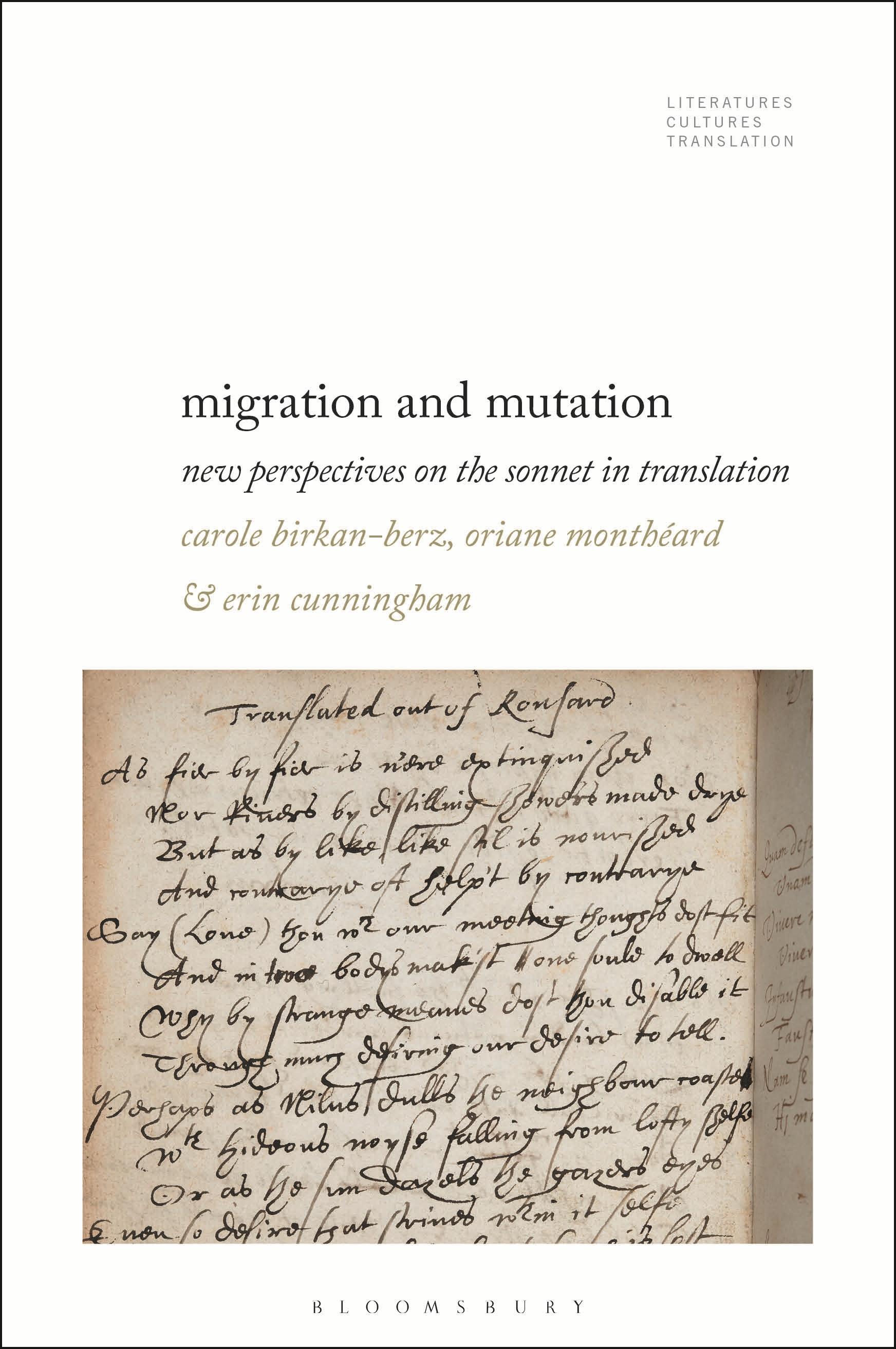
Spanning four centuries from the Renaissance to today's avant-garde, Migration and Mutation explores how the sonnet has evolved in and out of translation.
Contributors examine little-studied translation trajectories in the early modern period, such as the pivotal role of France between Italy and England or the first German sonnets and their Italian, French, Dutch and Scottish origins. Essays then shed new light on major European sonneteers In the 19th and 20th centuries, including Shakespeare, Keats, Yeats, Rilke and Pessoa, alongside lesser-known contemporaries and with novel approaches. And finally, contributors explore how translation and adaptation create metaphorical space in the 21st century.
Migration and Mutation also pays attention to the political or subversive dimension of the sonnet, with essays on women, gay or postcolonial reclaimings of the sonnet and recent experiments such as post-Soviet Sonnets on shirts by Genrikh Sagpir. It takes the sonnet out of the confines of enclosed national traditions bringing it into renewed contact with mostly European, but also other, cultures.
Contributors examine little-studied translation trajectories in the early modern period, such as the pivotal role of France between Italy and England or the first German sonnets and their Italian, French, Dutch and Scottish origins. Essays then shed new light on major European sonneteers In the 19th and 20th centuries, including Shakespeare, Keats, Yeats, Rilke and Pessoa, alongside lesser-known contemporaries and with novel approaches. And finally, contributors explore how translation and adaptation create metaphorical space in the 21st century.
Migration and Mutation also pays attention to the political or subversive dimension of the sonnet, with essays on women, gay or postcolonial reclaimings of the sonnet and recent experiments such as post-Soviet Sonnets on shirts by Genrikh Sagpir. It takes the sonnet out of the confines of enclosed national traditions bringing it into renewed contact with mostly European, but also other, cultures.
Paga facilmente con carta, Klarna, Apple Pay o Google Pay. Non sei soddisfatto? Hai sempre 14 giorni per il rimborso. Leggi di più nei nostri termini. Per qualsiasi domanda, scrivici a hello@memmo.org.
Memmo rende lo studio più facile, ovunque tu sia nel mondo. Qui trovi i tuoi libri di testo e strumenti di studio intelligenti, tutto in un unico posto: riassunti, quiz, podcast e flashcard. E poi c'è Ted, il tuo compagno di studio che risponde a ogni tua domanda. Oltre 50.000 studenti studiano già qui: è stato creato per aiutarti a imparare più velocemente e a stressarti meno.