
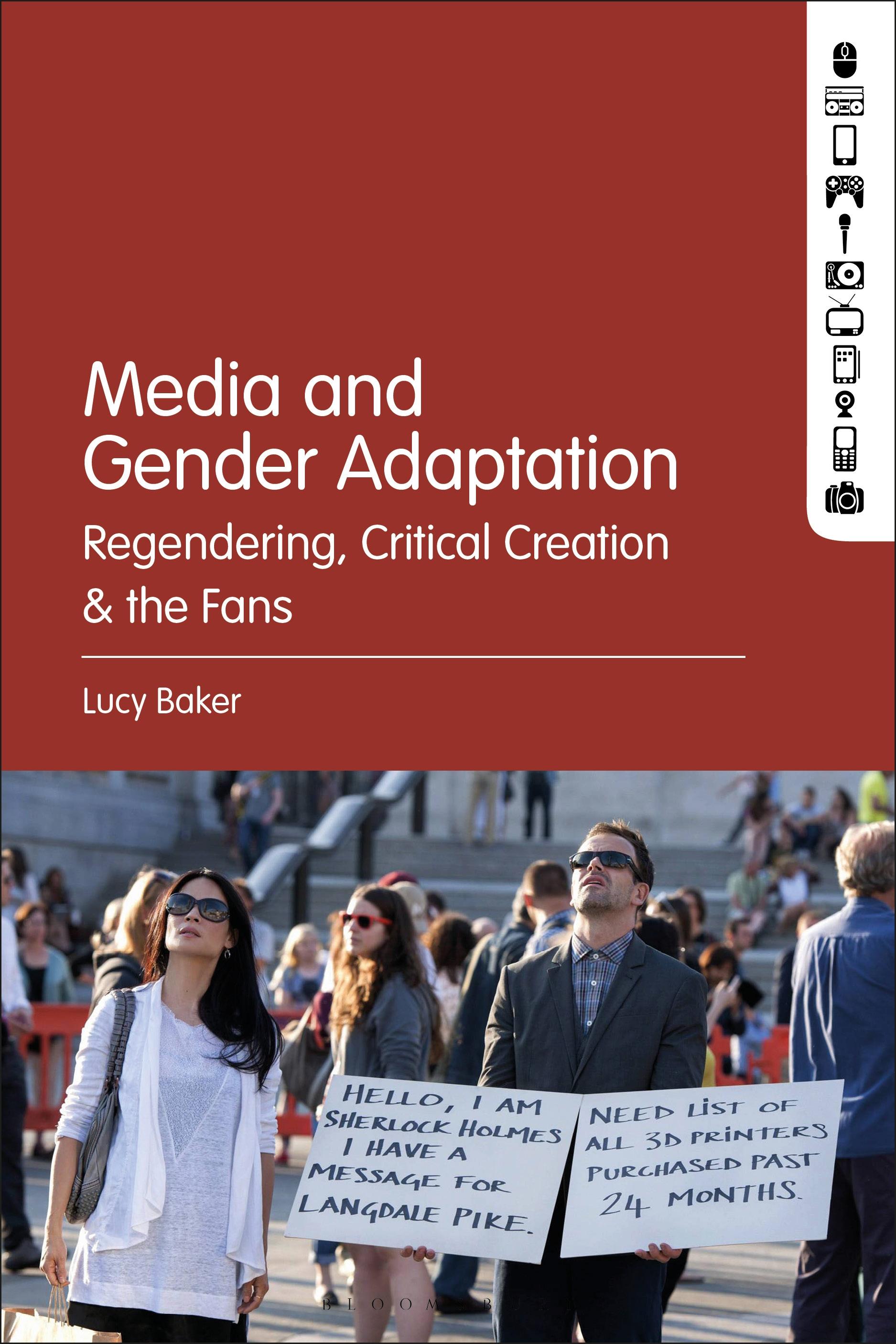
Media and Gender Adaptation examines how fans and professionals change the gender of characters when they adapt existing work. Using research into fans, and case studies on Sherlock Holmes, Ghostbusters and Doctor Who, it illustrates the foundation of the process and ways the works engage with and critique media and gender at a political level. The default maleness of narratives in media are reworked to be inclusive of other points of view. Regendering as an adaptational technique relies on audience familiarity with existing works, however it also reveals an increasing trend in aggressive backlash against interpretations of media that include marginalised and minority communities.
Combining analysis of fanfiction, television and big budget Hollywood productions, Media and Gender Adaptation also analyses fan responses to regendering in popular media. Through demographic surveys and interviews with fans, creators and broader audiences, a combination of playful and serious attitudes to gender are revealed to be part of how transformative fans (professional or not) adapt work. Specific fanfiction examples are analysed alongside professional works to reveal the depth and breadth of fannish play in regendered work and the constraints that professional adaptations are held to. It also reveals a schism in audiences, and those researching media, where the intersection of gender and race are sites of tension – nostalgia combining with expected representation of gender and race to create an aggressive defence of an original work that reiterates the mainstream hierarchies of gender and race.
Combining analysis of fanfiction, television and big budget Hollywood productions, Media and Gender Adaptation also analyses fan responses to regendering in popular media. Through demographic surveys and interviews with fans, creators and broader audiences, a combination of playful and serious attitudes to gender are revealed to be part of how transformative fans (professional or not) adapt work. Specific fanfiction examples are analysed alongside professional works to reveal the depth and breadth of fannish play in regendered work and the constraints that professional adaptations are held to. It also reveals a schism in audiences, and those researching media, where the intersection of gender and race are sites of tension – nostalgia combining with expected representation of gender and race to create an aggressive defence of an original work that reiterates the mainstream hierarchies of gender and race.
Pagine: 200
Categoria: Kultur-, Genus- & Postkoloniala studier
e-ISBN: 9781501370090
Peso di spedizione: 1.2 kg
Spedito in: 1-2 giorni
Paga facilmente con carta, Klarna, Apple Pay o Google Pay. Non sei soddisfatto? Hai sempre 14 giorni per il rimborso. Leggi di più nei nostri termini. Per qualsiasi domanda, scrivici a hello@memmo.org.
Memmo rende lo studio più facile, ovunque tu sia nel mondo. Qui trovi i tuoi libri di testo e strumenti di studio intelligenti, tutto in un unico posto: riassunti, quiz, podcast e flashcard. E poi c'è Ted, il tuo compagno di studio che risponde a ogni tua domanda. Oltre 50.000 studenti studiano già qui: è stato creato per aiutarti a imparare più velocemente e a stressarti meno.