
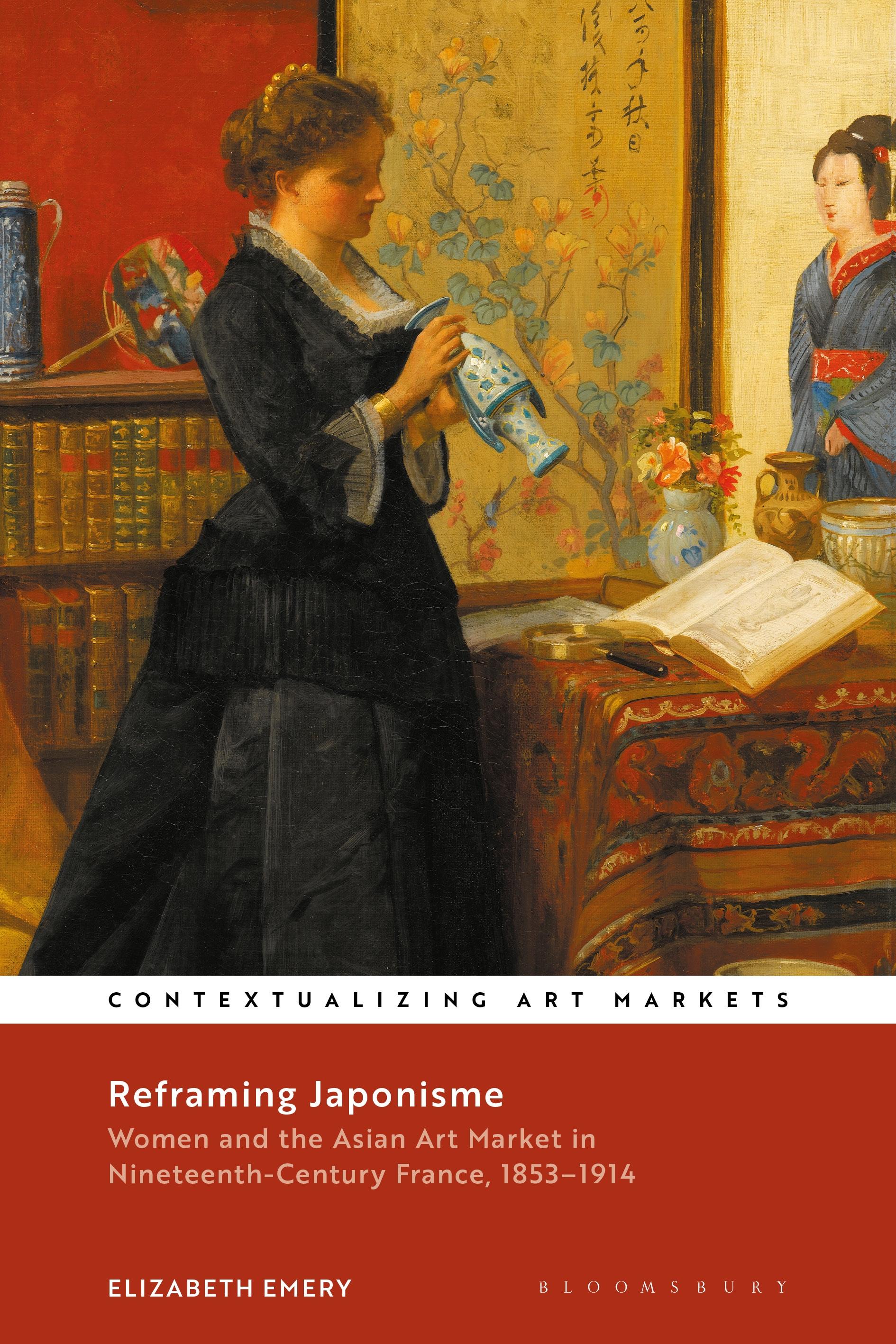
Japonisme, the nineteenth-century fascination for Japanese art, has generated an enormous body of scholarship since the beginning of the twenty-first century, but most of it neglects the women who acquired objects from the Far East and sold them to clients or displayed them in their homes before bequeathing them to museums. The stories of women shopkeepers, collectors, and artists rarely appear in memoirs left by those associated with the japoniste movement.
This volume brings to light the culturally important, yet largely forgotten activities of women such as Clémence d'Ennery (1823–1898), who began collecting Japanese and Chinese chimeras in the 1840s, built and decorated a house for them in the 1870s, and bequeathed the “Musée d'Ennery” to the state as a free public museum in 1893. A friend of the Goncourt brothers and a fifty-year patron of Parisian dealers of Asian art, d'Ennery's struggles to gain recognition as a collector and curator serve as a lens through which to examine the collecting and display practices of other women of her day.
Travelers to Japan such as the Duchesse de Persigny, Isabella Stewart Gardner, and Laure Durand- Fardel returned with souvenirs that they shared with friends and family. Salon hostesses including Juliette Adam, Louise Cahen d'Anvers, Princesse Mathilde, and Marguerite Charpentier provided venues for the discussion and examination of Japanese art objects, as did well-known art dealers Madame Desoye, Madame Malinet, Madame Hatty, and Madame Langweil. Writers, actresses, and artists-Judith Gautier, Thérèse Bentzon, Sarah Bernhardt, and Mary Cassatt, to name just a few- took inspiration from the Japanese material in circulation to create their own unique works of art.
Largely absent from the history of Japonisme, these women-and many others-actively collected Japanese art, interacted with auction houses and art dealers, and formed collections now at the heart of museums such as the Louvre, the Musée Guimet, the Musée Cernuschi, the Musée Unterlinden, and the Metropolitan Museum of Art.
This volume brings to light the culturally important, yet largely forgotten activities of women such as Clémence d'Ennery (1823–1898), who began collecting Japanese and Chinese chimeras in the 1840s, built and decorated a house for them in the 1870s, and bequeathed the “Musée d'Ennery” to the state as a free public museum in 1893. A friend of the Goncourt brothers and a fifty-year patron of Parisian dealers of Asian art, d'Ennery's struggles to gain recognition as a collector and curator serve as a lens through which to examine the collecting and display practices of other women of her day.
Travelers to Japan such as the Duchesse de Persigny, Isabella Stewart Gardner, and Laure Durand- Fardel returned with souvenirs that they shared with friends and family. Salon hostesses including Juliette Adam, Louise Cahen d'Anvers, Princesse Mathilde, and Marguerite Charpentier provided venues for the discussion and examination of Japanese art objects, as did well-known art dealers Madame Desoye, Madame Malinet, Madame Hatty, and Madame Langweil. Writers, actresses, and artists-Judith Gautier, Thérèse Bentzon, Sarah Bernhardt, and Mary Cassatt, to name just a few- took inspiration from the Japanese material in circulation to create their own unique works of art.
Largely absent from the history of Japonisme, these women-and many others-actively collected Japanese art, interacted with auction houses and art dealers, and formed collections now at the heart of museums such as the Louvre, the Musée Guimet, the Musée Cernuschi, the Musée Unterlinden, and the Metropolitan Museum of Art.
Pagine: 272
Categoria: Kultur-, Genus- & Postkoloniala studier
e-ISBN: 9781501344664
Peso di spedizione: 1.2 kg
Spedito in: 1-2 giorni
Paga facilmente con carta, Klarna, Apple Pay o Google Pay. Non sei soddisfatto? Hai sempre 14 giorni per il rimborso. Leggi di più nei nostri termini. Per qualsiasi domanda, scrivici a hello@memmo.org.
Memmo rende lo studio più facile, ovunque tu sia nel mondo. Qui trovi i tuoi libri di testo e strumenti di studio intelligenti, tutto in un unico posto: riassunti, quiz, podcast e flashcard. E poi c'è Ted, il tuo compagno di studio che risponde a ogni tua domanda. Oltre 50.000 studenti studiano già qui: è stato creato per aiutarti a imparare più velocemente e a stressarti meno.