
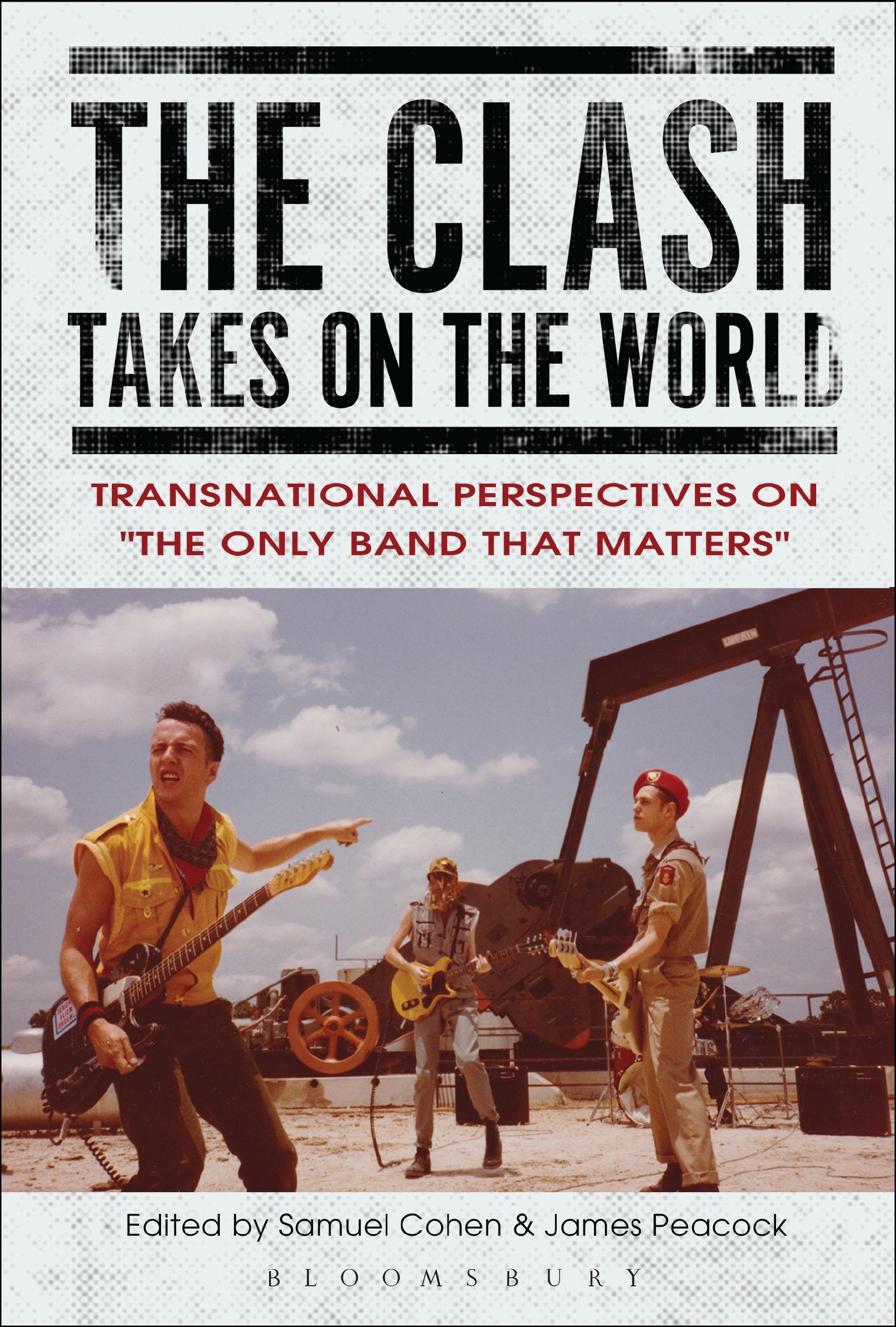
On their debut, The Clash famously claimed to be “bored with the USA,” but The Clash wasn't a parochial record. Mick Jones' licks on songs such as “Hate and War” were heavily influenced by classic American rock and roll, and the cover of Junior Murvin's reggae hit “Police and Thieves” showed that the band's musical influences were already wide-ranging. Later albums such as Sandinista! and Combat Rock saw them experimenting with a huge range of musical genres, lyrical themes and visual aesthetics.
The Clash Takes on the World explores the transnational aspects of The Clash's music, lyrics and politics, and it does so from a truly transnational perspective. It brings together literary scholars, historians, media theorists, musicologists, social activists and geographers from Europe and the US, and applies a range of critical approaches to The Clash's work in order to tackle a number of key questions: How should we interpret their negotiations with reggae music and culture? How did The Clash respond to the specific socio-political issues of their time, such as the economic recession, the Reagan-Thatcher era and burgeoning neoliberalism, and international conflicts in Nicaragua and the Falkland Islands? How did they reconcile their anti-capitalist stance with their own success and status as a global commodity? And how did their avowedly inclusive, multicultural stance, reflected in their musical diversity, square with the experience of watching the band in performance? The Clash Takes on the World is essential reading for scholars, students and general readers interested in a band whose popularity endures.
The Clash Takes on the World explores the transnational aspects of The Clash's music, lyrics and politics, and it does so from a truly transnational perspective. It brings together literary scholars, historians, media theorists, musicologists, social activists and geographers from Europe and the US, and applies a range of critical approaches to The Clash's work in order to tackle a number of key questions: How should we interpret their negotiations with reggae music and culture? How did The Clash respond to the specific socio-political issues of their time, such as the economic recession, the Reagan-Thatcher era and burgeoning neoliberalism, and international conflicts in Nicaragua and the Falkland Islands? How did they reconcile their anti-capitalist stance with their own success and status as a global commodity? And how did their avowedly inclusive, multicultural stance, reflected in their musical diversity, square with the experience of watching the band in performance? The Clash Takes on the World is essential reading for scholars, students and general readers interested in a band whose popularity endures.
Paga facilmente con carta, Klarna, Apple Pay o Google Pay. Non sei soddisfatto? Hai sempre 14 giorni per il rimborso. Leggi di più nei nostri termini. Per qualsiasi domanda, scrivici a hello@memmo.org.
Memmo rende lo studio più facile, ovunque tu sia nel mondo. Qui trovi i tuoi libri di testo e strumenti di studio intelligenti, tutto in un unico posto: riassunti, quiz, podcast e flashcard. E poi c'è Ted, il tuo compagno di studio che risponde a ogni tua domanda. Oltre 50.000 studenti studiano già qui: è stato creato per aiutarti a imparare più velocemente e a stressarti meno.