
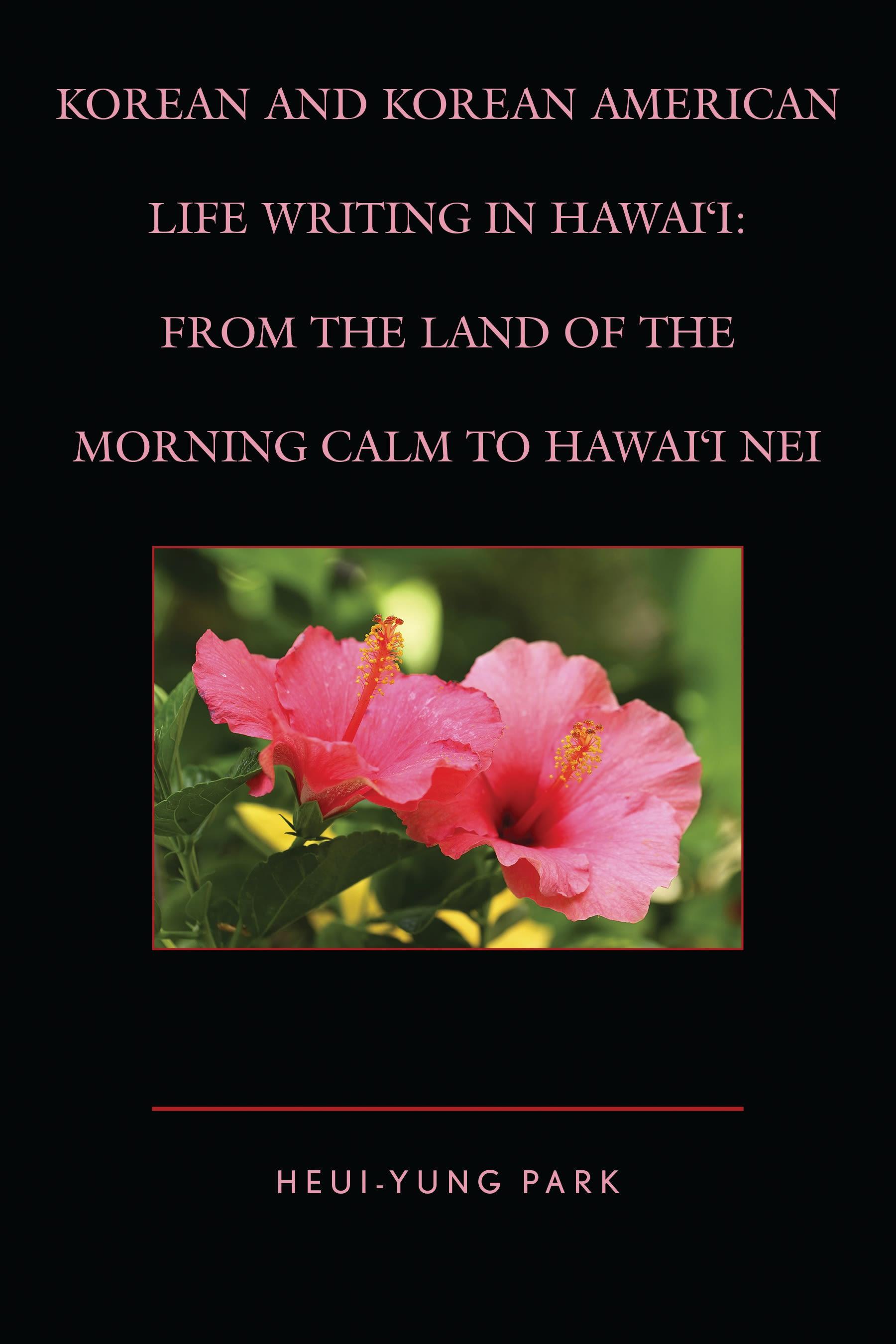
Korean and Korean American Life Writing in Hawai'i examines such self-representing genres as lyric poems, oral history, autobiography, and memoirs written by Korean and Korean Americans from the early twentieth century to the present, in order to explore how these people have shaped their individual or collective identities. Their representations, produced in different periods by successive generations, reveal how Koreans in their diaspora to Hawai‘i came to terms with their ethnic and local selves, and also how the sense of who and what they are changed over the years, both within and beyond the initial generation.
Looking into their individual and collective identities in lyric poems, oral history, autobiography, and memoirs reveals how the earliest arrivals, their children, and their grandchildren have come to terms with their national, ethnic, and local selves, and how their sense of identity changes over the course of time, both within and beyond the initial generation. In the lyric poems found in Korean-language periodicals of the native-born generation, we can trace the significance of the motherland and Hawai‘i for these writers’ sense of identity. The oral histories of first-generation women, most of whom arrived as picture brides, also represent another “us”: often vulnerable Koreans who define themselves in relation to both the present culture and to Korean men. The self developed by the second-, third-, and in-between-generation Koreans diversifies because their identity is not defined exclusively by their ancestral land, extending to Hawai‘i and to America.
This study focuses on three main areas of emphasis: Hawai‘i; Korean language and culture; and life writing. By tracing how identity changes with each generation, this study reveals how identity formation for Hawai‘i diasporic Koreans has evolved.
Looking into their individual and collective identities in lyric poems, oral history, autobiography, and memoirs reveals how the earliest arrivals, their children, and their grandchildren have come to terms with their national, ethnic, and local selves, and how their sense of identity changes over the course of time, both within and beyond the initial generation. In the lyric poems found in Korean-language periodicals of the native-born generation, we can trace the significance of the motherland and Hawai‘i for these writers’ sense of identity. The oral histories of first-generation women, most of whom arrived as picture brides, also represent another “us”: often vulnerable Koreans who define themselves in relation to both the present culture and to Korean men. The self developed by the second-, third-, and in-between-generation Koreans diversifies because their identity is not defined exclusively by their ancestral land, extending to Hawai‘i and to America.
This study focuses on three main areas of emphasis: Hawai‘i; Korean language and culture; and life writing. By tracing how identity changes with each generation, this study reveals how identity formation for Hawai‘i diasporic Koreans has evolved.
Pagine: 196
Categoria: Kultur-, Genus- & Postkoloniala studier
e-ISBN: 9781498507684
Peso di spedizione: 1.2 kg
Spedito in: 1-2 giorni
Paga facilmente con carta, Klarna, Apple Pay o Google Pay. Non sei soddisfatto? Hai sempre 14 giorni per il rimborso. Leggi di più nei nostri termini. Per qualsiasi domanda, scrivici a hello@memmo.org.
Memmo rende lo studio più facile, ovunque tu sia nel mondo. Qui trovi i tuoi libri di testo e strumenti di studio intelligenti, tutto in un unico posto: riassunti, quiz, podcast e flashcard. E poi c'è Ted, il tuo compagno di studio che risponde a ogni tua domanda. Oltre 50.000 studenti studiano già qui: è stato creato per aiutarti a imparare più velocemente e a stressarti meno.