
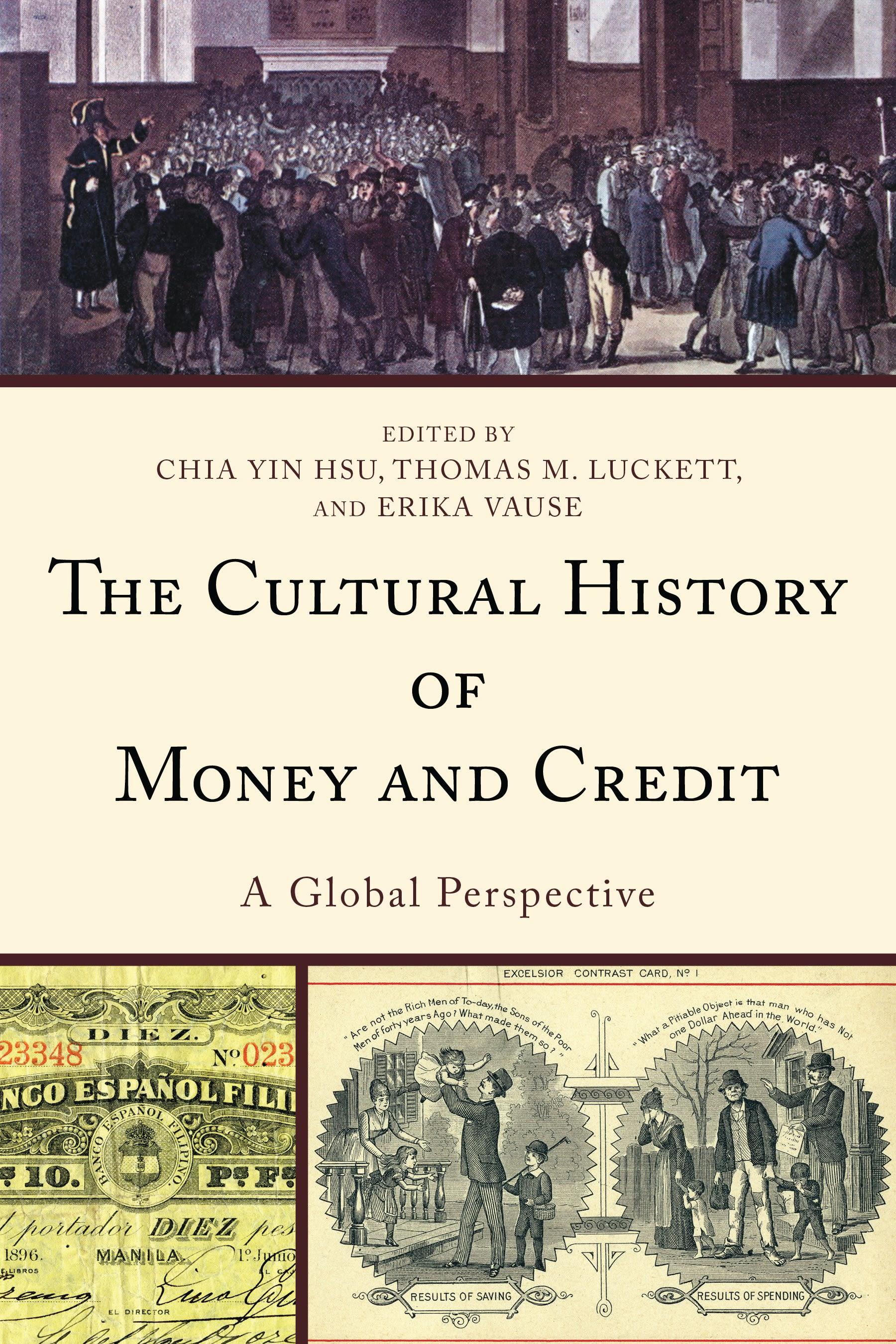
In the wake of the financial crisis in 2008, historians have turned with renewed urgency to understanding the economic dimension of historical change. In this collection, nine scholars present original research into the historical development of money and credit during the nineteenth and twentieth centuries and explore the social and cultural significance of financial phenomena from a global perspective. Together with an introduction by the editors, chapters emphasize themes of creditworthiness and access to credit, the role of the state in the loan market, modernization, colonialism, and global connections between markets.
The first section of the volume, "Creditworthiness and Credit Risks," examines microfinancial markets in South India and Sri Lanka, Brazil, and the United States, in which access to credit depended largely on reputation, while larger investors showed a strong interest in policing economic behavior and encouraging thrift among market participants. The second section, "The Loan Market and the State," concerns attempts by national governments to regulate the lending activities of merchants and banks for social ends, from the liberal regime of nineteenth-century Switzerland to the far more statist policies of post-revolutionary Mexico, and U.S. legislation that strove to eliminate discrimination in lending. The third section, "Money, Commercial Exchange, and Global Connections," focuses on colonial and semicolonial societies in the Philippines, China, and Zimbabwe, where currency reform and the development of organized financial markets engendered conflict over competing models of economic development, often pitting the colony against the metropole.
This volume offers a cultural history by considering money and credit as social relations, and explores how such relations were constructed and articulated by contemporaries. Chapters employ a variety of methodologies, including analyses of popular literature and the viewpoints of experts and professionals, investigations of policy measures and emerging social practices, and interpretations of quantitative data.
The first section of the volume, "Creditworthiness and Credit Risks," examines microfinancial markets in South India and Sri Lanka, Brazil, and the United States, in which access to credit depended largely on reputation, while larger investors showed a strong interest in policing economic behavior and encouraging thrift among market participants. The second section, "The Loan Market and the State," concerns attempts by national governments to regulate the lending activities of merchants and banks for social ends, from the liberal regime of nineteenth-century Switzerland to the far more statist policies of post-revolutionary Mexico, and U.S. legislation that strove to eliminate discrimination in lending. The third section, "Money, Commercial Exchange, and Global Connections," focuses on colonial and semicolonial societies in the Philippines, China, and Zimbabwe, where currency reform and the development of organized financial markets engendered conflict over competing models of economic development, often pitting the colony against the metropole.
This volume offers a cultural history by considering money and credit as social relations, and explores how such relations were constructed and articulated by contemporaries. Chapters employ a variety of methodologies, including analyses of popular literature and the viewpoints of experts and professionals, investigations of policy measures and emerging social practices, and interpretations of quantitative data.
Paga facilmente con carta, Klarna, Apple Pay o Google Pay. Non sei soddisfatto? Hai sempre 14 giorni per il rimborso. Leggi di più nei nostri termini. Per qualsiasi domanda, scrivici a hello@memmo.org.
Memmo rende lo studio più facile, ovunque tu sia nel mondo. Qui trovi i tuoi libri di testo e strumenti di studio intelligenti, tutto in un unico posto: riassunti, quiz, podcast e flashcard. E poi c'è Ted, il tuo compagno di studio che risponde a ogni tua domanda. Oltre 50.000 studenti studiano già qui: è stato creato per aiutarti a imparare più velocemente e a stressarti meno.