
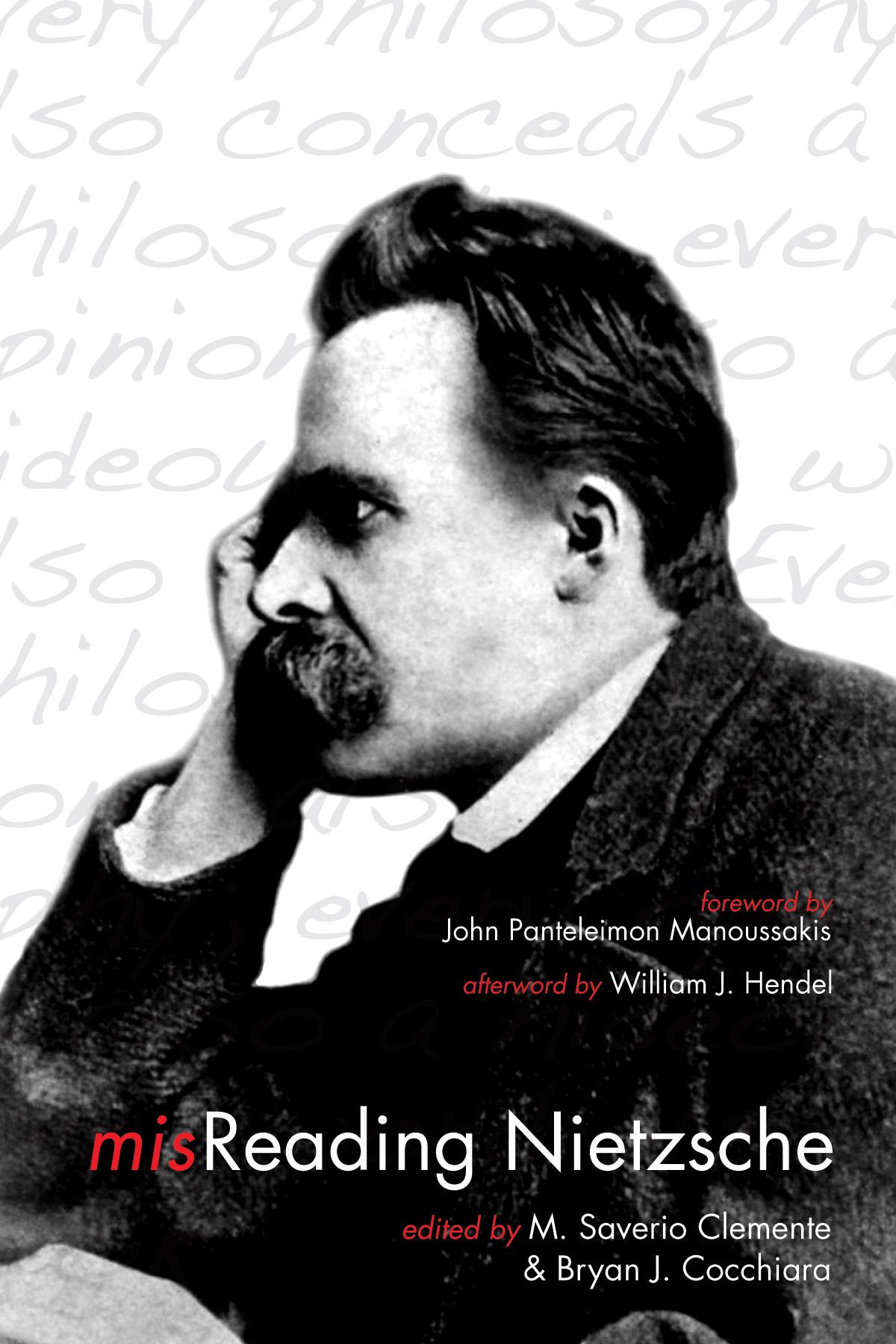
Perhaps more than any philosophy written in the past few centuries, the work of Friedrich Nietzsche has given rise to controversy, misunderstanding, and dissent. Today Nietzsche is remembered as the revolutionary author of such polemical ideas as the death of God, the revaluation of values, the will to untruth, and the Ubermensch. Yet is Nietzsche's philosophy as atheistic, relativistic, nihilistic, and immoral as some commentators have claimed? Or ought we perhaps to give more credence to Nietzsche's own assertion that one writes books "precisely to conceal what one harbors" (BGE, 9, 289)?
If "whatever is profound loves masks" (BGE, 2, 40) then might Nietzsche's more daring claims be interpreted as clever masks behind which he conceals a deeper philosophy and on which he reveals a hidden truth? Is it not possible that the standard readings of Nietzsche are in fact misreadings--that his work invites misreading, that it is intentionally unclear, deceptive, disguised?
The goal of this volume is to reread Nietzsche for all that he shows and all that he hides. It is to dig deeper into his work in order to challenge misreadings of old and invite misreadings anew--as, indeed, his work itself calls for and demands.
Paga facilmente con carta, Klarna, Apple Pay o Google Pay. Non sei soddisfatto? Hai sempre 14 giorni per il rimborso. Leggi di più nei nostri termini. Per qualsiasi domanda, scrivici a hello@memmo.org.
Memmo rende lo studio più facile, ovunque tu sia nel mondo. Qui trovi i tuoi libri di testo e strumenti di studio intelligenti, tutto in un unico posto: riassunti, quiz, podcast e flashcard. E poi c'è Ted, il tuo compagno di studio che risponde a ogni tua domanda. Oltre 50.000 studenti studiano già qui: è stato creato per aiutarti a imparare più velocemente e a stressarti meno.
Potrebbe interessarti anche
Acquista il libro0