
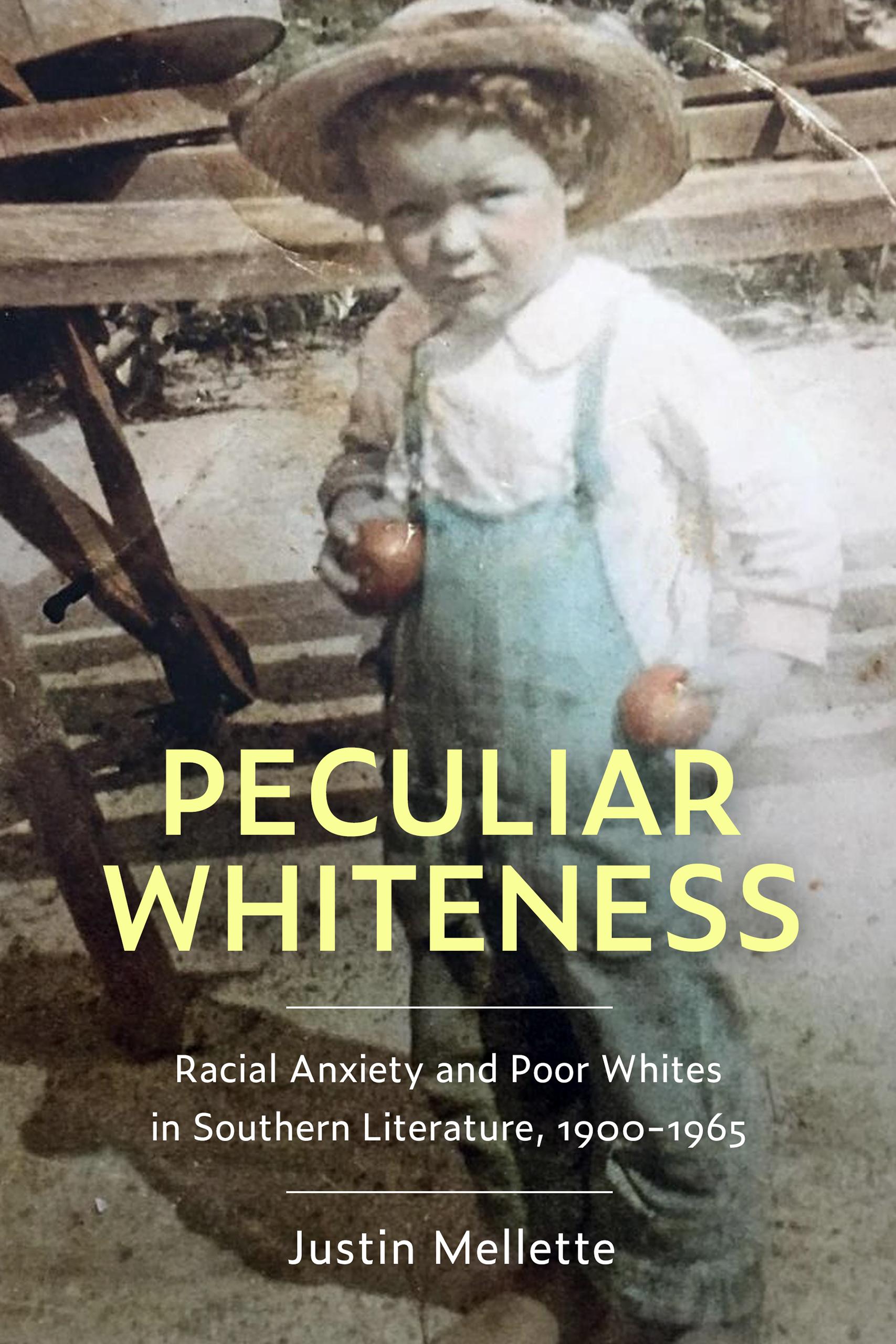
Peculiar Whiteness: Racial Anxiety and Poor Whites in Southern Literature, 1900–1965 argues for deeper consideration of the complexities surrounding the disparate treatment of poor whites throughout southern literature and attests to how broad such experiences have been. While the history of prejudice against this group is not the same as the legacy of violence perpetrated against people of color in America, individuals regarded as “white trash” have suffered a dehumanizing process in the writings of various white authors. Poor white characters are frequently maligned as grotesque and anxiety inducing, especially when they are aligned in close proximity to blacks or to people with disabilities.
Thus, as a symbol, much has been asked of poor whites, and various iterations of the label (e.g., “white trash,” tenant farmers, or even people with a little less money than average) have been subject to a broad spectrum of judgment, pity, compassion, fear, and anxiety. Peculiar Whiteness engages key issues in contemporary critical race studies, whiteness studies, and southern studies, both literary and historical. Through discussions of authors including Charles Chesnutt, Thomas Dixon, Sutton Griggs, Erskine Caldwell, Lillian Smith, William Faulkner, and Flannery O’Connor, we see how whites in a position of power work to maintain their status, often by finding ways to recategorize and marginalize people who might not otherwise have seemed to fall under the auspices or boundaries of “white trash.”
Thus, as a symbol, much has been asked of poor whites, and various iterations of the label (e.g., “white trash,” tenant farmers, or even people with a little less money than average) have been subject to a broad spectrum of judgment, pity, compassion, fear, and anxiety. Peculiar Whiteness engages key issues in contemporary critical race studies, whiteness studies, and southern studies, both literary and historical. Through discussions of authors including Charles Chesnutt, Thomas Dixon, Sutton Griggs, Erskine Caldwell, Lillian Smith, William Faulkner, and Flannery O’Connor, we see how whites in a position of power work to maintain their status, often by finding ways to recategorize and marginalize people who might not otherwise have seemed to fall under the auspices or boundaries of “white trash.”
Paga facilmente con carta, Klarna, Apple Pay o Google Pay. Non sei soddisfatto? Hai sempre 14 giorni per il rimborso. Leggi di più nei nostri termini. Per qualsiasi domanda, scrivici a hello@memmo.org.
Memmo rende lo studio più facile, ovunque tu sia nel mondo. Qui trovi i tuoi libri di testo e strumenti di studio intelligenti, tutto in un unico posto: riassunti, quiz, podcast e flashcard. E poi c'è Ted, il tuo compagno di studio che risponde a ogni tua domanda. Oltre 50.000 studenti studiano già qui: è stato creato per aiutarti a imparare più velocemente e a stressarti meno.
Potrebbe interessarti anche
Acquista il libro0