
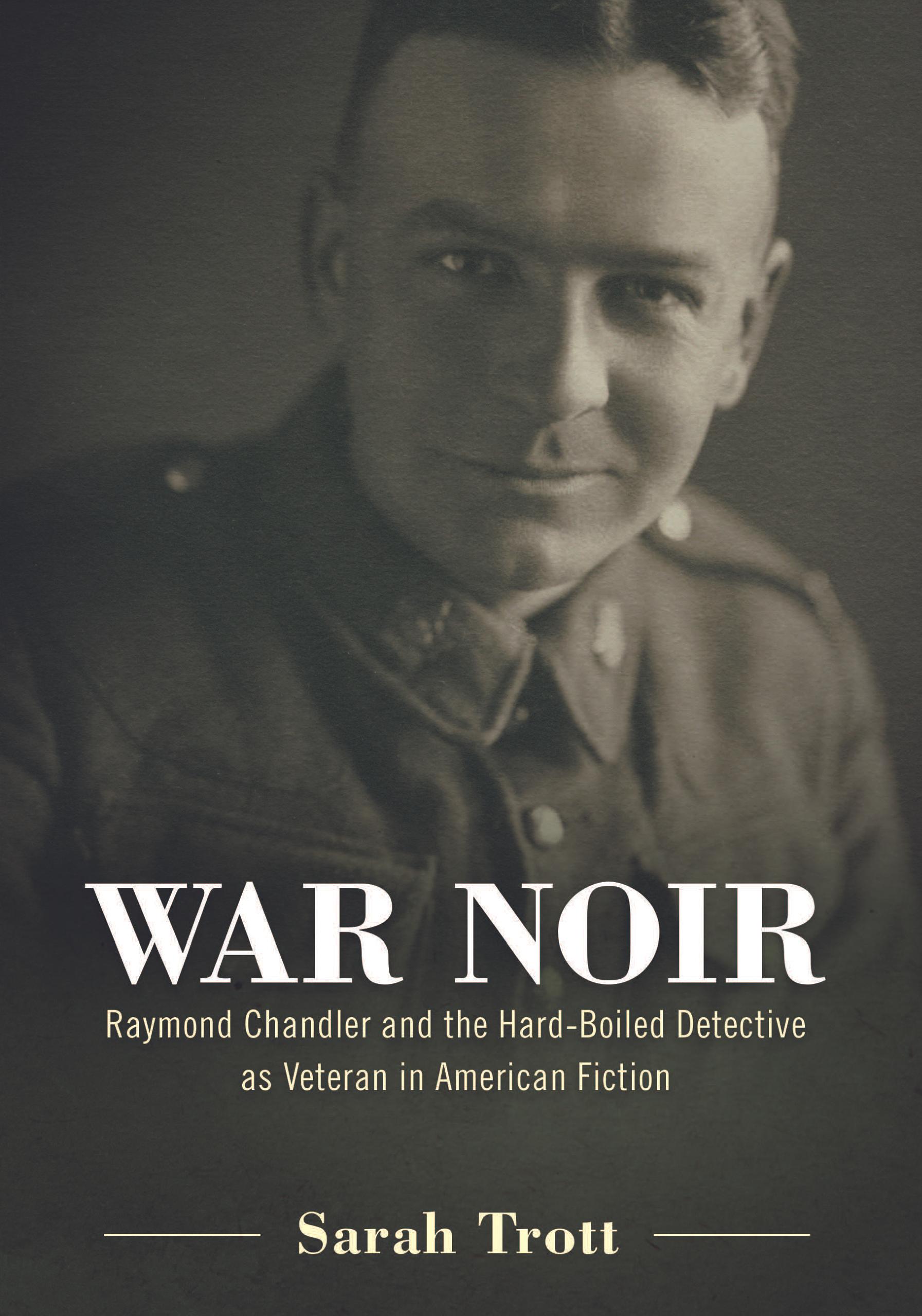
The conflation of the hard-boiled style and war experience has influenced many contemporary crime writers, particularly in the traumatic aftermath of the Vietnam War. Yet, earlier writers in the genre, such as Raymond Chandler, remain overlooked when it comes to examining how their war experience affected their writing. Sarah Trott corrects this oversight by examining Chandler alongside the World War I writers of the Lost Generation as well as highlighting a melding of very different styles in Chandler’s work.
Based on Chandler’s experience in combat, Trott explains that the writer created detective Philip Marlowe not as the idealization of heroic individualism, as is commonly perceived, but instead as an authentic individual subjected to very real psychological frailties from trauma during the First World War. Inspecting Chandler’s work and correspondence indicates that the characterization of the fictional Marlowe goes beyond the traditional chivalric readings and can instead be interpreted as a genuine representation of a traumatized veteran in American society. Substituting the horror of the trenches for the corruption of the city, Chandler formed a disillusioned protagonist in an uncaring America. Chandler did so with the sophistication necessary to straddle genre fiction and canonical literature.
The sum of this work offers a new understanding of how Chandler uses his war trauma, how that experience established the traditional archetype of detective fiction, and how this reading of his fiction enables Chandler to transcend generic limitations and be recognized as a key twentieth-century literary figure.
Based on Chandler’s experience in combat, Trott explains that the writer created detective Philip Marlowe not as the idealization of heroic individualism, as is commonly perceived, but instead as an authentic individual subjected to very real psychological frailties from trauma during the First World War. Inspecting Chandler’s work and correspondence indicates that the characterization of the fictional Marlowe goes beyond the traditional chivalric readings and can instead be interpreted as a genuine representation of a traumatized veteran in American society. Substituting the horror of the trenches for the corruption of the city, Chandler formed a disillusioned protagonist in an uncaring America. Chandler did so with the sophistication necessary to straddle genre fiction and canonical literature.
The sum of this work offers a new understanding of how Chandler uses his war trauma, how that experience established the traditional archetype of detective fiction, and how this reading of his fiction enables Chandler to transcend generic limitations and be recognized as a key twentieth-century literary figure.
Paga facilmente con carta, Klarna, Apple Pay o Google Pay. Non sei soddisfatto? Hai sempre 14 giorni per il rimborso. Leggi di più nei nostri termini. Per qualsiasi domanda, scrivici a hello@memmo.org.
Memmo rende lo studio più facile, ovunque tu sia nel mondo. Qui trovi i tuoi libri di testo e strumenti di studio intelligenti, tutto in un unico posto: riassunti, quiz, podcast e flashcard. E poi c'è Ted, il tuo compagno di studio che risponde a ogni tua domanda. Oltre 50.000 studenti studiano già qui: è stato creato per aiutarti a imparare più velocemente e a stressarti meno.
Potrebbe interessarti anche
Acquista il libro0