
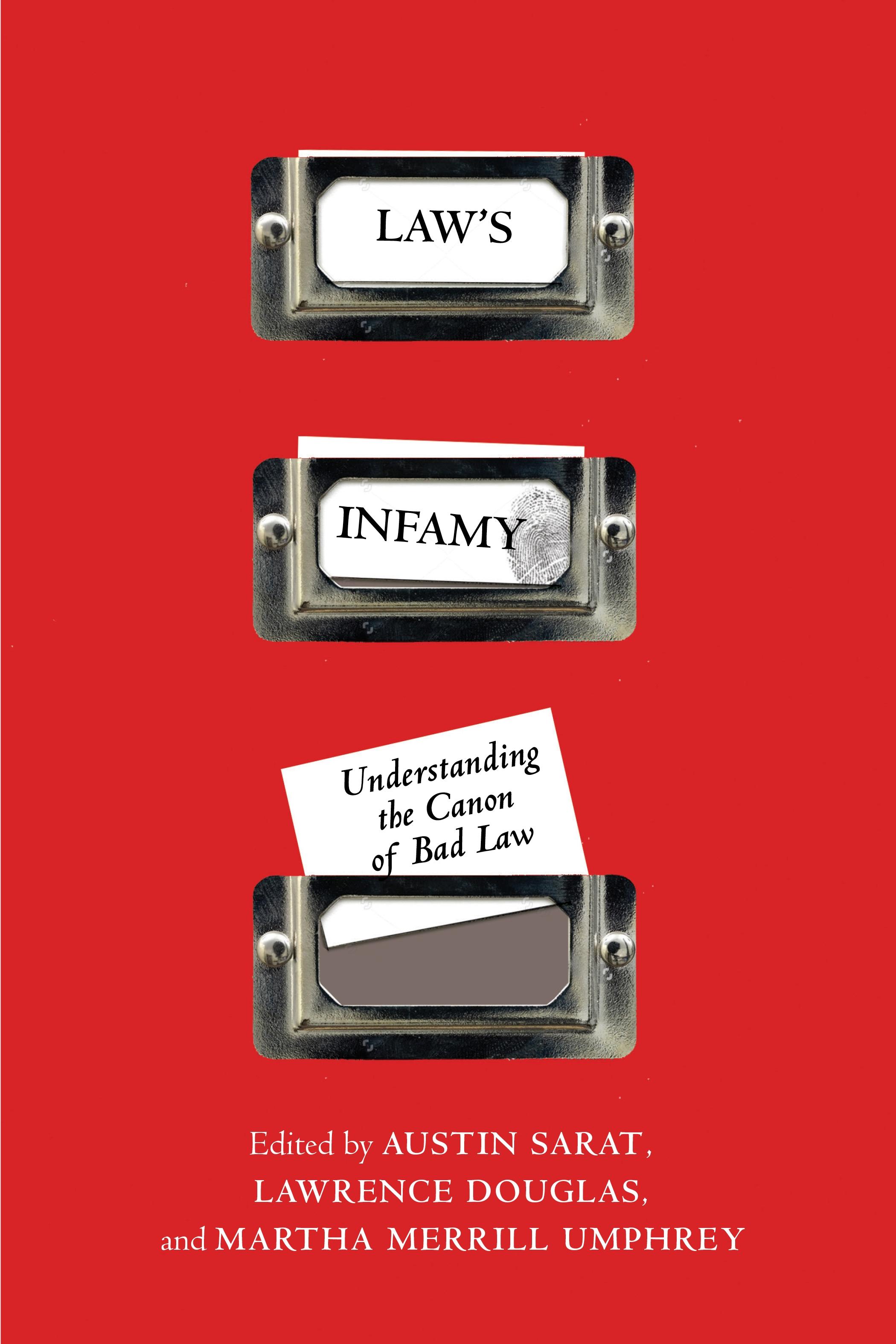
An analysis of how problematic laws ought to be framed and considered
From the murder of George Floyd to the systematic dismantling of voting rights, our laws and their implementation are actively shaping the course of our nation. But however abhorrent a legal decision might be—whether Dred Scott v. Sanford or Plessy v. Ferguson—the stories we tell of the law’s failures refer to their injustice and rarely label them in the language of infamy. Yet in many instances, infamy is part of the story law tells about citizens’ conduct. Such stories of individual infamy work on both the social and legal level to stigmatize and ostracize people, to mark them as unredeemably other.
Law’s Infamy seeks to alter that course by making legal actions and decisions the subject of an inquiry about infamy. Taken together, the essays demonstrate how legal institutions themselves engage in infamous actions and urge that scholars and activists label them as such, highlighting the damage done when law itself acts infamously and focus of infamous decisions that are worthy of repudiation. Law's Infamy asks when and why the word infamy should be used to characterize legal decisions or actions. This is a much-needed addition to the broader conversation and questions surrounding law’s complicity in evil.
Paga facilmente con carta, Klarna, Apple Pay o Google Pay. Non sei soddisfatto? Hai sempre 14 giorni per il rimborso. Leggi di più nei nostri termini. Per qualsiasi domanda, scrivici a hello@memmo.org.
Memmo rende lo studio più facile, ovunque tu sia nel mondo. Qui trovi i tuoi libri di testo e strumenti di studio intelligenti, tutto in un unico posto: riassunti, quiz, podcast e flashcard. E poi c'è Ted, il tuo compagno di studio che risponde a ogni tua domanda. Oltre 50.000 studenti studiano già qui: è stato creato per aiutarti a imparare più velocemente e a stressarti meno.