
Awarded an Honourable Mention by the Association for Israeli Studies.
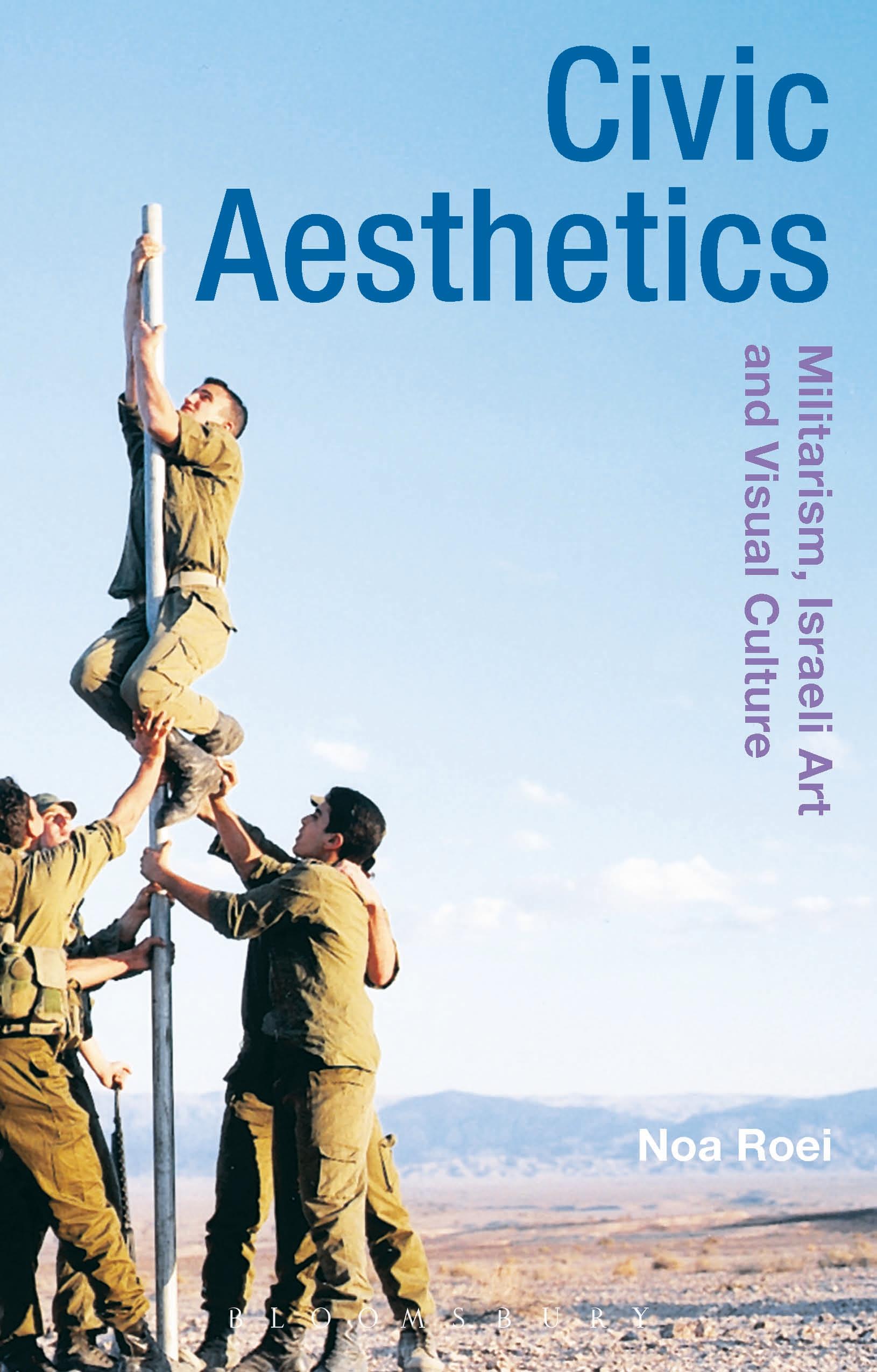
Exploring the politics of the image in the context of Israeli militarized visual culture, Civic Aesthetics examines both the omnipresence of militarism in Israeli culture and society and the way in which this omnipresence is articulated, enhanced, and contested within local contemporary visual art. Looking at a range of contemporary artworks through the lens of “civilian militarism”, Roei employs the theory of various fields, including memory studies, gender studies, landscape theory, and aesthetics, to explore the potential of visual art to communicate military excesses to its viewers.
This study builds on the specific sociological concerns of the chosen cases to discuss the complexities of visuality, the visible and non-visible, arguing for art's capacity to expose the scopic regimes that construct their visibility. Images and artworks are often read either out of context, on purely aesthetic or art-historical ground, or as cultural artefacts whose aesthetics play a minor role in their significance. This book breaks with both traditions as it approaches all art, both high and popular art, as part of the surrounding visual culture in which it is created and presented. This approach allows a new theory of the image to come forth, where the relation between the political and the aesthetic is one of exchange, rather than exclusion.
Exploring the politics of the image in the context of Israeli militarized visual culture, Civic Aesthetics examines both the omnipresence of militarism in Israeli culture and society and the way in which this omnipresence is articulated, enhanced, and contested within local contemporary visual art. Looking at a range of contemporary artworks through the lens of “civilian militarism”, Roei employs the theory of various fields, including memory studies, gender studies, landscape theory, and aesthetics, to explore the potential of visual art to communicate military excesses to its viewers.
This study builds on the specific sociological concerns of the chosen cases to discuss the complexities of visuality, the visible and non-visible, arguing for art's capacity to expose the scopic regimes that construct their visibility. Images and artworks are often read either out of context, on purely aesthetic or art-historical ground, or as cultural artefacts whose aesthetics play a minor role in their significance. This book breaks with both traditions as it approaches all art, both high and popular art, as part of the surrounding visual culture in which it is created and presented. This approach allows a new theory of the image to come forth, where the relation between the political and the aesthetic is one of exchange, rather than exclusion.
Pagine: 240
Categoria: Kultur-, Genus- & Postkoloniala studier
e-ISBN: 9781474253185
Peso di spedizione: 1.2 kg
Spedito in: 1-2 giorni
Paga facilmente con carta, Klarna, Apple Pay o Google Pay. Non sei soddisfatto? Hai sempre 14 giorni per il rimborso. Leggi di più nei nostri termini. Per qualsiasi domanda, scrivici a hello@memmo.org.
Memmo rende lo studio più facile, ovunque tu sia nel mondo. Qui trovi i tuoi libri di testo e strumenti di studio intelligenti, tutto in un unico posto: riassunti, quiz, podcast e flashcard. E poi c'è Ted, il tuo compagno di studio che risponde a ogni tua domanda. Oltre 50.000 studenti studiano già qui: è stato creato per aiutarti a imparare più velocemente e a stressarti meno.