
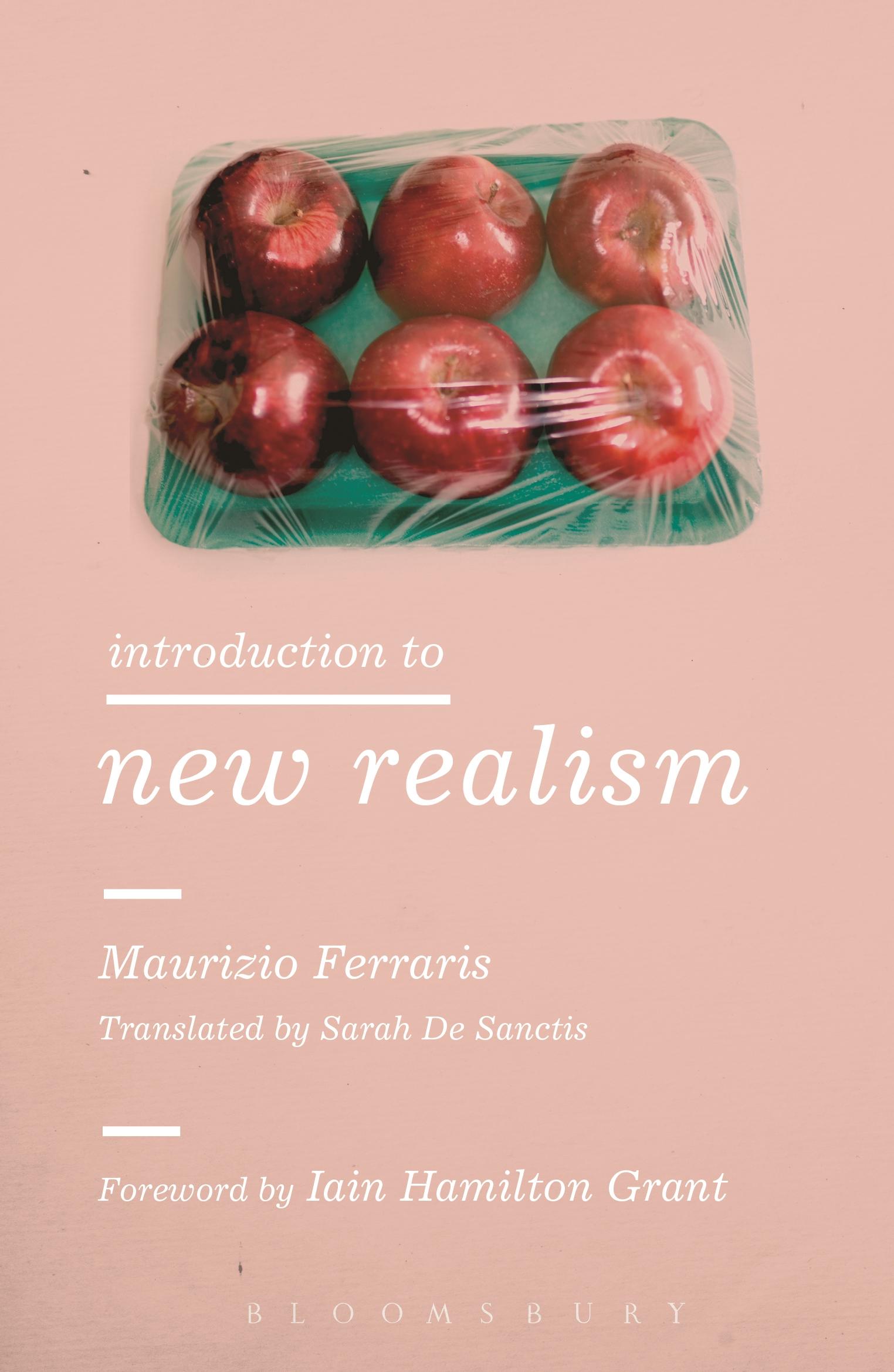
Introduction to New Realism provides an overview of the movement of contemporary thought named New Realism, by its creator and most celebrated practitioner, Maurizio Ferraris. Sharing significant concerns and features with Speculative Realism and Object Oriented Ontology, New Realism can be said to be one of the most prescient philosophical positions today. Its desire to overcome the postmodern antirealism of Kantian origin, and to reassert the importance of truth and objectivity in the name of a new Enlightenment, has had an enormous resonance both in Europe and in the US. Introduction to New Realism is the first volume dedicated to exposing this continental movement to an anglophone audience.
Featuring a foreword by the eminent contemporary philosopher and leading exponent of Speculative Realism, Iain Hamilton Grant, the book begins by tracing the genesis of New Realism, and outlining its central theoretical tenets, before opening onto three distinct sections. The first, 'Negativity', is a critique of the postmodern idea that the world is constructed by our conceptual schemas, all the more so as we have entered the age of digitality and virtuality. The second thesis, 'positivity', proposes the fundamental ontological assertion of New Realism, namely that not only are there parts of reality that are independent of thought, but these parts are also able to act causally over thought and the human world. The third thesis, 'normativity,' applies New Realism to the sphere of the social world. Finally, an afterword written by two young scholars explains in more detail the relationship between New Realism and other forms of contemporary realism.
Featuring a foreword by the eminent contemporary philosopher and leading exponent of Speculative Realism, Iain Hamilton Grant, the book begins by tracing the genesis of New Realism, and outlining its central theoretical tenets, before opening onto three distinct sections. The first, 'Negativity', is a critique of the postmodern idea that the world is constructed by our conceptual schemas, all the more so as we have entered the age of digitality and virtuality. The second thesis, 'positivity', proposes the fundamental ontological assertion of New Realism, namely that not only are there parts of reality that are independent of thought, but these parts are also able to act causally over thought and the human world. The third thesis, 'normativity,' applies New Realism to the sphere of the social world. Finally, an afterword written by two young scholars explains in more detail the relationship between New Realism and other forms of contemporary realism.
Paga facilmente con carta, Klarna, Apple Pay o Google Pay. Non sei soddisfatto? Hai sempre 14 giorni per il rimborso. Leggi di più nei nostri termini. Per qualsiasi domanda, scrivici a hello@memmo.org.
Memmo rende lo studio più facile, ovunque tu sia nel mondo. Qui trovi i tuoi libri di testo e strumenti di studio intelligenti, tutto in un unico posto: riassunti, quiz, podcast e flashcard. E poi c'è Ted, il tuo compagno di studio che risponde a ogni tua domanda. Oltre 50.000 studenti studiano già qui: è stato creato per aiutarti a imparare più velocemente e a stressarti meno.