
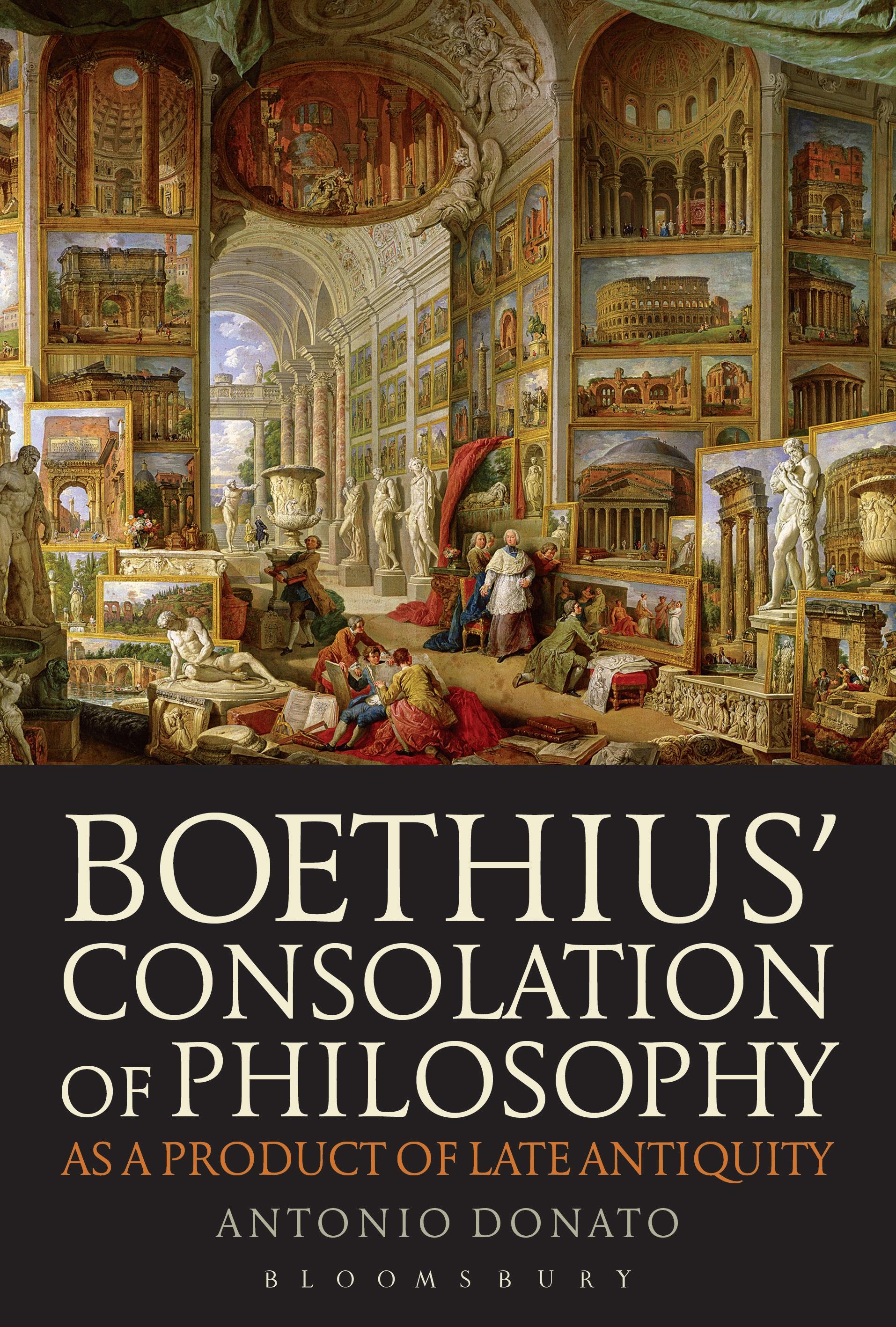
In the last fifty years the field of Late Antiquity has advanced significantly. Today we have a picture of this period that is more precise and accurate than before. However, the study of one of the most significant texts of this age, Boethius' Consolation of Philosophy, has not benefited enough from these advances in scholarship. Antonio Donato aims to fill this gap by investigating how the study of the Consolation can profit from the knowledge of Boethius' cultural, political and social background that is available today.
The book focuses on three topics: Boethius' social/political background, his notion of philosophy and its sources, and his understanding of the relation between Christianity and classical culture. These topics deal with issues that are of crucial importance for the exegesis of the Consolation. The study of Boethius' social/political background allows us to gain a better understanding of the identity of the character Boethius and to recognize his role in the Consolation. Examination of the possible sources of Boethius' notion of philosophy and of their influence on the Consolation offers valuable instruments to evaluate the role of the text's philosophical discussions and their relation to its literary features. Finally, the long-standing problem of the lack of overt Christian elements in the Consolation can be enlightened by considering how Boethius relies on a peculiar understanding of philosophy's goal and its relation to Christianity that was common among some of his predecessors and contemporaries.
The book focuses on three topics: Boethius' social/political background, his notion of philosophy and its sources, and his understanding of the relation between Christianity and classical culture. These topics deal with issues that are of crucial importance for the exegesis of the Consolation. The study of Boethius' social/political background allows us to gain a better understanding of the identity of the character Boethius and to recognize his role in the Consolation. Examination of the possible sources of Boethius' notion of philosophy and of their influence on the Consolation offers valuable instruments to evaluate the role of the text's philosophical discussions and their relation to its literary features. Finally, the long-standing problem of the lack of overt Christian elements in the Consolation can be enlightened by considering how Boethius relies on a peculiar understanding of philosophy's goal and its relation to Christianity that was common among some of his predecessors and contemporaries.
Paga facilmente con carta, Klarna, Apple Pay o Google Pay. Non sei soddisfatto? Hai sempre 14 giorni per il rimborso. Leggi di più nei nostri termini. Per qualsiasi domanda, scrivici a hello@memmo.org.
Memmo rende lo studio più facile, ovunque tu sia nel mondo. Qui trovi i tuoi libri di testo e strumenti di studio intelligenti, tutto in un unico posto: riassunti, quiz, podcast e flashcard. E poi c'è Ted, il tuo compagno di studio che risponde a ogni tua domanda. Oltre 50.000 studenti studiano già qui: è stato creato per aiutarti a imparare più velocemente e a stressarti meno.