
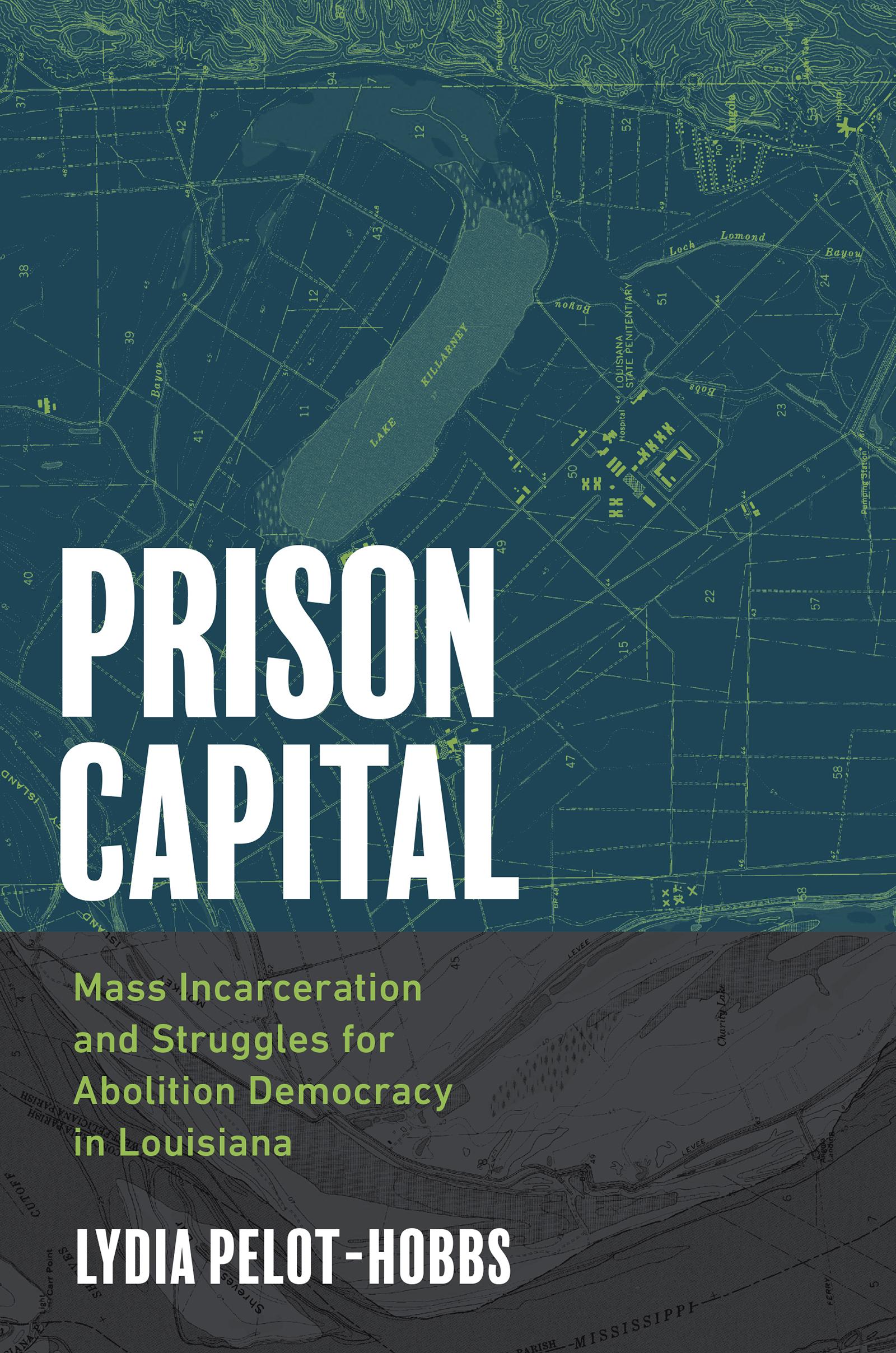
Every year between 1998 to 2020 except one, Louisiana had the highest per capita rate of incarceration in the nation and thus the world. This is the first detailed account of Louisiana’s unprecedented turn to mass incarceration from 1970 to 2020.
Through extensive research, Lydia Pelot-Hobbs illuminates how policy makers enlarged Louisiana’s carceral infrastructures with new prisons and jail expansions alongside the bulking up of police and prosecutorial power. At the same time, these infrastructures were the products of multiscalar crises: the swings of global oil capitalism, liberal federal court and policy interventions, the rise of neoliberal governance and law-and-order austerity, and racist and patriarchal moral panics surrounding “crime.” However, these crises have also created fertile space for anticarceral social movements. From incarcerated people filing conditions of confinement lawsuits and Angola activists challenging life without parole to grassroots organizers struggling to shrink the New Orleans jail following Hurricane Katrina and LGBTQ youth of color organizing against police sexual violence, grassroots movements stretch us toward new geographies of freedom in the lineage of abolition democracy. Understanding Louisiana’s carceral crisis extends our understanding of the interplay between the crises of mass criminalization and racial capitalism while highlighting the conditions of possibility for dismantling carceral power in all its forms.
Through extensive research, Lydia Pelot-Hobbs illuminates how policy makers enlarged Louisiana’s carceral infrastructures with new prisons and jail expansions alongside the bulking up of police and prosecutorial power. At the same time, these infrastructures were the products of multiscalar crises: the swings of global oil capitalism, liberal federal court and policy interventions, the rise of neoliberal governance and law-and-order austerity, and racist and patriarchal moral panics surrounding “crime.” However, these crises have also created fertile space for anticarceral social movements. From incarcerated people filing conditions of confinement lawsuits and Angola activists challenging life without parole to grassroots organizers struggling to shrink the New Orleans jail following Hurricane Katrina and LGBTQ youth of color organizing against police sexual violence, grassroots movements stretch us toward new geographies of freedom in the lineage of abolition democracy. Understanding Louisiana’s carceral crisis extends our understanding of the interplay between the crises of mass criminalization and racial capitalism while highlighting the conditions of possibility for dismantling carceral power in all its forms.
Paga facilmente con carta, Klarna, Apple Pay o Google Pay. Non sei soddisfatto? Hai sempre 14 giorni per il rimborso. Leggi di più nei nostri termini. Per qualsiasi domanda, scrivici a hello@memmo.org.
Memmo rende lo studio più facile, ovunque tu sia nel mondo. Qui trovi i tuoi libri di testo e strumenti di studio intelligenti, tutto in un unico posto: riassunti, quiz, podcast e flashcard. E poi c'è Ted, il tuo compagno di studio che risponde a ogni tua domanda. Oltre 50.000 studenti studiano già qui: è stato creato per aiutarti a imparare più velocemente e a stressarti meno.
Potrebbe interessarti anche
Acquista il libro0