
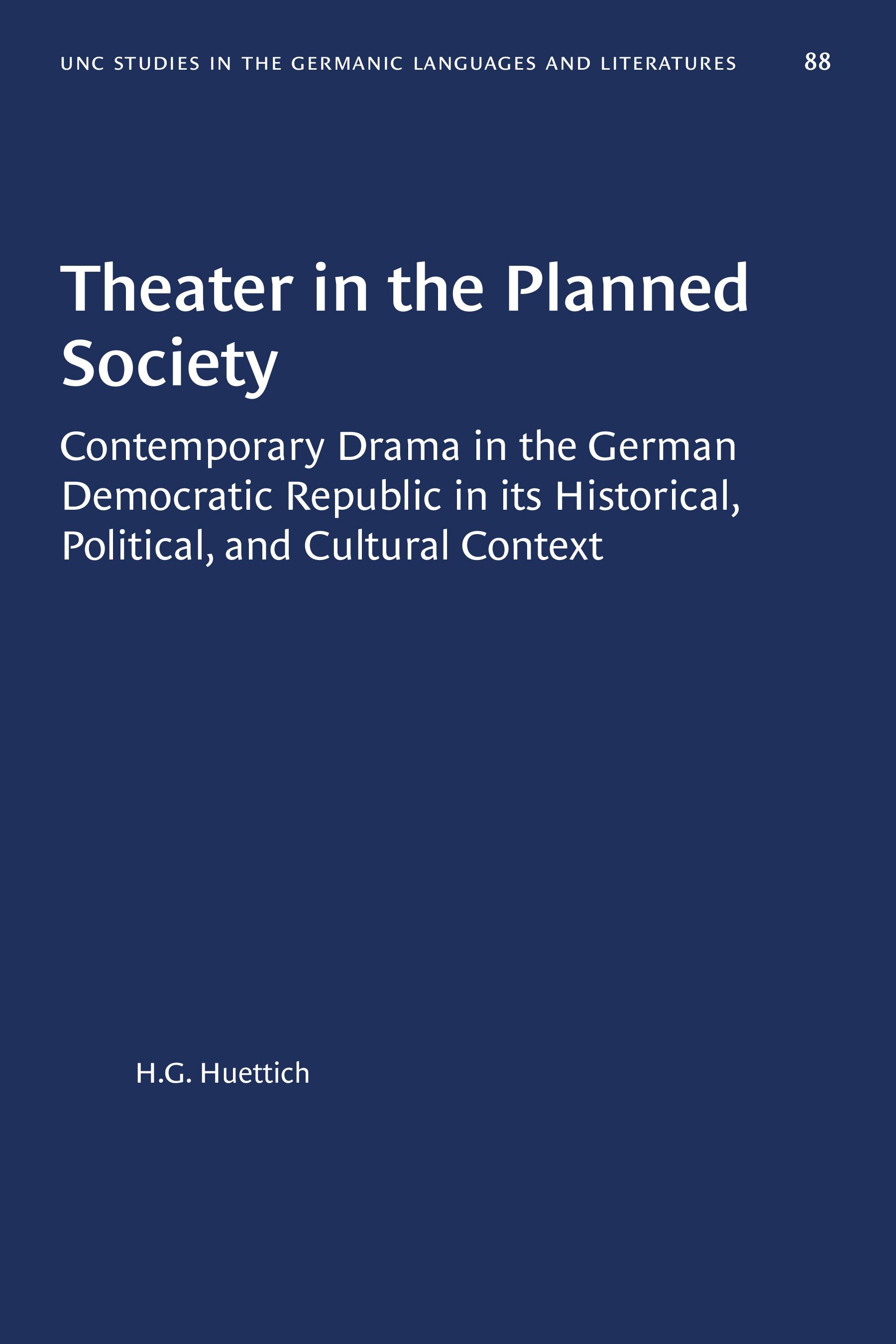
This study presents the historical development of topical drama in the German Democratic Republic from 1945 to 1975. The author investigates the sociopolitical function of both dramas and dramatists such as Karl Grünberg, Friedrich Wolf, and Erwin Strittmatter during the various transitional stages of the GDR’s growth toward a socialist society.
The substantive, critical study of plays, authors, productions, and dramatic theory is supplemented by a critical analysis of the Socialist Unity Party’s cultural and literary policies during the GDR’s turbulent history. While Western critics tend to isolate individual GDR dramas and interpret them out of context, Huettich explores in depth how the cultural policy of the GDR significantly helped shape the course of post-World War II drama in the 'planned society.'
The substantive, critical study of plays, authors, productions, and dramatic theory is supplemented by a critical analysis of the Socialist Unity Party’s cultural and literary policies during the GDR’s turbulent history. While Western critics tend to isolate individual GDR dramas and interpret them out of context, Huettich explores in depth how the cultural policy of the GDR significantly helped shape the course of post-World War II drama in the 'planned society.'
Paga facilmente con carta, Klarna, Apple Pay o Google Pay. Non sei soddisfatto? Hai sempre 14 giorni per il rimborso. Leggi di più nei nostri termini. Per qualsiasi domanda, scrivici a hello@memmo.org.
Memmo rende lo studio più facile, ovunque tu sia nel mondo. Qui trovi i tuoi libri di testo e strumenti di studio intelligenti, tutto in un unico posto: riassunti, quiz, podcast e flashcard. E poi c'è Ted, il tuo compagno di studio che risponde a ogni tua domanda. Oltre 50.000 studenti studiano già qui: è stato creato per aiutarti a imparare più velocemente e a stressarti meno.
Potrebbe interessarti anche
Acquista il libro0