
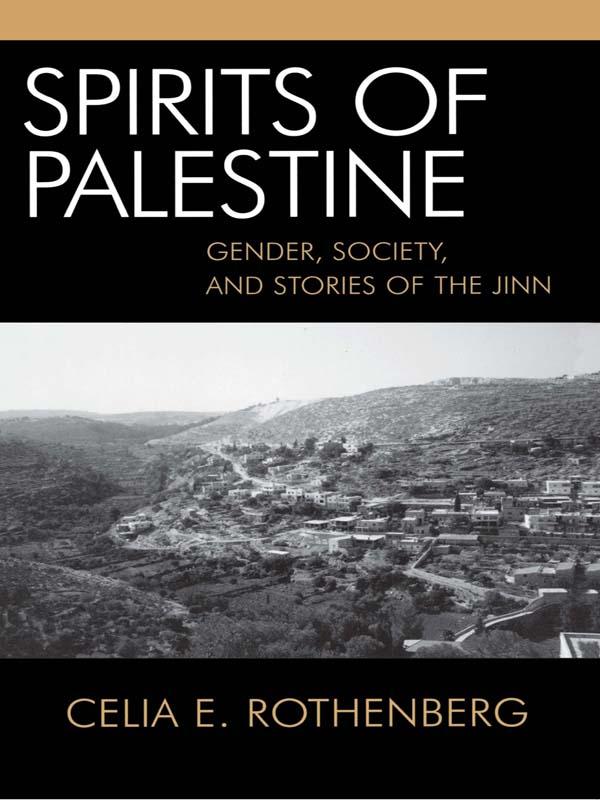
The Palestinian Muslim village of Artas is cradled in the lap of four mountains in the Israeli-occupied West Bank. Although Artas has experienced the violence of Israeli occupation, Spirits of Palestine does not focus exclusively on the villagers' experiences of violence, terrorism, or loss. This ethnography looks instead at the daily lives of Palestinian women and men and how they relate to tragedies and difficulties both large and small. Through stories of possession by the jinn, spirits that appear throughout the Koran, anthropologist Celia Rothenberg takes the reader past the dramatic, violent world of street battles and stone-throwing to more intimate realms of power-in homes and prisons, family and neighborhood relations, and personal experiences of migration and diaspora. Rothenberg shows how remarkably far-reaching jinn stories can be; they provide commentary on the constructed nature of kinship, strong social mores, and those who are both on the margins and at the center of a Palestinian community. Jinn stories remind us that power in all its forms has gaps and inconsistencies. Spirits of Palestine is a truly original ethnography and an essential addition to scholarship on Israel, Palestine, and the Middle East that will be of interest to cultural anthropologists, sociologists, and women's/gender studies scholars.
Paga facilmente con carta, Klarna, Apple Pay o Google Pay. Non sei soddisfatto? Hai sempre 14 giorni per il rimborso. Leggi di più nei nostri termini. Per qualsiasi domanda, scrivici a hello@memmo.org.
Memmo rende lo studio più facile, ovunque tu sia nel mondo. Qui trovi i tuoi libri di testo e strumenti di studio intelligenti, tutto in un unico posto: riassunti, quiz, podcast e flashcard. E poi c'è Ted, il tuo compagno di studio che risponde a ogni tua domanda. Oltre 50.000 studenti studiano già qui: è stato creato per aiutarti a imparare più velocemente e a stressarti meno.