
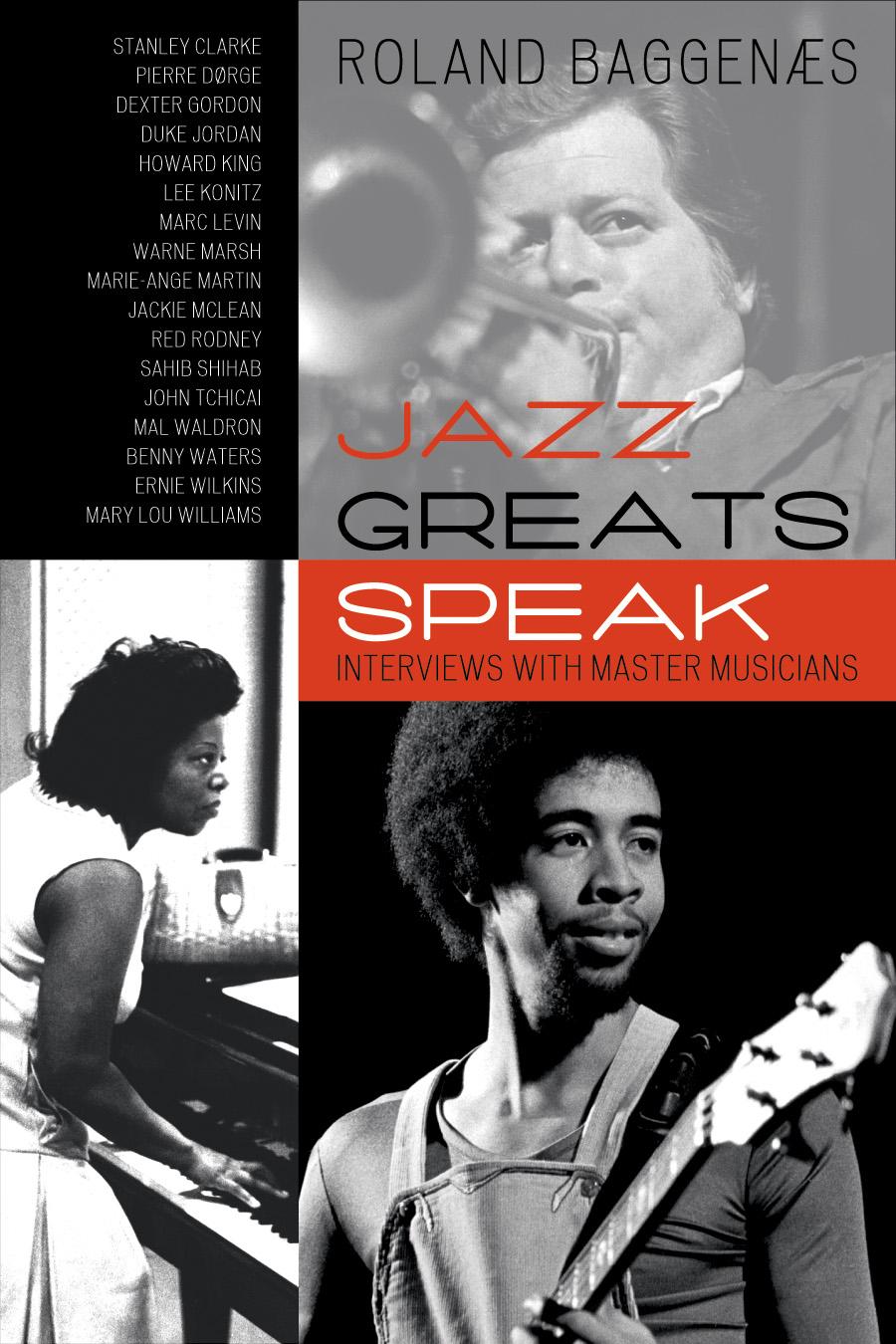
Between 1972 and 1987, freelance teacher and music journalist Roland Baggenæs conducted a series of interviews with jazz musicians for CODA magazine. Upon recently re-discovering the interviews, he was once again fascinated by the enthusiasm of the musicians and their profound dedication to their chosen profession.
Jazz Greats Speak: Interviews with Master Musicians brings those fascinating discussions into one bound volume. Such jazz artists as Lee Konitz, Mary Lou Williams, Dexter Gordon, Red Rodney, Stanley Clarke, and John Tchicai talk about their art, how they got interested in playing jazz, their influences, and about the many different musicians with whom they worked. The interviewees openly relate in their own words what jazz means to them and, in some cases, share their viewpoints on politics, religion, and their social life and conditions as a jazz artist in America or elsewhere.
The book covers a wide area of jazz but emphasizes the period from the early 1940s into the 1960s. In their entirety, the interviews give an insight into the development of jazz, from the early days of the 1920s, over the formative 1940s and 1950s, and up to the new trends of the 1980s. Complete with a beautiful selection of photographs, brief biographies of each participant, and an index, this volume will appeal to lovers of jazz, students of jazz, and anyone interested in finding out what jazz and its corresponding lifestyle is about.
Jazz Greats Speak: Interviews with Master Musicians brings those fascinating discussions into one bound volume. Such jazz artists as Lee Konitz, Mary Lou Williams, Dexter Gordon, Red Rodney, Stanley Clarke, and John Tchicai talk about their art, how they got interested in playing jazz, their influences, and about the many different musicians with whom they worked. The interviewees openly relate in their own words what jazz means to them and, in some cases, share their viewpoints on politics, religion, and their social life and conditions as a jazz artist in America or elsewhere.
The book covers a wide area of jazz but emphasizes the period from the early 1940s into the 1960s. In their entirety, the interviews give an insight into the development of jazz, from the early days of the 1920s, over the formative 1940s and 1950s, and up to the new trends of the 1980s. Complete with a beautiful selection of photographs, brief biographies of each participant, and an index, this volume will appeal to lovers of jazz, students of jazz, and anyone interested in finding out what jazz and its corresponding lifestyle is about.
Paga facilmente con carta, Klarna, Apple Pay o Google Pay. Non sei soddisfatto? Hai sempre 14 giorni per il rimborso. Leggi di più nei nostri termini. Per qualsiasi domanda, scrivici a hello@memmo.org.
Memmo rende lo studio più facile, ovunque tu sia nel mondo. Qui trovi i tuoi libri di testo e strumenti di studio intelligenti, tutto in un unico posto: riassunti, quiz, podcast e flashcard. E poi c'è Ted, il tuo compagno di studio che risponde a ogni tua domanda. Oltre 50.000 studenti studiano già qui: è stato creato per aiutarti a imparare più velocemente e a stressarti meno.