
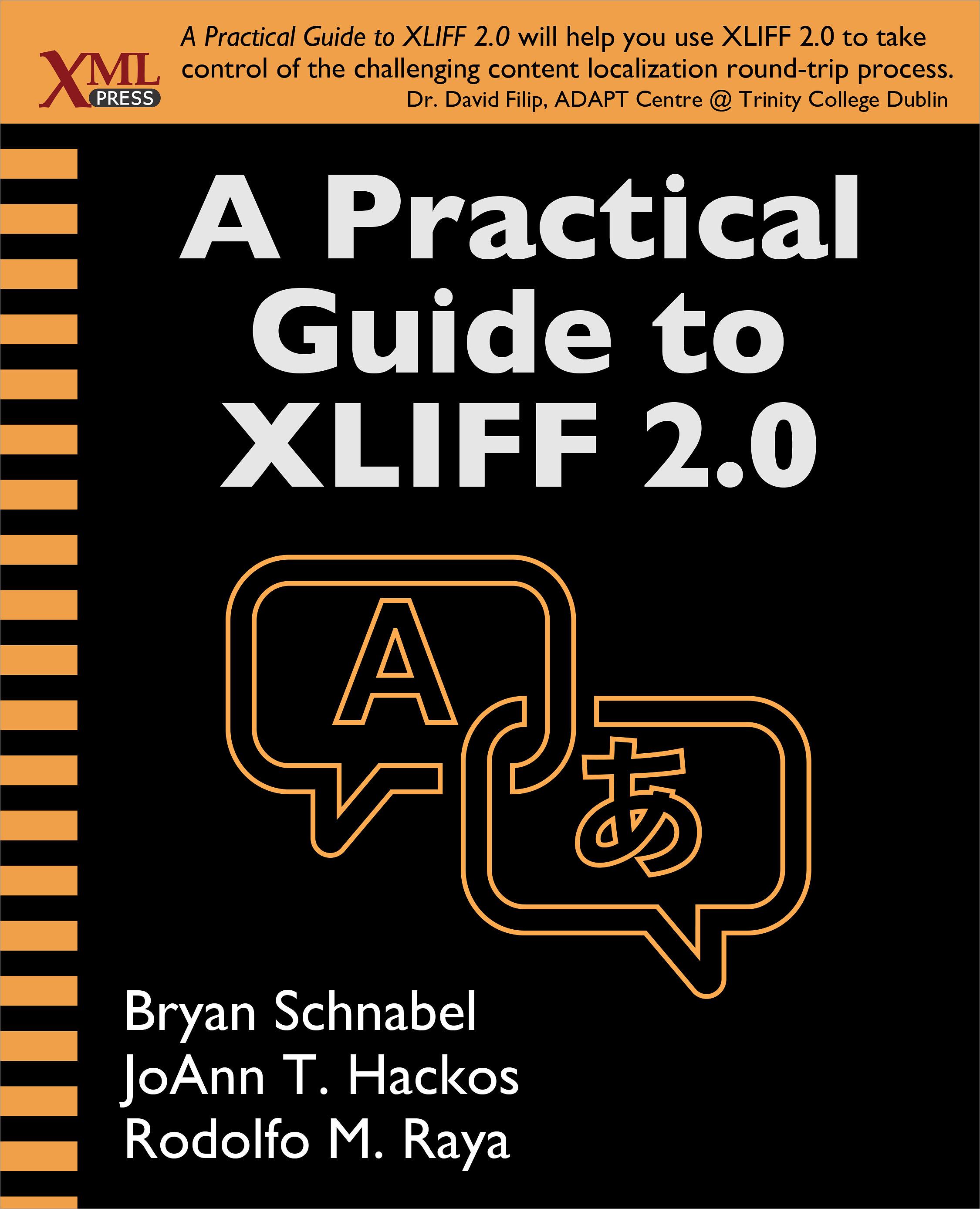
A Practical Guide to XLIFF 2.0 introduces the OASIS XLIFF standard. Companies use XLIFF to standardize the exchange of source and localized content with localization and translation vendors.
You will learn how to get the most from the XLIFF standard, use best practices in your translation workflow, extend XLIFF, and use the XLIFF modules.
This book is for localization coordinators, technical writers, content management system vendors, localization service providers, and consultants who want to incorporate XLIFF into their customers' publishing workflow.
Getting Started introduces XLIFF, the translation process, and the major parts of XLIFF, including the core and modules.
Applied XLIFF describes how XLIFF supports translation of XML (including DITA), websites, office documents, graphics, and software user interfaces.
XLIFF Core: introduces the XLIFF core features, including:
- Preserving document structure
- Marking up text for translation
- Segmentation and sub-flows
- Fragment identification
- Extensibility
XLIFF Modules: introduces the XLIFF modules, including:
- Translation Candidates
- Glossary
- Format Style
- Metadata
- Resource Data
- Change Tracking
- Size and Length Restriction
- Validation
XLIFF 2.0 Structure: describes the XLIFF 2.0 schemas, including the core structural and inline elements and module schemas.
Examples: detailed examples, including XSL code, for transforming XML source files into and out of XLIFF.
Paga facilmente con carta, Klarna, Apple Pay o Google Pay. Non sei soddisfatto? Hai sempre 14 giorni per il rimborso. Leggi di più nei nostri termini. Per qualsiasi domanda, scrivici a hello@memmo.org.
Memmo rende lo studio più facile, ovunque tu sia nel mondo. Qui trovi i tuoi libri di testo e strumenti di studio intelligenti, tutto in un unico posto: riassunti, quiz, podcast e flashcard. E poi c'è Ted, il tuo compagno di studio che risponde a ogni tua domanda. Oltre 50.000 studenti studiano già qui: è stato creato per aiutarti a imparare più velocemente e a stressarti meno.