
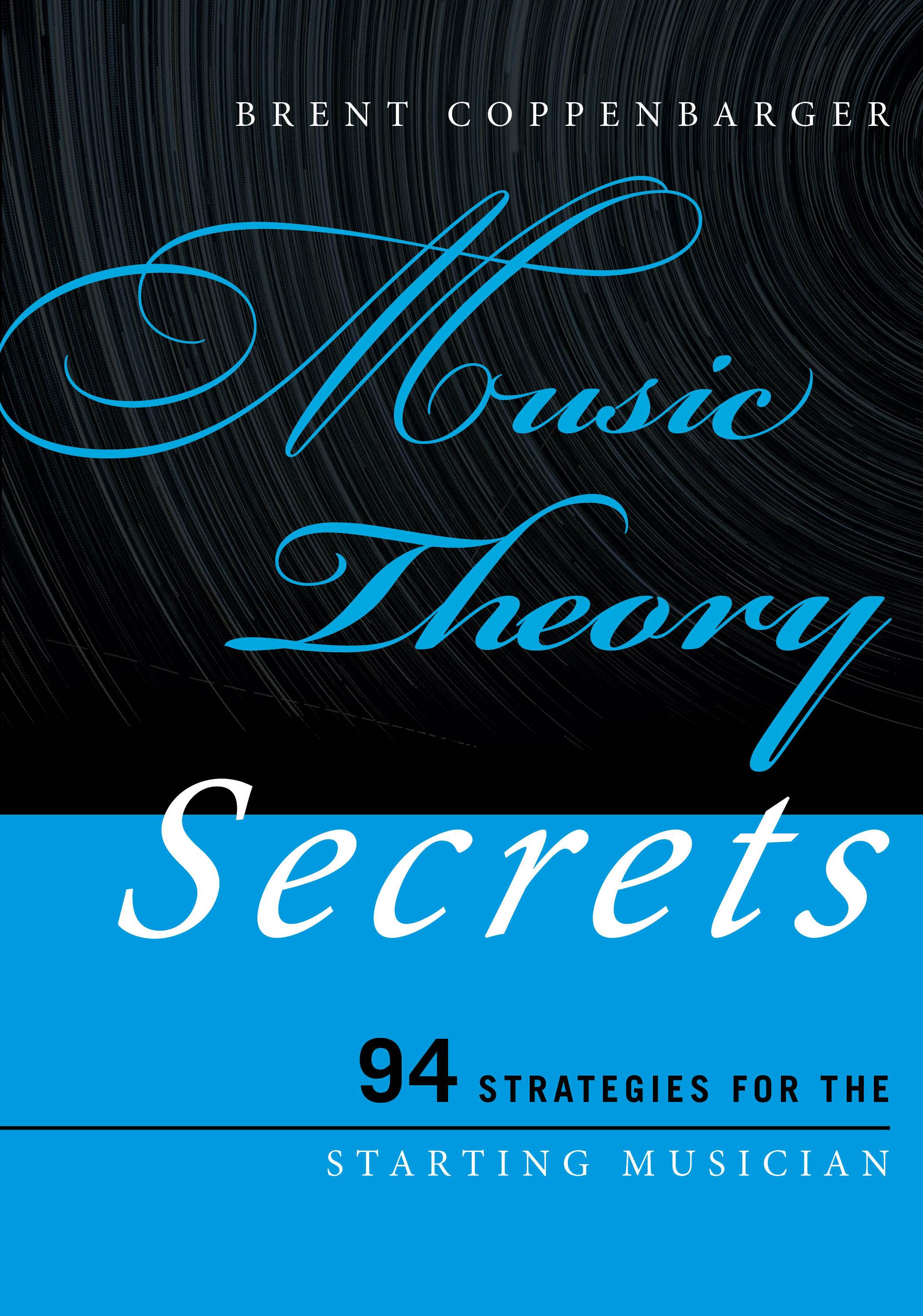
Modeled on the brilliant approach first formulated by distinguished professor of music and master clarinetist Michele Gingras in Clarinet Secrets and More Clarinet Secrets (both available from Rowman and Littlefield), Music Secrets is designed for instrumentalists, singers, conductors, composers, and other instructors and professionals seeking a quick set of pointers to improve their work as performers and producers of music. Easy to use, contributions to the Music Secrets series fill a niche for those who need quick and easy methods for learning what they need—from those just starting to the advanced musician in need of a refresher or new insights.
Rhythms, melodies, and harmonies are the building blocks of music. In Music Theory Secrets: 94 Strategies for the Starting Musician, Brent Coppenbarger offers a full range of methods to help musicians, not only grasp, but remember those key elements upon which the music they play is built: pitch, rhythm, scales, key signatures, and harmony. With over eighteen years of experience teaching music theory, Coppenbarger offers the various teaching and memory strategies he has designed to help musicians understand and retain what they need to know.
Coppenbarger covers critical information on how to determine pitch, the use of meter, and how to count rhythms in simple and compound meter; explains major scales and major key signatures, as well as minor scales and minor key signatures; surveys other types of scales (such as those used in jazz) and explains how modes work; presents necessary data on scale degree names and intervals; covers triads and various types of chords; touches upon Roman numeral analysis, inversions, and figured bass; presents non-chord tones and discusses solfege singing, including several pages of sight singing using various clefs and keys (strongly recommended for instrumentalists for practicing transpositions for the appropriate clef and range) demonstrates the different techniques musicians can use for transposing keys; and finally discusses more advanced concepts such as part-writing rules, the use of sequences, and form.
Music Theory Secrets: 94 Strategies for the Starting Musician is an indispensable resource for instrumental teachers wishing to incorporate music theory into lessons, classroom teachers, high school and college students, amateur musicians, those wanting to learn to read music, home-schooled students, and college bound music students.
Rhythms, melodies, and harmonies are the building blocks of music. In Music Theory Secrets: 94 Strategies for the Starting Musician, Brent Coppenbarger offers a full range of methods to help musicians, not only grasp, but remember those key elements upon which the music they play is built: pitch, rhythm, scales, key signatures, and harmony. With over eighteen years of experience teaching music theory, Coppenbarger offers the various teaching and memory strategies he has designed to help musicians understand and retain what they need to know.
Coppenbarger covers critical information on how to determine pitch, the use of meter, and how to count rhythms in simple and compound meter; explains major scales and major key signatures, as well as minor scales and minor key signatures; surveys other types of scales (such as those used in jazz) and explains how modes work; presents necessary data on scale degree names and intervals; covers triads and various types of chords; touches upon Roman numeral analysis, inversions, and figured bass; presents non-chord tones and discusses solfege singing, including several pages of sight singing using various clefs and keys (strongly recommended for instrumentalists for practicing transpositions for the appropriate clef and range) demonstrates the different techniques musicians can use for transposing keys; and finally discusses more advanced concepts such as part-writing rules, the use of sequences, and form.
Music Theory Secrets: 94 Strategies for the Starting Musician is an indispensable resource for instrumental teachers wishing to incorporate music theory into lessons, classroom teachers, high school and college students, amateur musicians, those wanting to learn to read music, home-schooled students, and college bound music students.
Paga facilmente con carta, Klarna, Apple Pay o Google Pay. Non sei soddisfatto? Hai sempre 14 giorni per il rimborso. Leggi di più nei nostri termini. Per qualsiasi domanda, scrivici a hello@memmo.org.
Memmo rende lo studio più facile, ovunque tu sia nel mondo. Qui trovi i tuoi libri di testo e strumenti di studio intelligenti, tutto in un unico posto: riassunti, quiz, podcast e flashcard. E poi c'è Ted, il tuo compagno di studio che risponde a ogni tua domanda. Oltre 50.000 studenti studiano già qui: è stato creato per aiutarti a imparare più velocemente e a stressarti meno.