
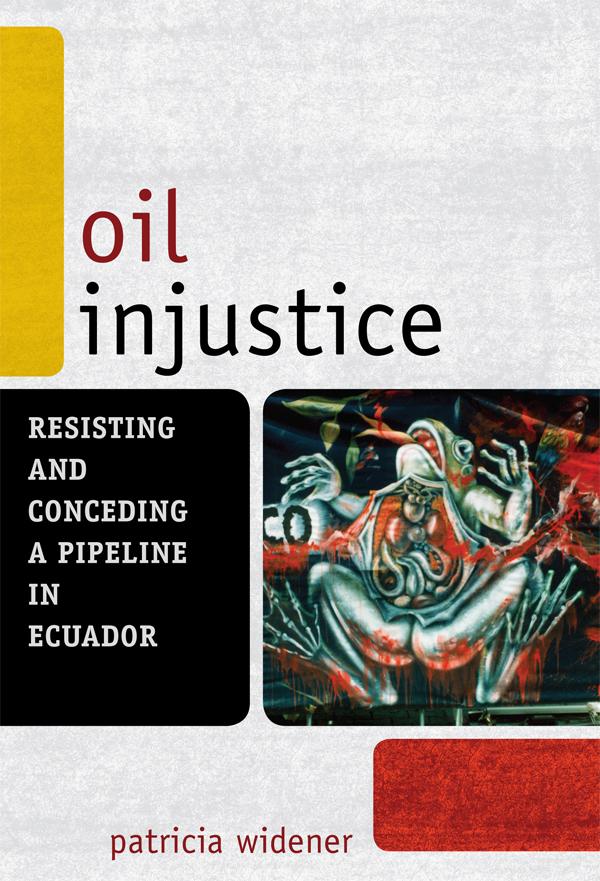
Oil Injustice examines the mobilization efforts of four communities with different oil histories in response to the construction of an oil pipeline. Using multiple sites in Ecuador as case studies, Patricia Widener examines the efforts of grassroots groups, non-governmental organizations, activist mayors, and transnational advocates that mobilized to redefine the country's oil path and to represent the voice of many local communities and organizations that sought to offer an alternative to the nation's oil dependency and to the use of its oil wealth. These groups generated divergent and at times rival reactions to the pipeline, though at their core, the multiple campaigns developed from a shared history and awareness of a number of marginalized communities and degraded environments in areas most important to the oil process. Widener shows that global environmental justice demands are bound within a capitalist political system, where community activists, national NGOs and their international allies are forced to seek local change rather than attempt to defeat a disabling and unequal system.
Paga facilmente con carta, Klarna, Apple Pay o Google Pay. Non sei soddisfatto? Hai sempre 14 giorni per il rimborso. Leggi di più nei nostri termini. Per qualsiasi domanda, scrivici a hello@memmo.org.
Memmo rende lo studio più facile, ovunque tu sia nel mondo. Qui trovi i tuoi libri di testo e strumenti di studio intelligenti, tutto in un unico posto: riassunti, quiz, podcast e flashcard. E poi c'è Ted, il tuo compagno di studio che risponde a ogni tua domanda. Oltre 50.000 studenti studiano già qui: è stato creato per aiutarti a imparare più velocemente e a stressarti meno.