
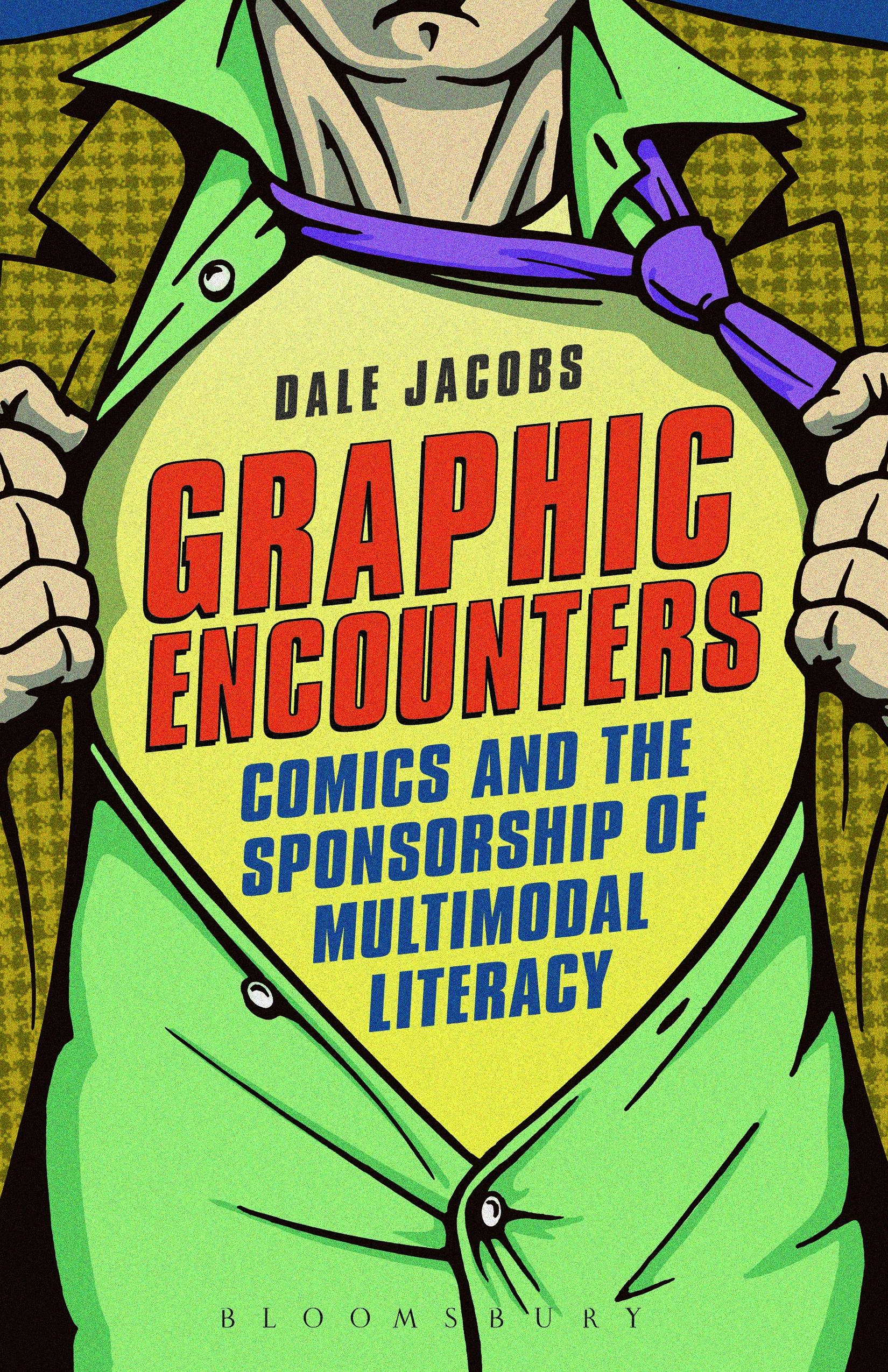
With the recent explosion of activity and discussion surrounding comics, it seems timely to examine how we might think about the multiple ways in which comics are read and consumed.
Graphic Encounters moves beyond seeing the reading of comics as a debased or simplified word-based literacy. Dale Jacobs argues compellingly that we should consider comics as multimodal texts in which meaning is created through linguistic, visual, audio, gestural, and spatial realms in order to achieve effects and meanings that would not be possible in either a strictly print or strictly visual text. Jacobs advances two key ideas: one, that reading comics involves a complex, multimodal literacy and, two, that by studying how comics are used to sponsor multimodal literacy, we can engage more deeply with the ways students encounter and use these and other multimodal texts. Looking at the history of how comics have been used (by churches, schools, and libraries among others) will help us, as literacy teachers, best use that knowledge within our curricula, even as we act as sponsors ourselves.
Graphic Encounters moves beyond seeing the reading of comics as a debased or simplified word-based literacy. Dale Jacobs argues compellingly that we should consider comics as multimodal texts in which meaning is created through linguistic, visual, audio, gestural, and spatial realms in order to achieve effects and meanings that would not be possible in either a strictly print or strictly visual text. Jacobs advances two key ideas: one, that reading comics involves a complex, multimodal literacy and, two, that by studying how comics are used to sponsor multimodal literacy, we can engage more deeply with the ways students encounter and use these and other multimodal texts. Looking at the history of how comics have been used (by churches, schools, and libraries among others) will help us, as literacy teachers, best use that knowledge within our curricula, even as we act as sponsors ourselves.
Paga facilmente con carta, Klarna, Apple Pay o Google Pay. Non sei soddisfatto? Hai sempre 14 giorni per il rimborso. Leggi di più nei nostri termini. Per qualsiasi domanda, scrivici a hello@memmo.org.
Memmo rende lo studio più facile, ovunque tu sia nel mondo. Qui trovi i tuoi libri di testo e strumenti di studio intelligenti, tutto in un unico posto: riassunti, quiz, podcast e flashcard. E poi c'è Ted, il tuo compagno di studio che risponde a ogni tua domanda. Oltre 50.000 studenti studiano già qui: è stato creato per aiutarti a imparare più velocemente e a stressarti meno.