
A short history of piracy and capitalism
When capitalism spread along the trade routes toward the Indies…when radio opened an era of mass communication . . . when the Internet became part of the global economy…pirates were there. And although most people see pirates as solitary anarchists out to destroy capitalism, it turns out the opposite is true. They are the ones who forge the path.
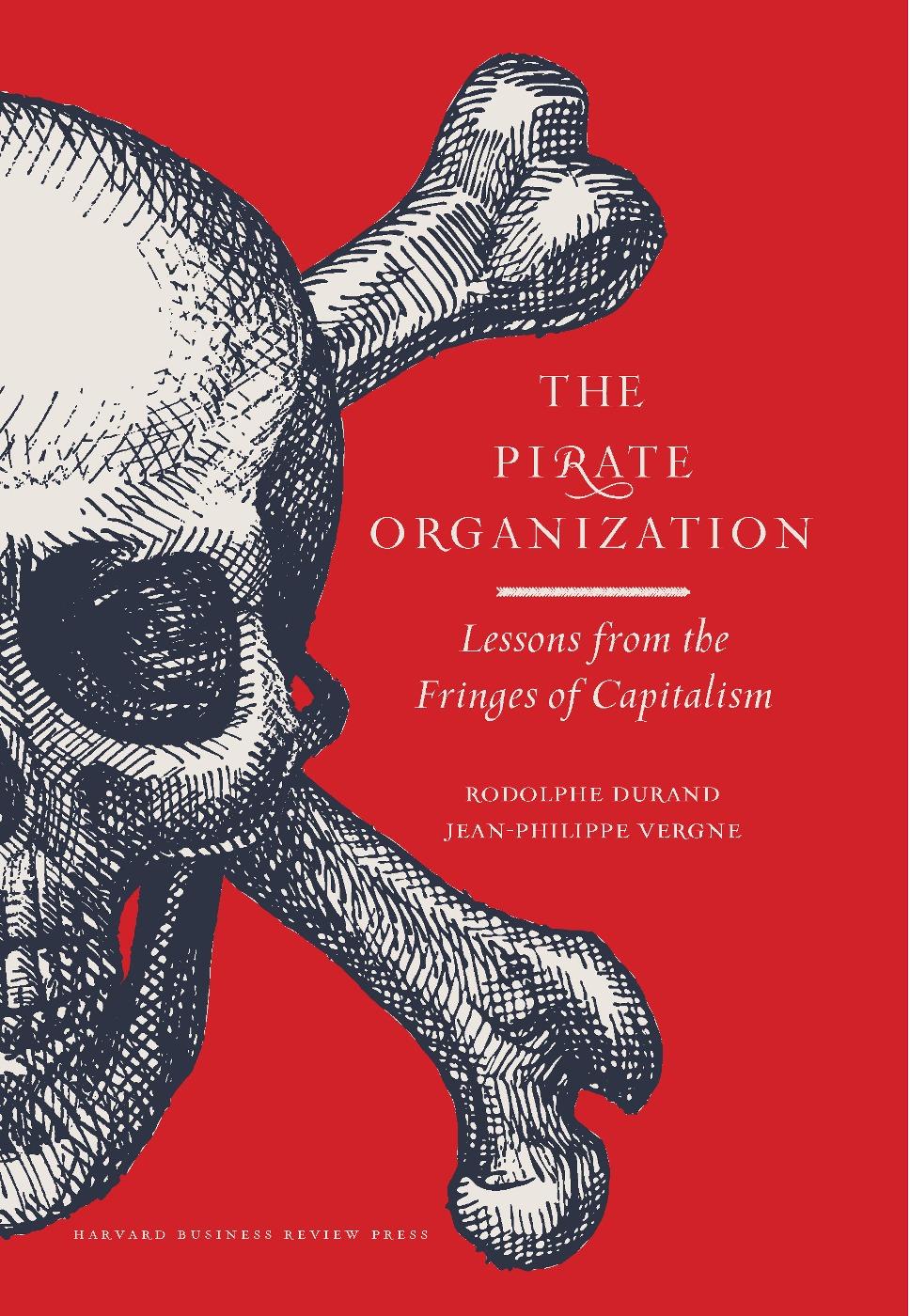
In The Pirate Organization, Rodolphe Durand and Jean-Philippe Vergne argue that piracy drives capitalism’s evolution and foreshadows the direction of the economy. Through a rigorous yet engaging analysis of the history and golden ages of piracy, the authors show how pirates form complex and sophisticated organizations that change the course of capitalism. Surprisingly, pirate organizations also behave in predictable ways: challenging widespread norms; controlling resources, communication, and transportation; maintaining trade relationships with other communities; and formulating strategies favoring speed and surprise. We could learn a lot from them—if only we paid more attention.
Durand and Vergne recommend that rather than trying to stamp out piracy, savvy entrepreneurs and organizations should keep a sharp eye on the pirate space to stay successful as the game changes—and it always does.
First published in French to great critical acclaim and commercial success as L’Organisation Pirate: Essai sur l’évolution du capitalisme, this book shows that piracy is not random. It’s predictable, it cannot be separated from capitalism, and it likely will be the source of capitalism’s continuing evolution.
Pirates, surprisingly, also behave in predictable ways: challenging widespread norms; controlling resources, communication, and transportation; maintaining trade relationships with other communities; and formulating strategies favoring speed and surprise.
And we can learn from them.
Durand and Vergne recommend that rather than trying to stamp out piracy, savvy companies should keep a sharp eye on the pirate space. Only then can they detect how capitalism’s rules of engagement are changing—and then revise their business practices to remain successful in the new game.
When capitalism spread along the trade routes toward the Indies…when radio opened an era of mass communication . . . when the Internet became part of the global economy…pirates were there. And although most people see pirates as solitary anarchists out to destroy capitalism, it turns out the opposite is true. They are the ones who forge the path.
In The Pirate Organization, Rodolphe Durand and Jean-Philippe Vergne argue that piracy drives capitalism’s evolution and foreshadows the direction of the economy. Through a rigorous yet engaging analysis of the history and golden ages of piracy, the authors show how pirates form complex and sophisticated organizations that change the course of capitalism. Surprisingly, pirate organizations also behave in predictable ways: challenging widespread norms; controlling resources, communication, and transportation; maintaining trade relationships with other communities; and formulating strategies favoring speed and surprise. We could learn a lot from them—if only we paid more attention.
Durand and Vergne recommend that rather than trying to stamp out piracy, savvy entrepreneurs and organizations should keep a sharp eye on the pirate space to stay successful as the game changes—and it always does.
First published in French to great critical acclaim and commercial success as L’Organisation Pirate: Essai sur l’évolution du capitalisme, this book shows that piracy is not random. It’s predictable, it cannot be separated from capitalism, and it likely will be the source of capitalism’s continuing evolution.
Pirates, surprisingly, also behave in predictable ways: challenging widespread norms; controlling resources, communication, and transportation; maintaining trade relationships with other communities; and formulating strategies favoring speed and surprise.
And we can learn from them.
Durand and Vergne recommend that rather than trying to stamp out piracy, savvy companies should keep a sharp eye on the pirate space. Only then can they detect how capitalism’s rules of engagement are changing—and then revise their business practices to remain successful in the new game.
Paga facilmente con carta, Klarna, Apple Pay o Google Pay. Non sei soddisfatto? Hai sempre 14 giorni per il rimborso. Leggi di più nei nostri termini. Per qualsiasi domanda, scrivici a hello@memmo.org.
Memmo rende lo studio più facile, ovunque tu sia nel mondo. Qui trovi i tuoi libri di testo e strumenti di studio intelligenti, tutto in un unico posto: riassunti, quiz, podcast e flashcard. E poi c'è Ted, il tuo compagno di studio che risponde a ogni tua domanda. Oltre 50.000 studenti studiano già qui: è stato creato per aiutarti a imparare più velocemente e a stressarti meno.
Potrebbe interessarti anche
Acquista il libro0