
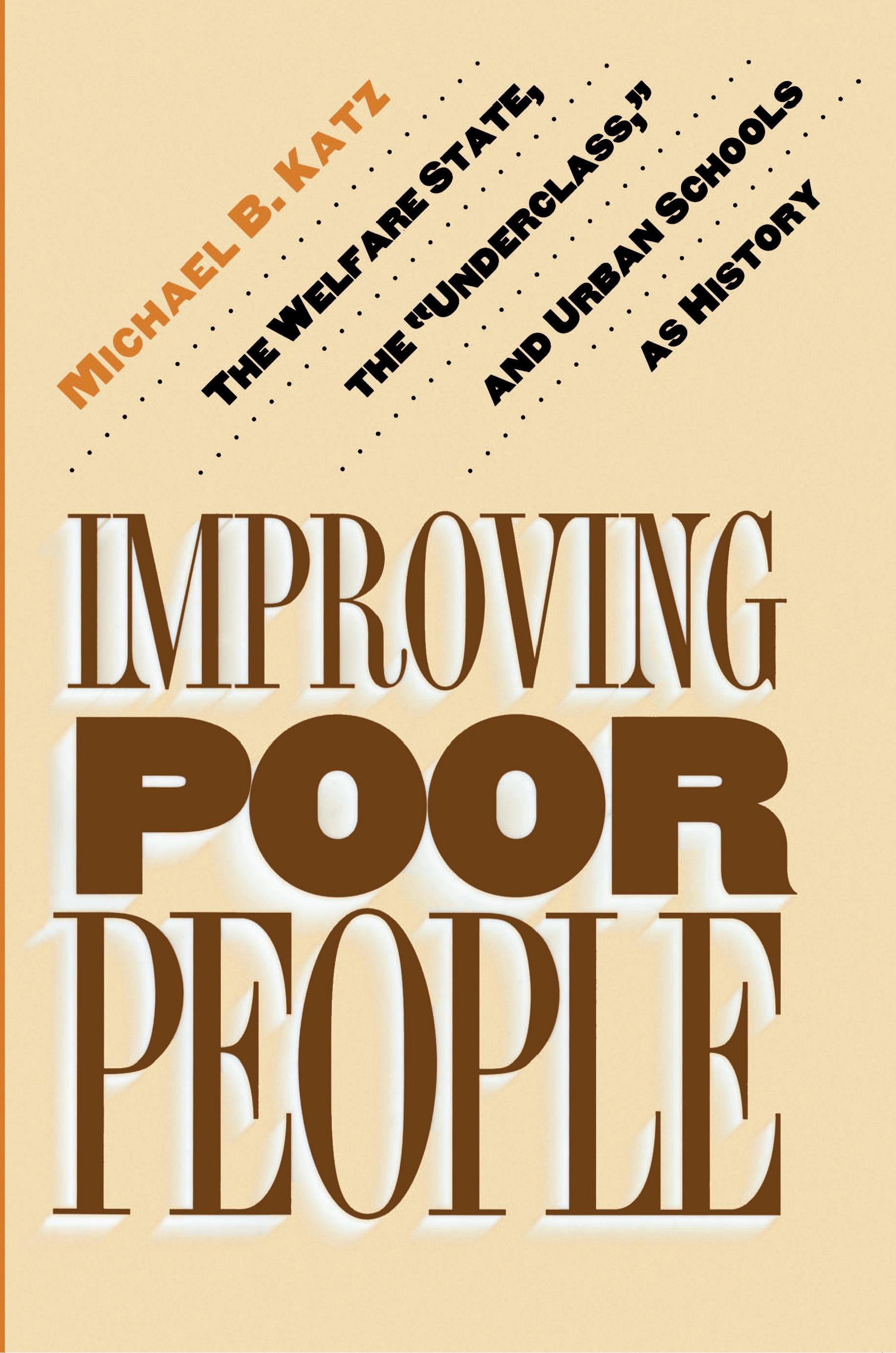
"There are places where history feels irrelevant, and America's inner cities are among them," acknowledges Michael Katz, in expressing the tensions between activism and scholarship. But this major historian of urban poverty realizes that the pain in these cities has its origins in the American past. To understand contemporary poverty, he looks particularly at an old attitude: because many nineteenth-century reformers traced extreme poverty to drink, laziness, and other forms of bad behavior, they tried to use public policy and philanthropy to improve the character of poor people, rather than to attack the structural causes of their misery. Showing how this misdiagnosis has afflicted today's welfare and educational systems, Katz draws on his own experiences to introduce each of four topics--the welfare state, the "underclass" debate, urban school reform, and the strategies of survival used by the urban poor. Uniquely informed by his personal involvement, each chapter also illustrates the interpretive power of history by focusing on a strand of social policy in the nineteenth and twentieth centuries: social welfare from the poorhouse era through the New Deal, ideas about urban poverty from the undeserving poor to the "underclass," and the emergence of public education through the radical school reform movement now at work in Chicago.
Why have American governments proved unable to redesign a welfare system that will satisfy anyone? Why has public policy proved unable to eradicate poverty and prevent the deterioration of major cities? What strategies have helped poor people survive the poverty endemic to urban history? How did urban schools become unresponsive bureaucracies that fail to educate most of their students? Are there fresh, constructive ways to think about welfare, poverty, and public education? Throughout the book Katz shows how interpretations of the past, grounded in analytic history, can free us of comforting myths and help us to reframe discussions of these great public issues.
Paga facilmente con carta, Klarna, Apple Pay o Google Pay. Non sei soddisfatto? Hai sempre 14 giorni per il rimborso. Leggi di più nei nostri termini. Per qualsiasi domanda, scrivici a hello@memmo.org.
Memmo rende lo studio più facile, ovunque tu sia nel mondo. Qui trovi i tuoi libri di testo e strumenti di studio intelligenti, tutto in un unico posto: riassunti, quiz, podcast e flashcard. E poi c'è Ted, il tuo compagno di studio che risponde a ogni tua domanda. Oltre 50.000 studenti studiano già qui: è stato creato per aiutarti a imparare più velocemente e a stressarti meno.