
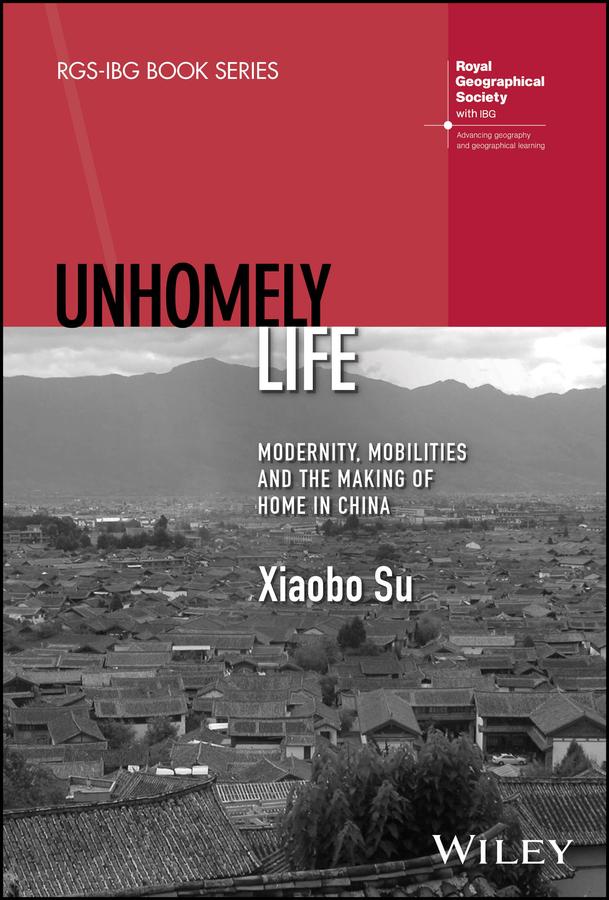
How do Chinas mobile individuals create a sense of home in a rapidly changing world?
Unhomely life, different from houselessness, refers to a fluctuating condition between losing home feelings and the search for home — a prevalent condition in post-Mao China. The faster that Chinese society modernizes, the less individuals feel at home, and the more they yearn for a sense of home. This is the central paradox that Xiaobo Su explores: how mobile individuals—lifestyle migrants and retreat tourists from China's big cities, displaced natives and rural migrants in peripheral China—handle the loss of home and try to experience a homely way of life.
In Unhomely Life, Xiaobo Su examines the subjective experiences of mobile individuals to better understand why they experience the loss of home feelings and how they search for home. Integrating extensive empirical data and a robust theoretical framework, the author presents a journey-based critical analysis of “home” under constant making, un-making, and re-making in post-Mao China. Su argues that the making of home is not a solely economic or rational calculation for maximum return, but rather a synthesis of resistance and compromise under the disappointing conditions of modernity.
Offering rich insights into the continuity and disruption of China's great transformation, Unhomely Life:
- Develops an original theory of unhomely life that incorporates contemporary research and traditional Chinese ideas of home
- Explores the process of homemaking and its implications for understanding the costs of high-speed economic growth in China
- Analyzes mobile individuals across different genders, ages, ethnicities, social classes, and economic backgrounds to address the balance between meaning and money in everyday life
Containing in-depth and sophisticated empirical data collected from 2002 to 2020, Unhomely Life: Modernity, Mobilities, and the Making of Home in China is an invaluable resource for advanced undergraduates, graduate students, lecturers, and academic researchers in cultural studies, migration, tourism, China studies, cultural anthropology, sociology, and social and cultural geography.
Paga facilmente con carta, Klarna, Apple Pay o Google Pay. Non sei soddisfatto? Hai sempre 14 giorni per il rimborso. Leggi di più nei nostri termini. Per qualsiasi domanda, scrivici a hello@memmo.org.
Memmo rende lo studio più facile, ovunque tu sia nel mondo. Qui trovi i tuoi libri di testo e strumenti di studio intelligenti, tutto in un unico posto: riassunti, quiz, podcast e flashcard. E poi c'è Ted, il tuo compagno di studio che risponde a ogni tua domanda. Oltre 50.000 studenti studiano già qui: è stato creato per aiutarti a imparare più velocemente e a stressarti meno.