
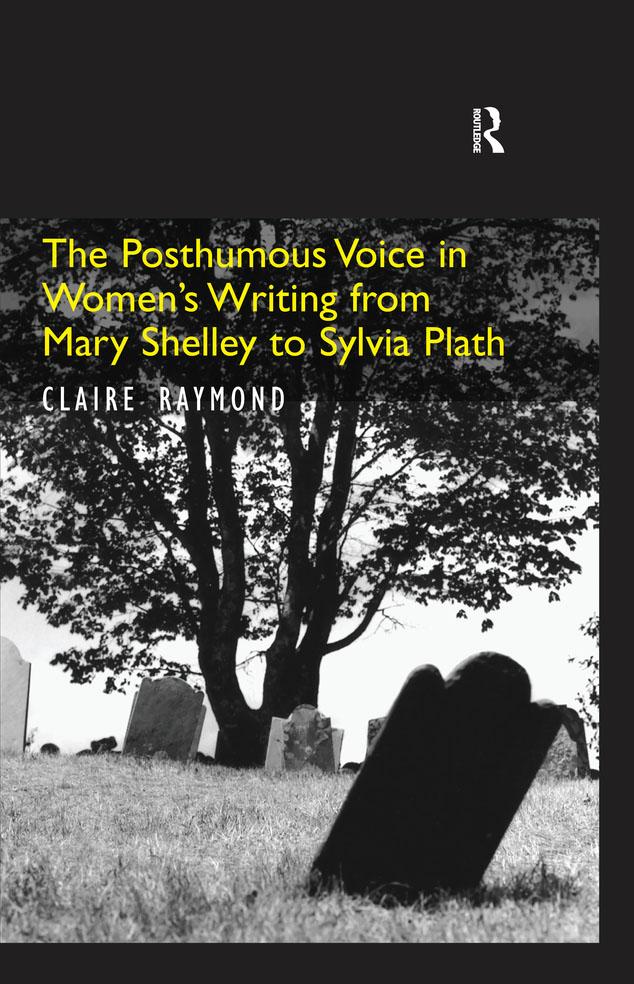
This provocative book posits a new theory of women's writing characterized by what Claire Raymond calls 'the posthumous voice.'This suggestive term evokes the way that women's writing both forefronts and hides the author's implied body within and behind the written work. Tracing the use of the disembodied posthumous voice in fiction and poetry by Mary Shelley, Emily Brontë, Emily Dickinson, and Sylvia Plath, Raymond's study sounds out the ways that the trope of the posthumous voice succeeds in negotiating the difficult cultural space between the concept of woman's body and the production of canonical literature. Arguing that the nineteenth-century cult of mourning opens to women's writing the possibility of a post-Romantic 'self-elegy,' Raymond explores how the woman writer's appropriation and alteration of elegiac conventions signifies and revises her disrupted relationship to audience. Theorizing the posthumous voice as a gesture by which the woman writer claims, and in some cases gains, canonicity, Raymond contends that the elegy posed as if written by a dead woman for herself both describes and subverts the woman writer's secondary status in the English canon. For the woman writer, the self-elegy permits access to a topos central to canonical literature, with the implementation of the trope of the posthumous voice marking a crucial site of woman's interaction with the English canon.
Pagine: 272
Categoria: Kultur-, Genus- & Postkoloniala studier
e-ISBN: 9781351883665
Peso di spedizione: 1.2 kg
Spedito in: 1-2 giorni
Paga facilmente con carta, Klarna, Apple Pay o Google Pay. Non sei soddisfatto? Hai sempre 14 giorni per il rimborso. Leggi di più nei nostri termini. Per qualsiasi domanda, scrivici a hello@memmo.org.
Memmo rende lo studio più facile, ovunque tu sia nel mondo. Qui trovi i tuoi libri di testo e strumenti di studio intelligenti, tutto in un unico posto: riassunti, quiz, podcast e flashcard. E poi c'è Ted, il tuo compagno di studio che risponde a ogni tua domanda. Oltre 50.000 studenti studiano già qui: è stato creato per aiutarti a imparare più velocemente e a stressarti meno.
Potrebbe interessarti anche
Acquista il libro0