
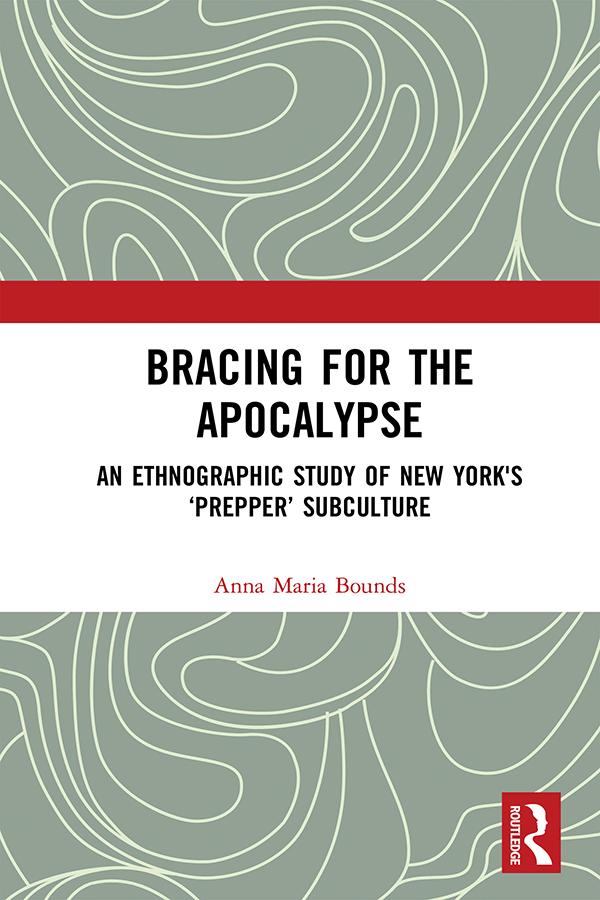
Increasing American fear about terrorism, environmental catastrophes, pandemics, and economic crises has fueled interest in "prepping": confronting disaster by mastering survivalist skills. This trend of self-reliance is not merely evidence of the American belief in the power of the individual; rather, this pragmatic shift away from expecting government aid during a disaster reflects a weakened belief in the bond between government and its citizens during a time of crisis. This ethnographic study explores the rise of the urban preppers' subculture in New York City, shedding light on the distinctive approach of city dwellers in preparing for disaster. With attention to the role of factors such as class, race, gender and one’s expectations of government, it shows that how one imagines Doomsday affects how one prepares for it. Drawing on participant observation, the author explores preppers’ views on the central question of whether to "bug out" or "hunker down" in the event of disaster, and examines the ways in which the prepper economy increases revenue by targeting concerns over developing skills, building networks, securing equipment and arranging a safe locale. A rich qualitative study, Bracing for the Apocalypse will appeal to scholars of sociology and anthropology with interests in urban studies, ethnography and subcultures.
Paga facilmente con carta, Klarna, Apple Pay o Google Pay. Non sei soddisfatto? Hai sempre 14 giorni per il rimborso. Leggi di più nei nostri termini. Per qualsiasi domanda, scrivici a hello@memmo.org.
Memmo rende lo studio più facile, ovunque tu sia nel mondo. Qui trovi i tuoi libri di testo e strumenti di studio intelligenti, tutto in un unico posto: riassunti, quiz, podcast e flashcard. E poi c'è Ted, il tuo compagno di studio che risponde a ogni tua domanda. Oltre 50.000 studenti studiano già qui: è stato creato per aiutarti a imparare più velocemente e a stressarti meno.