
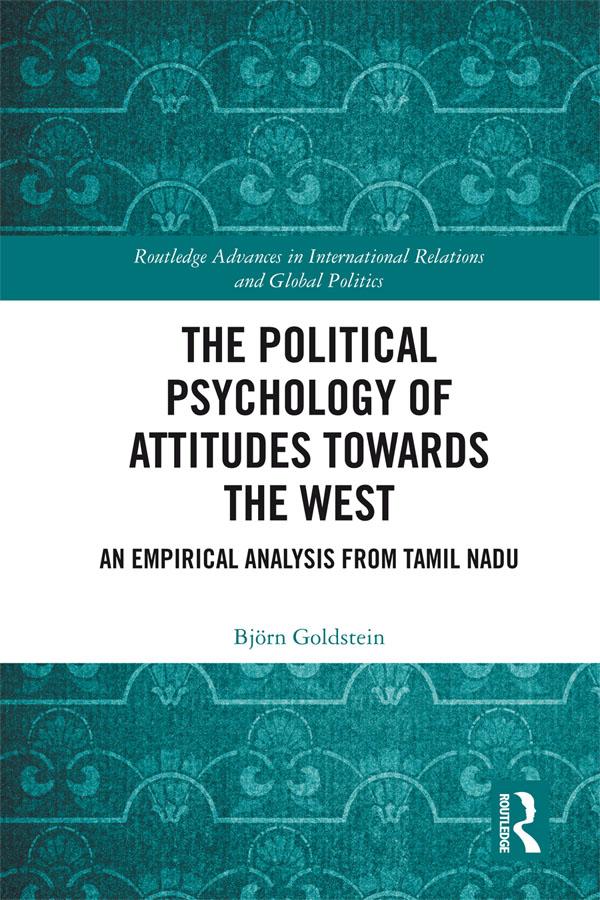
Why do some individuals from the imagined "non-West" view the "West" favorably and others do not?
Grounded in psychological authoritarianism and the psychological reactions to experiences of rejection, Björn Goldstein provides a theoretical model to explain and predict attitude toward the "West." Using accounts from high-ranking politicians from different socioeconomic groups in the Tamil Nadu region of India—a region independent from the often too "emotionalized" discourse regarding (political) Islam—Goldstein challenges the conventional narrative that the most important factors for attitude formation toward the West are experiences of disregard and oppression perpetrated by the West.
Far beyond the personal characteristics of individuals, differences in attitudes follow a regular pattern of variables influencing opinion and attitude formation toward the West in each society. Scoring high on authoritarianism predicts "anti-Western" attitudes far better than socio-economic status, cultural or moral concerns, or normative differences do.
Paga facilmente con carta, Klarna, Apple Pay o Google Pay. Non sei soddisfatto? Hai sempre 14 giorni per il rimborso. Leggi di più nei nostri termini. Per qualsiasi domanda, scrivici a hello@memmo.org.
Memmo rende lo studio più facile, ovunque tu sia nel mondo. Qui trovi i tuoi libri di testo e strumenti di studio intelligenti, tutto in un unico posto: riassunti, quiz, podcast e flashcard. E poi c'è Ted, il tuo compagno di studio che risponde a ogni tua domanda. Oltre 50.000 studenti studiano già qui: è stato creato per aiutarti a imparare più velocemente e a stressarti meno.