
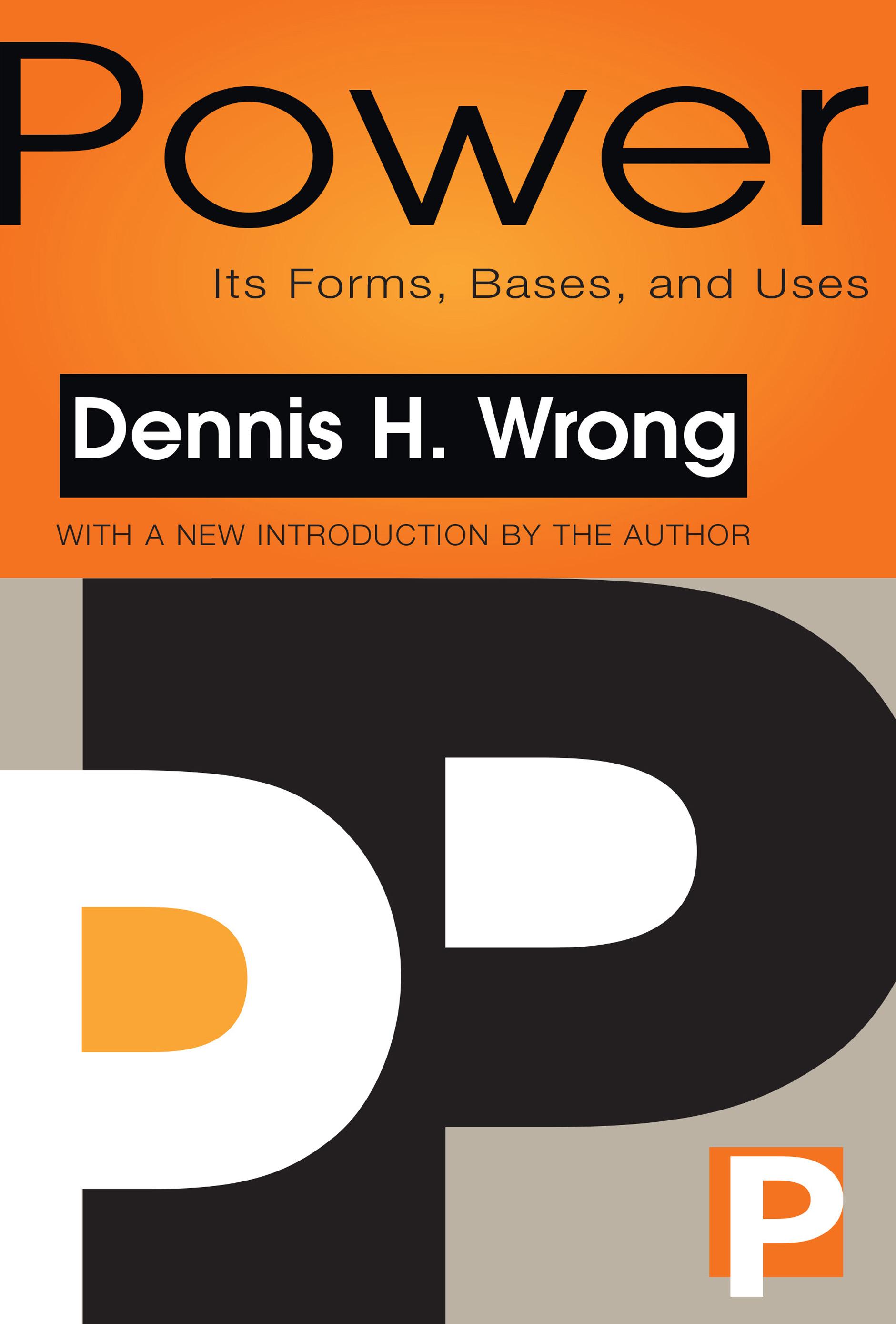
In one grand effort, this is an anatomy of power, a history of the ways in which it has been defined, and a study of its forms (force, manipulation, authority, and persuasion), its bases (individual and collective resources, political mobilization), and its uses. The issues that Dennis Wrong addresses range from the philosophical and ethical to the psychological and political. Much of the work is punctuated with careful examples from history. While the author illuminates his discussion with references to Weber, Marx, Freud, Plato, Dostoevsky, Orwell, Hobbes, Arendt, and Machiavelli, he keeps his arguments grounded in contemporary practical issues, such as class conflicts, multi-party politics, and parent-child relationships.
In his new introduction, prepared for the 1995 edition of Power, the author reconsiders the concept of power, now locating it in the broader traditions of the social sciences rather than as a series of actions and actors within the sociological tradition. As a result. Wrong emphasizes such major distinctions as "power over" and "power to," and various conflations of power as commonly used. The new opening provides the reader with a deeper appreciation of the non-reductionist character of the book as a whole.
Paga facilmente con carta, Klarna, Apple Pay o Google Pay. Non sei soddisfatto? Hai sempre 14 giorni per il rimborso. Leggi di più nei nostri termini. Per qualsiasi domanda, scrivici a hello@memmo.org.
Memmo rende lo studio più facile, ovunque tu sia nel mondo. Qui trovi i tuoi libri di testo e strumenti di studio intelligenti, tutto in un unico posto: riassunti, quiz, podcast e flashcard. E poi c'è Ted, il tuo compagno di studio che risponde a ogni tua domanda. Oltre 50.000 studenti studiano già qui: è stato creato per aiutarti a imparare più velocemente e a stressarti meno.