
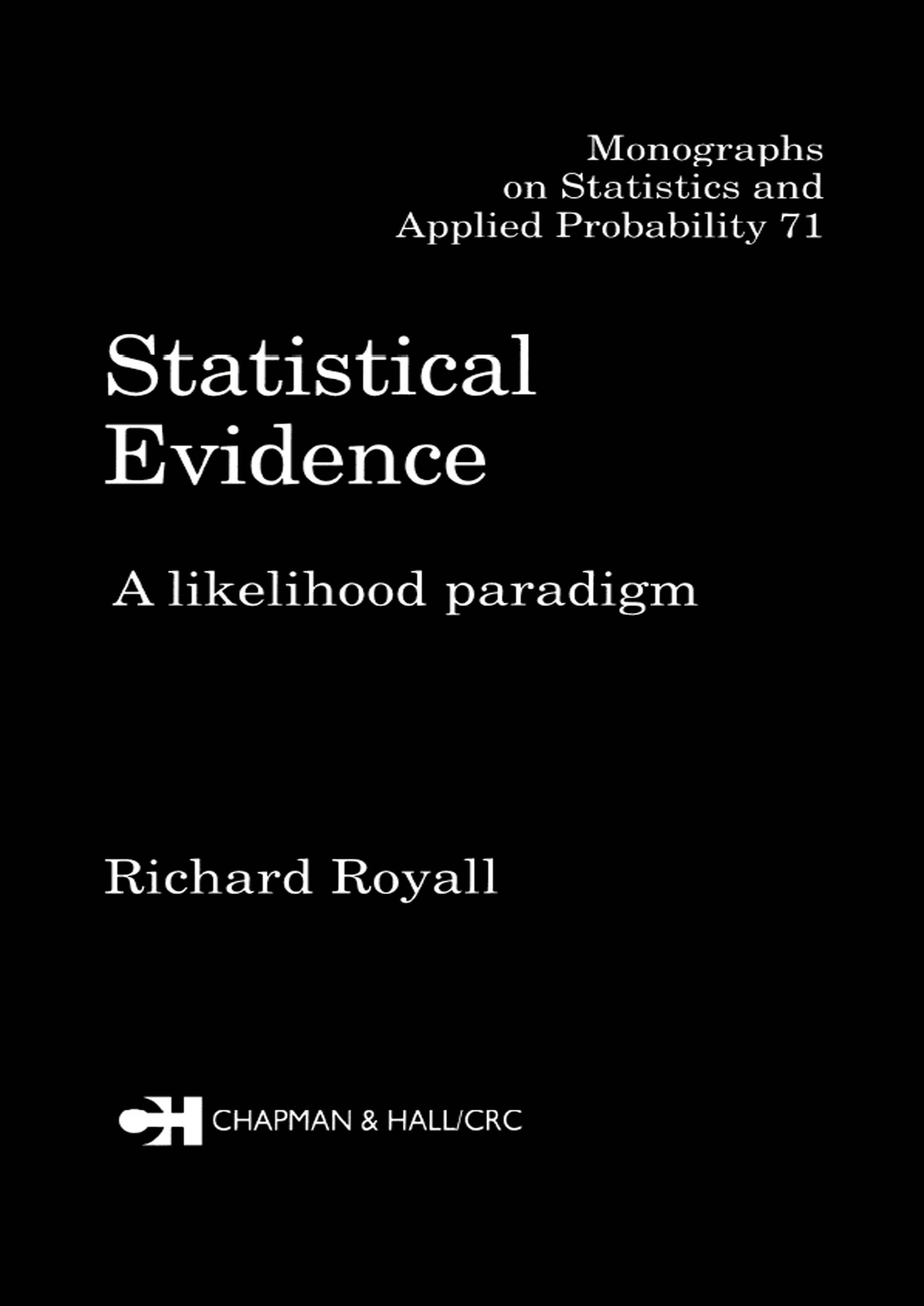
Interpreting statistical data as evidence, Statistical Evidence: A Likelihood Paradigm focuses on the law of likelihood, fundamental to solving many of the problems associated with interpreting data in this way. Statistics has long neglected this principle, resulting in a seriously defective methodology. This book redresses the balance, explaining why science has clung to a defective methodology despite its well-known defects. After examining the strengths and weaknesses of the work of Neyman and Pearson and the Fisher paradigm, the author proposes an alternative paradigm which provides, in the law of likelihood, the explicit concept of evidence missing from the other paradigms. At the same time, this new paradigm retains the elements of objective measurement and control of the frequency of misleading results, features which made the old paradigms so important to science. The likelihood paradigm leads to statistical methods that have a compelling rationale and an elegant simplicity, no longer forcing the reader to choose between frequentist and Bayesian statistics.
Paga facilmente con carta, Klarna, Apple Pay o Google Pay. Non sei soddisfatto? Hai sempre 14 giorni per il rimborso. Leggi di più nei nostri termini. Per qualsiasi domanda, scrivici a hello@memmo.org.
Memmo rende lo studio più facile, ovunque tu sia nel mondo. Qui trovi i tuoi libri di testo e strumenti di studio intelligenti, tutto in un unico posto: riassunti, quiz, podcast e flashcard. E poi c'è Ted, il tuo compagno di studio che risponde a ogni tua domanda. Oltre 50.000 studenti studiano già qui: è stato creato per aiutarti a imparare più velocemente e a stressarti meno.
Potrebbe interessarti anche
Acquista il libro0