
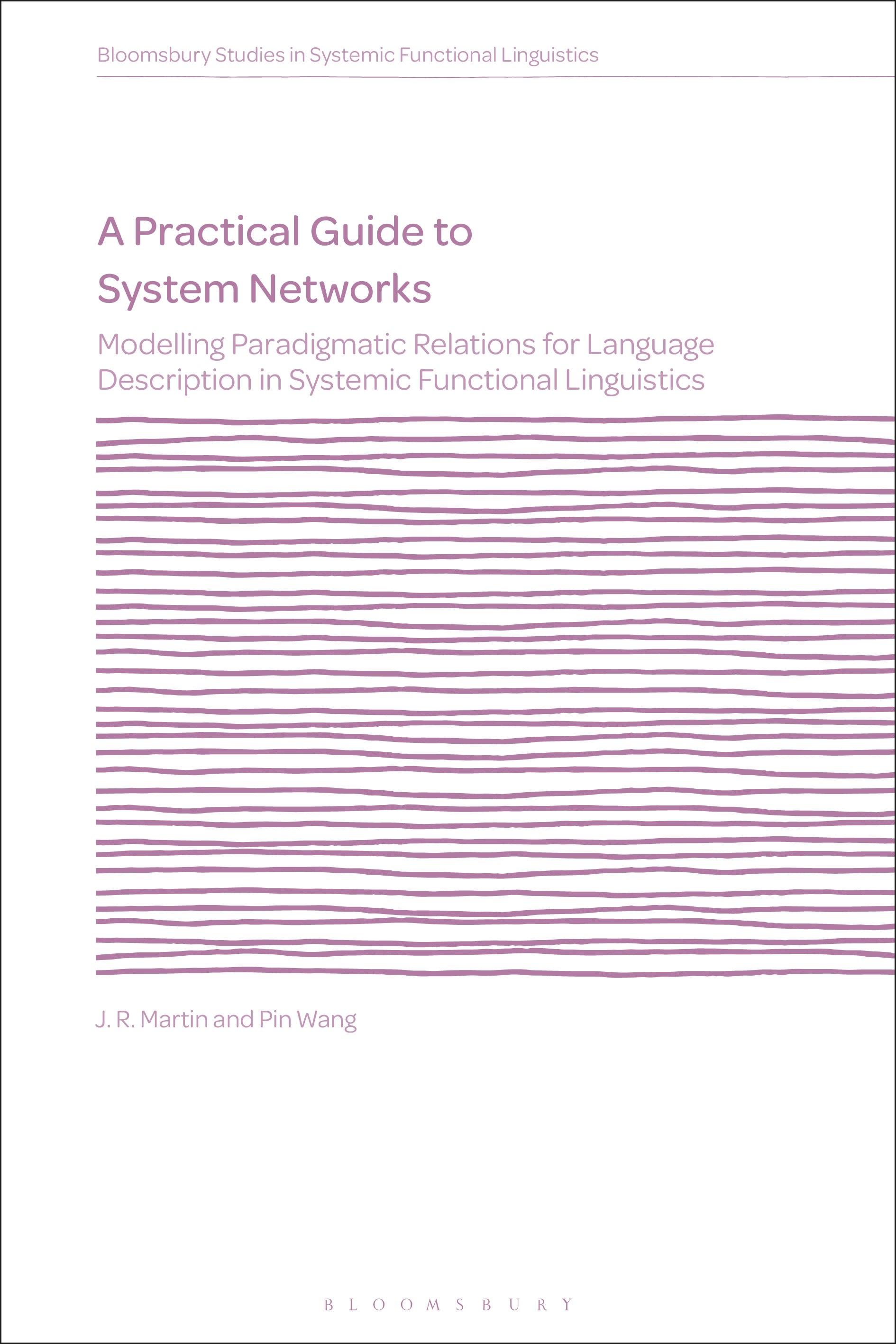
In Systemic Functional Linguistics (SFL), paradigmatic relations are formalised in system networks. This book provides a practical, step-by-step guide to designing system networks for language description, one of the key aspects of SFL theory and analysis.
Including examples from English, Chinese, Korean and Spanish, and exercises with answer keys for each of the main chapters, this book offers a broad coverage and guides learners through the process of designing system networks for the purpose of grammatical description in an accessible way.
Beginning with simple systems, the authors show how grammars involve a complex of relations, with some systems dependent on others and some working in parallel with simultaneous options. They introduce the reasoning involved in designing system networks, explaining how choices in grammatical systems are motivated in terms of their realisation in structure and how this relationship between the paradigmatic axis and the syntagmatic axis is formalised in SFL descriptions. In addition, the book helps readers to understand the theoretical architecture of SFL – including the dimensions of rank, metafunction and stratification.
With an introduction by Michael Alexander Kirkwood (M. A. K.) Halliday, who reviews the history of the development of his approach to system and structure and the use of system networks to formalise paradigmatic relations, this book is essential reading for all scholars of functional grammar and SFL. It will also appeal to researchers interested in theoretical linguistics from the perspective of the history of linguistics and different schools of linguistics.
Including examples from English, Chinese, Korean and Spanish, and exercises with answer keys for each of the main chapters, this book offers a broad coverage and guides learners through the process of designing system networks for the purpose of grammatical description in an accessible way.
Beginning with simple systems, the authors show how grammars involve a complex of relations, with some systems dependent on others and some working in parallel with simultaneous options. They introduce the reasoning involved in designing system networks, explaining how choices in grammatical systems are motivated in terms of their realisation in structure and how this relationship between the paradigmatic axis and the syntagmatic axis is formalised in SFL descriptions. In addition, the book helps readers to understand the theoretical architecture of SFL – including the dimensions of rank, metafunction and stratification.
With an introduction by Michael Alexander Kirkwood (M. A. K.) Halliday, who reviews the history of the development of his approach to system and structure and the use of system networks to formalise paradigmatic relations, this book is essential reading for all scholars of functional grammar and SFL. It will also appeal to researchers interested in theoretical linguistics from the perspective of the history of linguistics and different schools of linguistics.
Paga facilmente con carta, Klarna, Apple Pay o Google Pay. Non sei soddisfatto? Hai sempre 14 giorni per il rimborso. Leggi di più nei nostri termini. Per qualsiasi domanda, scrivici a hello@memmo.org.
Memmo rende lo studio più facile, ovunque tu sia nel mondo. Qui trovi i tuoi libri di testo e strumenti di studio intelligenti, tutto in un unico posto: riassunti, quiz, podcast e flashcard. E poi c'è Ted, il tuo compagno di studio che risponde a ogni tua domanda. Oltre 50.000 studenti studiano già qui: è stato creato per aiutarti a imparare più velocemente e a stressarti meno.