
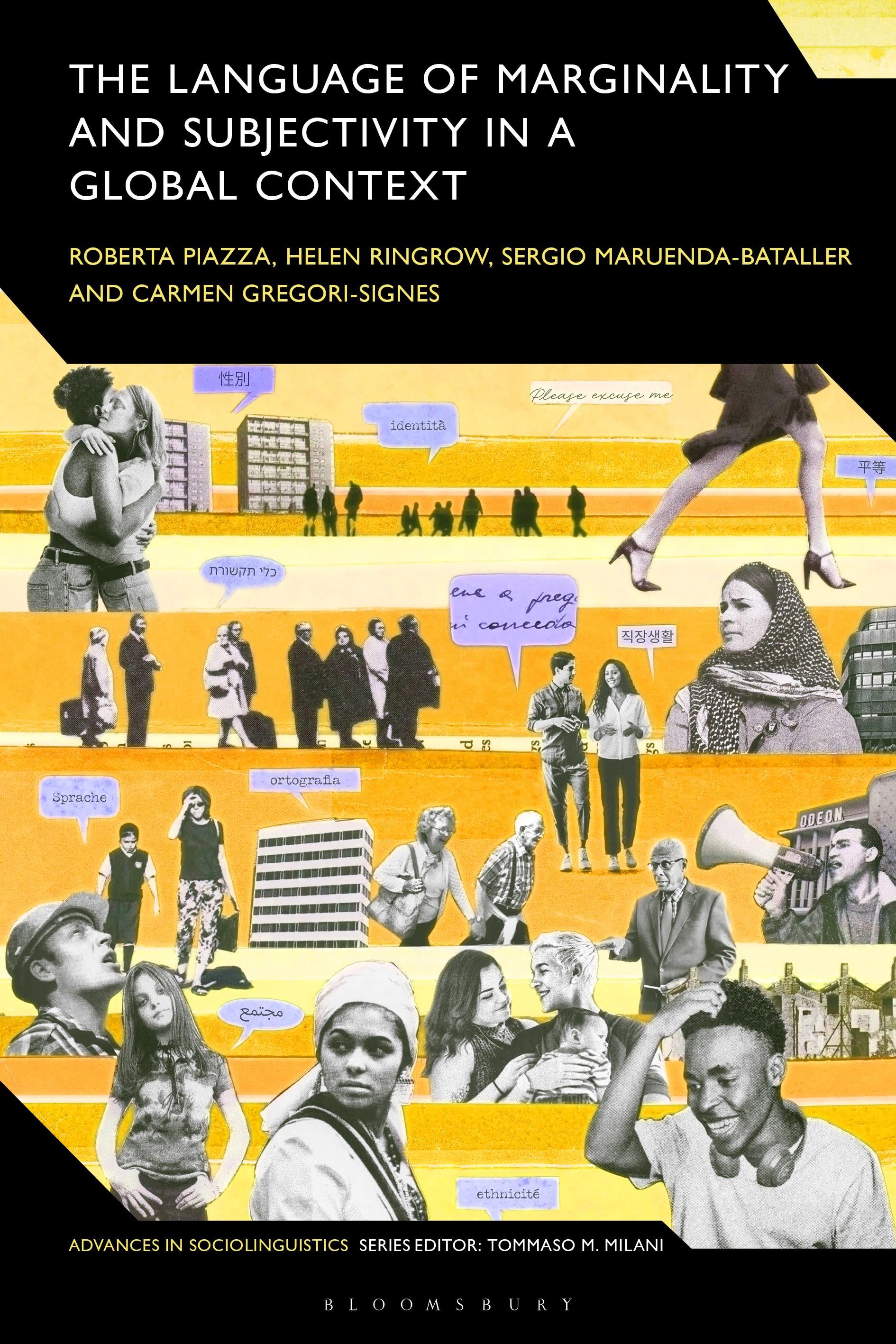
This book expands and deepens the investigation of the language associated with or produced by groups that are socially, culturally, racially and economically outliers and whose marginalisation results in a different engagement with and participation in mainstream society's activities.
It features case studies from across the globe, including Ghana, Norway, Poland, Saudi Arabia, South Africa and Zambia, addressing the construction (and self-construction) of marginalisation and diversity in discourse and society, bringing to light many unheard and hidden voices and perspectives. The 14 chapters explore a wide range of forms of marginalisation and diversity as global issues that have an impact on societies worldwide, in terms of exclusion in the guise of non-participation in mainstream society's activities and contestation in different international contexts.
The contributions in the book capture how vulnerable individuals and groups occupying the in-between spaces of marginality navigate through them and construct themselves as dissenting and diverse; how they are aware of their condition at a certain point in time and how they are able to reflect resourcefully on it. Aspiration to a safe place away from the street for individuals at risk of rough sleeping can find an echo in the desire to escape the oppression of a despotic regime that limits Saudi women's freedom. On the contrary, cases of negative self-exclusion are exemplified by the language of Men's Rights Activists who, critical of society's oppression of men, engage in a condemnation of women and feminism. In both cases, there is a conflict between periphery of society and mainstream, although the language of the excluded still engages with the hegemonic society in a form of intrinsic contestation.
It features case studies from across the globe, including Ghana, Norway, Poland, Saudi Arabia, South Africa and Zambia, addressing the construction (and self-construction) of marginalisation and diversity in discourse and society, bringing to light many unheard and hidden voices and perspectives. The 14 chapters explore a wide range of forms of marginalisation and diversity as global issues that have an impact on societies worldwide, in terms of exclusion in the guise of non-participation in mainstream society's activities and contestation in different international contexts.
The contributions in the book capture how vulnerable individuals and groups occupying the in-between spaces of marginality navigate through them and construct themselves as dissenting and diverse; how they are aware of their condition at a certain point in time and how they are able to reflect resourcefully on it. Aspiration to a safe place away from the street for individuals at risk of rough sleeping can find an echo in the desire to escape the oppression of a despotic regime that limits Saudi women's freedom. On the contrary, cases of negative self-exclusion are exemplified by the language of Men's Rights Activists who, critical of society's oppression of men, engage in a condemnation of women and feminism. In both cases, there is a conflict between periphery of society and mainstream, although the language of the excluded still engages with the hegemonic society in a form of intrinsic contestation.
Paga facilmente con carta, Klarna, Apple Pay o Google Pay. Non sei soddisfatto? Hai sempre 14 giorni per il rimborso. Leggi di più nei nostri termini. Per qualsiasi domanda, scrivici a hello@memmo.org.
Memmo rende lo studio più facile, ovunque tu sia nel mondo. Qui trovi i tuoi libri di testo e strumenti di studio intelligenti, tutto in un unico posto: riassunti, quiz, podcast e flashcard. E poi c'è Ted, il tuo compagno di studio che risponde a ogni tua domanda. Oltre 50.000 studenti studiano già qui: è stato creato per aiutarti a imparare più velocemente e a stressarti meno.