
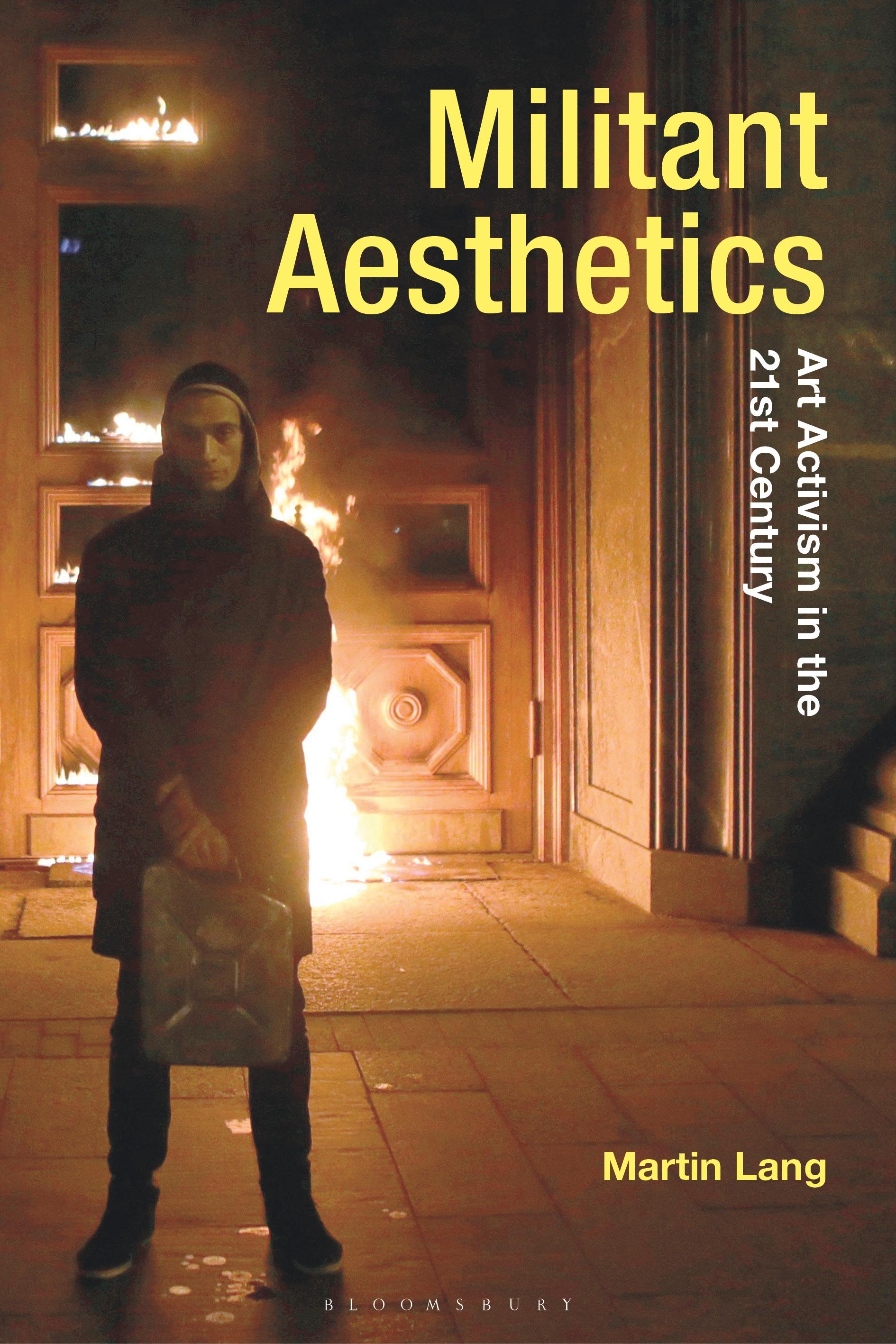
In 2008 an Iraqi artist was waterboarded as performance art. In 2010 artists upturned police cars in Russia. But what exactly do we mean by militant art and aesthetics? Bringing together the philosophy of art and politics, Martin Lang provides a comprehensive examination of militant art activism: its history, its advocates and the aesthetic theory behind it.
Protest art is not a new concept and yet this book argues that after the terrorist attacks of 9/11 distinctly 21st-century forms of art activism emerged. On the one hand these became militant as artists retained belief in the possibility of radical political change through art. On the other hand, this belief developed in a hostile environment, when anti-terror legislations reclassified activists and artists as terrorists.
Through first-hand interviews and experiences, Militant Aesthetics sheds light on numerous international case studies of modern art activism and the different ways they can be classified as militant. Many artists and collectives, including Grupo Etcétera in Buenos Aries, are prepared to break the law and risk arrest for their art. Others like Thomas Bresolin's Militant Training Camp utilise military uniforms in violent performances that connect with public anger, and artists such as Zthoven in the Czech Republic occupy, hack, antagonise and disrupt in increasingly militant ways.
Combining these examples with the pioneering thought of Badiou, Žižek, Rancière and Mouffe, as well as up-to-date scholarship from Bishop, Léger and others, Lang investigates the instances, attributes and rules of militant art in order to introduce a new overall theory of 21st-century militant aesthetics.
Protest art is not a new concept and yet this book argues that after the terrorist attacks of 9/11 distinctly 21st-century forms of art activism emerged. On the one hand these became militant as artists retained belief in the possibility of radical political change through art. On the other hand, this belief developed in a hostile environment, when anti-terror legislations reclassified activists and artists as terrorists.
Through first-hand interviews and experiences, Militant Aesthetics sheds light on numerous international case studies of modern art activism and the different ways they can be classified as militant. Many artists and collectives, including Grupo Etcétera in Buenos Aries, are prepared to break the law and risk arrest for their art. Others like Thomas Bresolin's Militant Training Camp utilise military uniforms in violent performances that connect with public anger, and artists such as Zthoven in the Czech Republic occupy, hack, antagonise and disrupt in increasingly militant ways.
Combining these examples with the pioneering thought of Badiou, Žižek, Rancière and Mouffe, as well as up-to-date scholarship from Bishop, Léger and others, Lang investigates the instances, attributes and rules of militant art in order to introduce a new overall theory of 21st-century militant aesthetics.
Paga facilmente con carta, Klarna, Apple Pay o Google Pay. Non sei soddisfatto? Hai sempre 14 giorni per il rimborso. Leggi di più nei nostri termini. Per qualsiasi domanda, scrivici a hello@memmo.org.
Memmo rende lo studio più facile, ovunque tu sia nel mondo. Qui trovi i tuoi libri di testo e strumenti di studio intelligenti, tutto in un unico posto: riassunti, quiz, podcast e flashcard. E poi c'è Ted, il tuo compagno di studio che risponde a ogni tua domanda. Oltre 50.000 studenti studiano già qui: è stato creato per aiutarti a imparare più velocemente e a stressarti meno.