
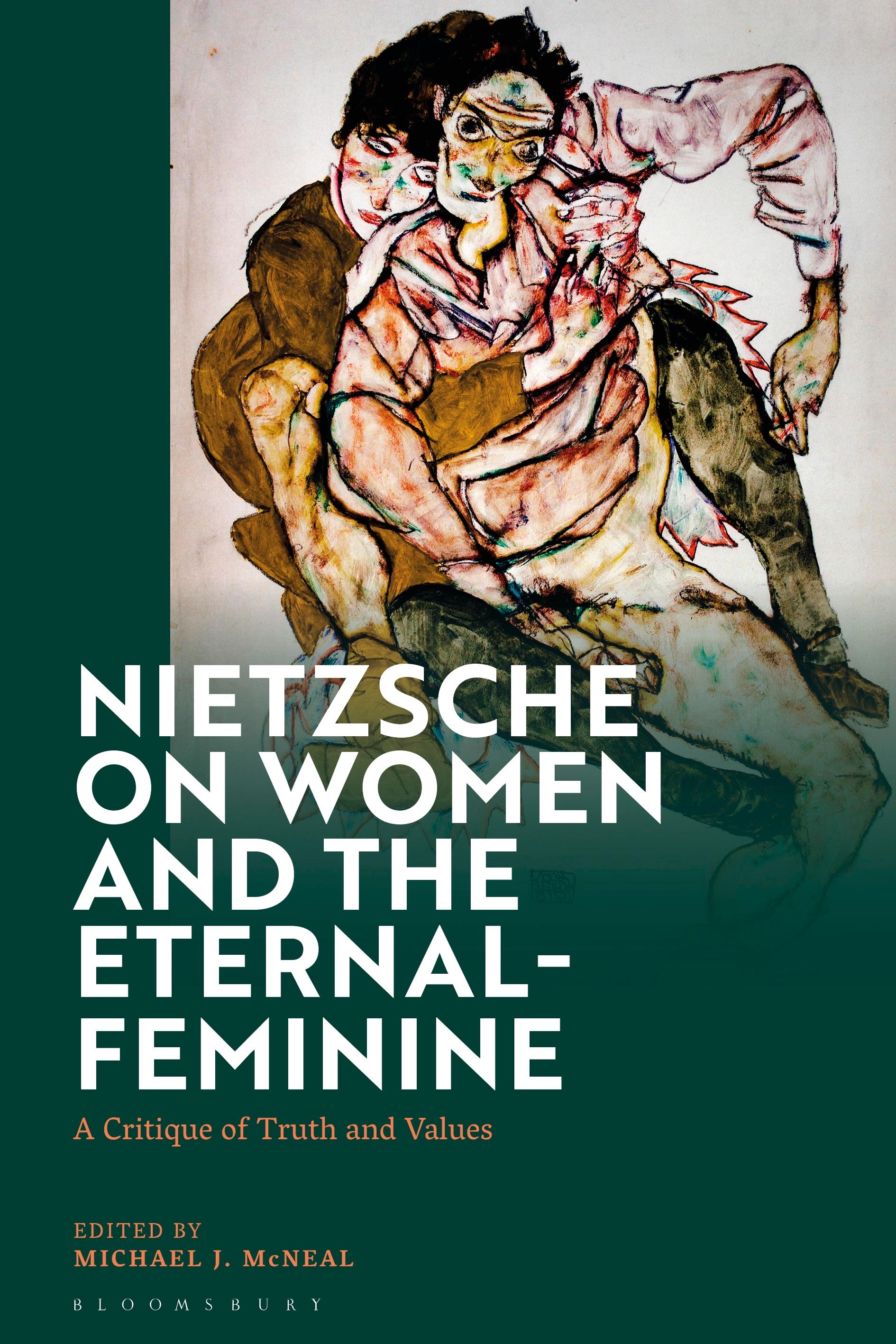
By re-examining Nietzsche's notion of the “eternal-feminine” and his views on women and feminism, this volume offers new perspectives on some of his key ideas. It brings together a diverse group of scholars to critically engage with Nietzsche's use of late-19th-century gender stereotypes and the ways in which they served his critique of values, including his use of “woman” as a trope for truth.
Among other subjects, the contributors consider the role of psychology in Nietzsche's thought, his concern with style, self-creation, and advocacy of perfectionism, his views on romantic love and marriage, and his aim of revaluing all values to instigate a distant philosophy of the future. They investigate parallels between Nietzsche's thought and Shaktism, his relation to Goethe and Stendahl, and his influence on Beauvoir, Butler, and Dohm. With the inclusion of two seminal essays on Nietzsche and women by Lawrence J. Hatab and Kelly Oliver, the volume also illustrates some of the ways in which scholarship on these subjects has evolved over the last four decades.
Providing fresh insights into these inter-related subjects, Nietzsche on Women and the Eternal-Feminine highlights the enduring relevance of his thought and its still-underappreciated potential for re-thinking both the bases for and aims of feminism and other emancipatory movements.
Among other subjects, the contributors consider the role of psychology in Nietzsche's thought, his concern with style, self-creation, and advocacy of perfectionism, his views on romantic love and marriage, and his aim of revaluing all values to instigate a distant philosophy of the future. They investigate parallels between Nietzsche's thought and Shaktism, his relation to Goethe and Stendahl, and his influence on Beauvoir, Butler, and Dohm. With the inclusion of two seminal essays on Nietzsche and women by Lawrence J. Hatab and Kelly Oliver, the volume also illustrates some of the ways in which scholarship on these subjects has evolved over the last four decades.
Providing fresh insights into these inter-related subjects, Nietzsche on Women and the Eternal-Feminine highlights the enduring relevance of his thought and its still-underappreciated potential for re-thinking both the bases for and aims of feminism and other emancipatory movements.
Paga facilmente con carta, Klarna, Apple Pay o Google Pay. Non sei soddisfatto? Hai sempre 14 giorni per il rimborso. Leggi di più nei nostri termini. Per qualsiasi domanda, scrivici a hello@memmo.org.
Memmo rende lo studio più facile, ovunque tu sia nel mondo. Qui trovi i tuoi libri di testo e strumenti di studio intelligenti, tutto in un unico posto: riassunti, quiz, podcast e flashcard. E poi c'è Ted, il tuo compagno di studio che risponde a ogni tua domanda. Oltre 50.000 studenti studiano già qui: è stato creato per aiutarti a imparare più velocemente e a stressarti meno.