
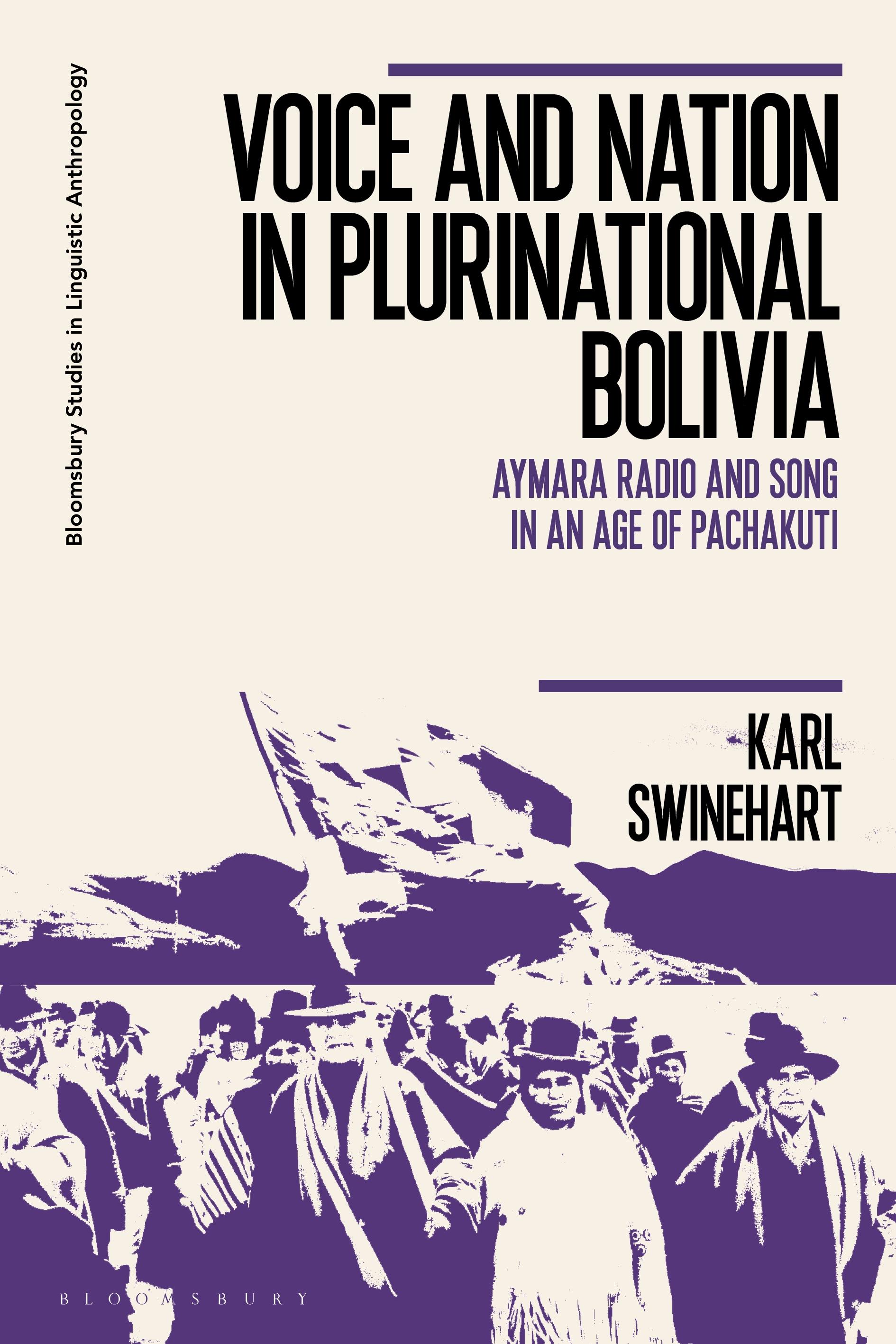
This book offers ethnographic accounts of Aymara language media activism in Bolivia during the presidency of Evo Morales (2006–2019). It draws on research conducted among Aymara language radio broadcasters, hip hop artists, and community members during a period of radical social change and Indigenous political resurgence (pachakuti) in South America's most Indigenous republic.
The Plurinational Republic of Bolivia counts Aymara among its official languages, but Aymara's social status and transmission to newer generations raise concerns about whether, despite being one of the most widely spoken Indigenous languages of the Americas, the threat of language obsolescence persists. This ethnographic account of Indigenous language activism shows how Aymara media and cultural workers combat this threat by making the language audible in diverse corners of Aymara life and examines the role Indigenous multilingualism plays in Bolivian politics. Through interviews and analysis of Aymara media texts, this study shows how language professionals determine how “the voice of the people” should sound. By introducing neologisms and archaicisms to avoid mixing Aymara with Spanish, Aymara language professionals disseminate a register of dehispanicized Aymara over the airwaves. The study reveals how these language professionals approach cultivating Aymara as more than a question of linguistic competence, but also of political commitment and anti-racist practice.
Organized into two sections, one on radio and one on song, and including clear explanations and illustrations of key concepts in linguistic anthropology, this book listens to Aymara language advocacy from devout Catholics, union militants, and hip hop artists and fans, who hear in their language both the past and the future of Bolivia's Aymaras.
The Plurinational Republic of Bolivia counts Aymara among its official languages, but Aymara's social status and transmission to newer generations raise concerns about whether, despite being one of the most widely spoken Indigenous languages of the Americas, the threat of language obsolescence persists. This ethnographic account of Indigenous language activism shows how Aymara media and cultural workers combat this threat by making the language audible in diverse corners of Aymara life and examines the role Indigenous multilingualism plays in Bolivian politics. Through interviews and analysis of Aymara media texts, this study shows how language professionals determine how “the voice of the people” should sound. By introducing neologisms and archaicisms to avoid mixing Aymara with Spanish, Aymara language professionals disseminate a register of dehispanicized Aymara over the airwaves. The study reveals how these language professionals approach cultivating Aymara as more than a question of linguistic competence, but also of political commitment and anti-racist practice.
Organized into two sections, one on radio and one on song, and including clear explanations and illustrations of key concepts in linguistic anthropology, this book listens to Aymara language advocacy from devout Catholics, union militants, and hip hop artists and fans, who hear in their language both the past and the future of Bolivia's Aymaras.
Paga facilmente con carta, Klarna, Apple Pay o Google Pay. Non sei soddisfatto? Hai sempre 14 giorni per il rimborso. Leggi di più nei nostri termini. Per qualsiasi domanda, scrivici a hello@memmo.org.
Memmo rende lo studio più facile, ovunque tu sia nel mondo. Qui trovi i tuoi libri di testo e strumenti di studio intelligenti, tutto in un unico posto: riassunti, quiz, podcast e flashcard. E poi c'è Ted, il tuo compagno di studio che risponde a ogni tua domanda. Oltre 50.000 studenti studiano già qui: è stato creato per aiutarti a imparare più velocemente e a stressarti meno.