
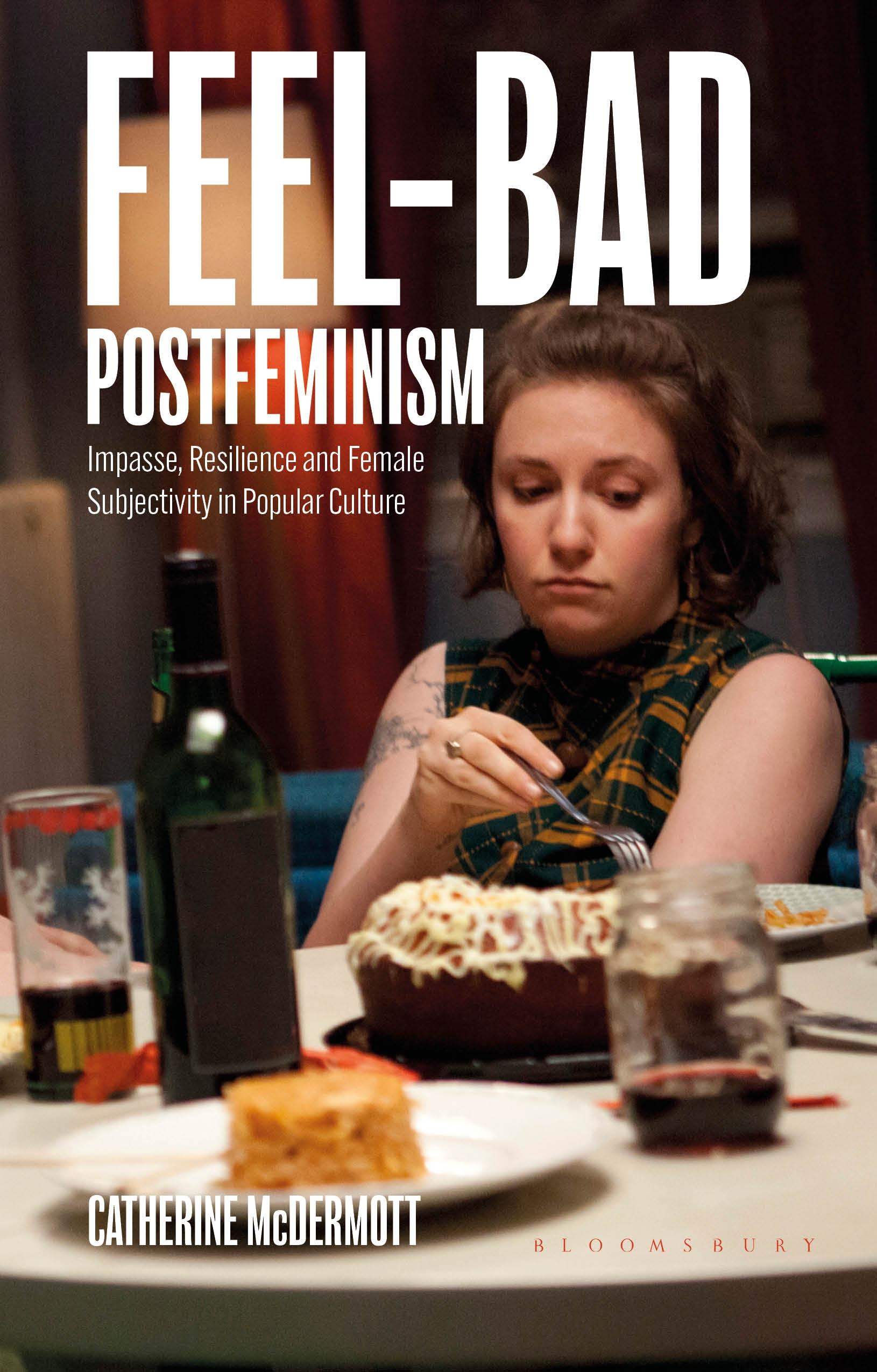
In Feel-Bad Postfeminism, Catherine McDermott provides crucial insight into what growing up during empowerment postfeminism feels like, and outlines the continuing postfeminist legacy of resilience in girlhood coming-of-age narratives.
McDermott's analysis of Gone Girl (2012), Girls (2012–2017) and Appropriate Behaviour (2012) illuminates a major cultural turn in which the pleasures of postfeminist empowerment curdle into a profound sense of rage and resentment. By contrast, close examination of The Hunger Games (2008–2010), Girlhood (2014) and Catch Me Daddy (2014) reveals that contemporary genres are increasingly constructing girls as uniquely capable of resiliently overcoming and adapting to unforgiving social conditions.
She develops an affective vocabulary to better understand contemporary modes of defiant, transformative and relational resilience, as well as a framework through which to expand on further modes that are specific to the genres they emerge within. Overall, the book suggests that exploration of the affective dimensions of girls' and women's culture can offer new insights into how coming-of-age, girlhood and femininity are culturally produced in the aftermath of postfeminism.
McDermott's analysis of Gone Girl (2012), Girls (2012–2017) and Appropriate Behaviour (2012) illuminates a major cultural turn in which the pleasures of postfeminist empowerment curdle into a profound sense of rage and resentment. By contrast, close examination of The Hunger Games (2008–2010), Girlhood (2014) and Catch Me Daddy (2014) reveals that contemporary genres are increasingly constructing girls as uniquely capable of resiliently overcoming and adapting to unforgiving social conditions.
She develops an affective vocabulary to better understand contemporary modes of defiant, transformative and relational resilience, as well as a framework through which to expand on further modes that are specific to the genres they emerge within. Overall, the book suggests that exploration of the affective dimensions of girls' and women's culture can offer new insights into how coming-of-age, girlhood and femininity are culturally produced in the aftermath of postfeminism.
Paga facilmente con carta, Klarna, Apple Pay o Google Pay. Non sei soddisfatto? Hai sempre 14 giorni per il rimborso. Leggi di più nei nostri termini. Per qualsiasi domanda, scrivici a hello@memmo.org.
Memmo rende lo studio più facile, ovunque tu sia nel mondo. Qui trovi i tuoi libri di testo e strumenti di studio intelligenti, tutto in un unico posto: riassunti, quiz, podcast e flashcard. E poi c'è Ted, il tuo compagno di studio che risponde a ogni tua domanda. Oltre 50.000 studenti studiano già qui: è stato creato per aiutarti a imparare più velocemente e a stressarti meno.