
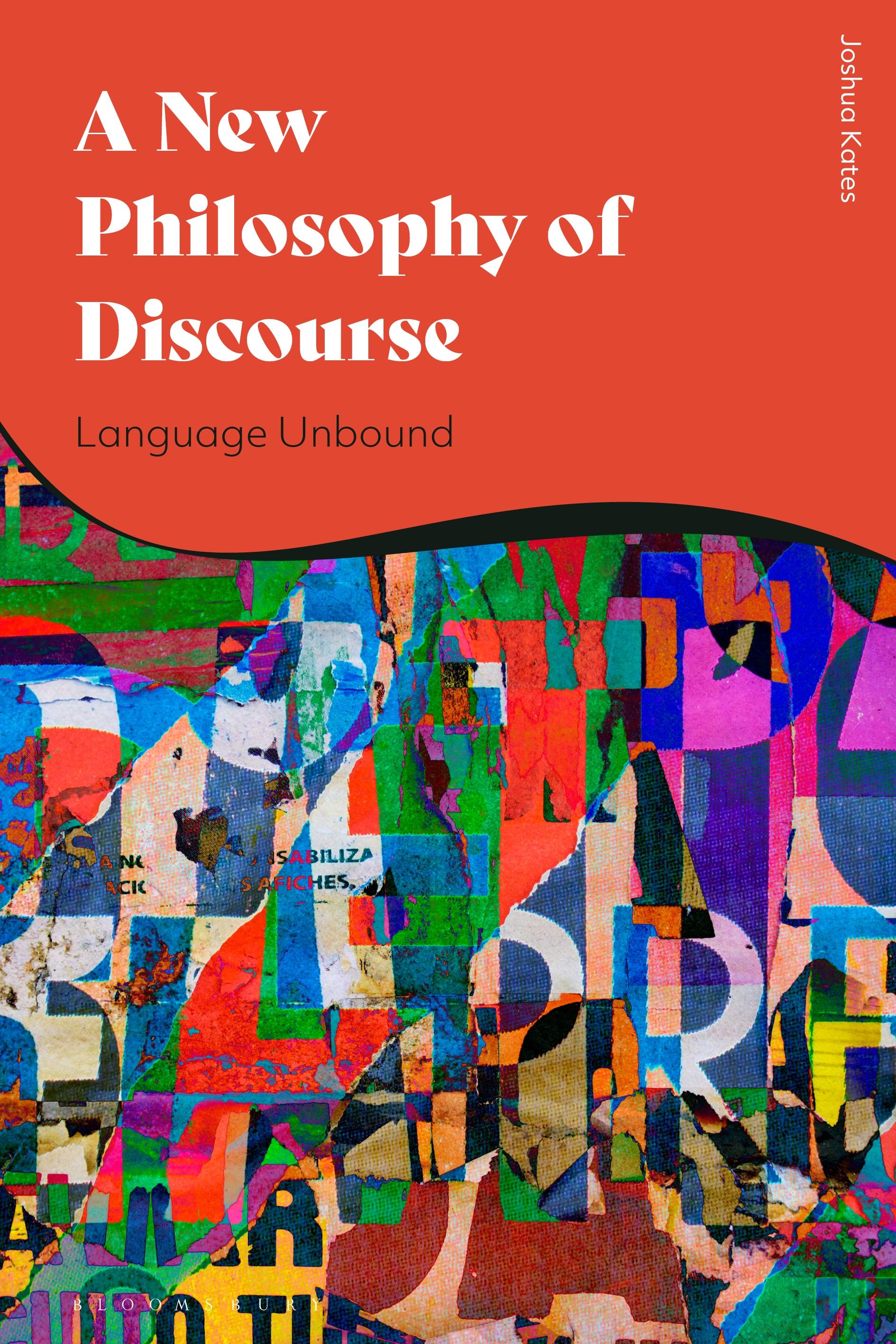
What would happen if structures, forms, and other stand-alone entities thought to comprise our intellectual toolkit-words, meanings, signs-were jettisoned? How would a work written in a purportedly dead language, like The Iliad, or penned in a foreign tongue be approached if deemed legible without structures such as meaning-bearing signs or grammatical rules?
A New Philosophy of Discourse charts a novel course in response to these questions, coining an original concept of discourse, or talk!, that Joshua Kates presents as more fundamental than language. In Kates' conception of discourse, writing and speech take shape entirely as events, situated within histories, contexts, and traditions themselves always in the making. Combining literary theory, literary criticism, and philosophy, to reveal a new perspective on discourse, Kates focuses on literary criticism, literary texts by Charles Bernstein and Stanley Elkin, and the philosophical writings of Stanley Cavell, Hans-Georg Gadamer, Donald Davidson and Martin Heidegger.
This ground-breaking study bridges the analytical/continental divide, by working through concrete problems using novel and extended interpretations with wide-ranging implications for the humanities.
A New Philosophy of Discourse charts a novel course in response to these questions, coining an original concept of discourse, or talk!, that Joshua Kates presents as more fundamental than language. In Kates' conception of discourse, writing and speech take shape entirely as events, situated within histories, contexts, and traditions themselves always in the making. Combining literary theory, literary criticism, and philosophy, to reveal a new perspective on discourse, Kates focuses on literary criticism, literary texts by Charles Bernstein and Stanley Elkin, and the philosophical writings of Stanley Cavell, Hans-Georg Gadamer, Donald Davidson and Martin Heidegger.
This ground-breaking study bridges the analytical/continental divide, by working through concrete problems using novel and extended interpretations with wide-ranging implications for the humanities.
Paga facilmente con carta, Klarna, Apple Pay o Google Pay. Non sei soddisfatto? Hai sempre 14 giorni per il rimborso. Leggi di più nei nostri termini. Per qualsiasi domanda, scrivici a hello@memmo.org.
Memmo rende lo studio più facile, ovunque tu sia nel mondo. Qui trovi i tuoi libri di testo e strumenti di studio intelligenti, tutto in un unico posto: riassunti, quiz, podcast e flashcard. E poi c'è Ted, il tuo compagno di studio che risponde a ogni tua domanda. Oltre 50.000 studenti studiano già qui: è stato creato per aiutarti a imparare più velocemente e a stressarti meno.