
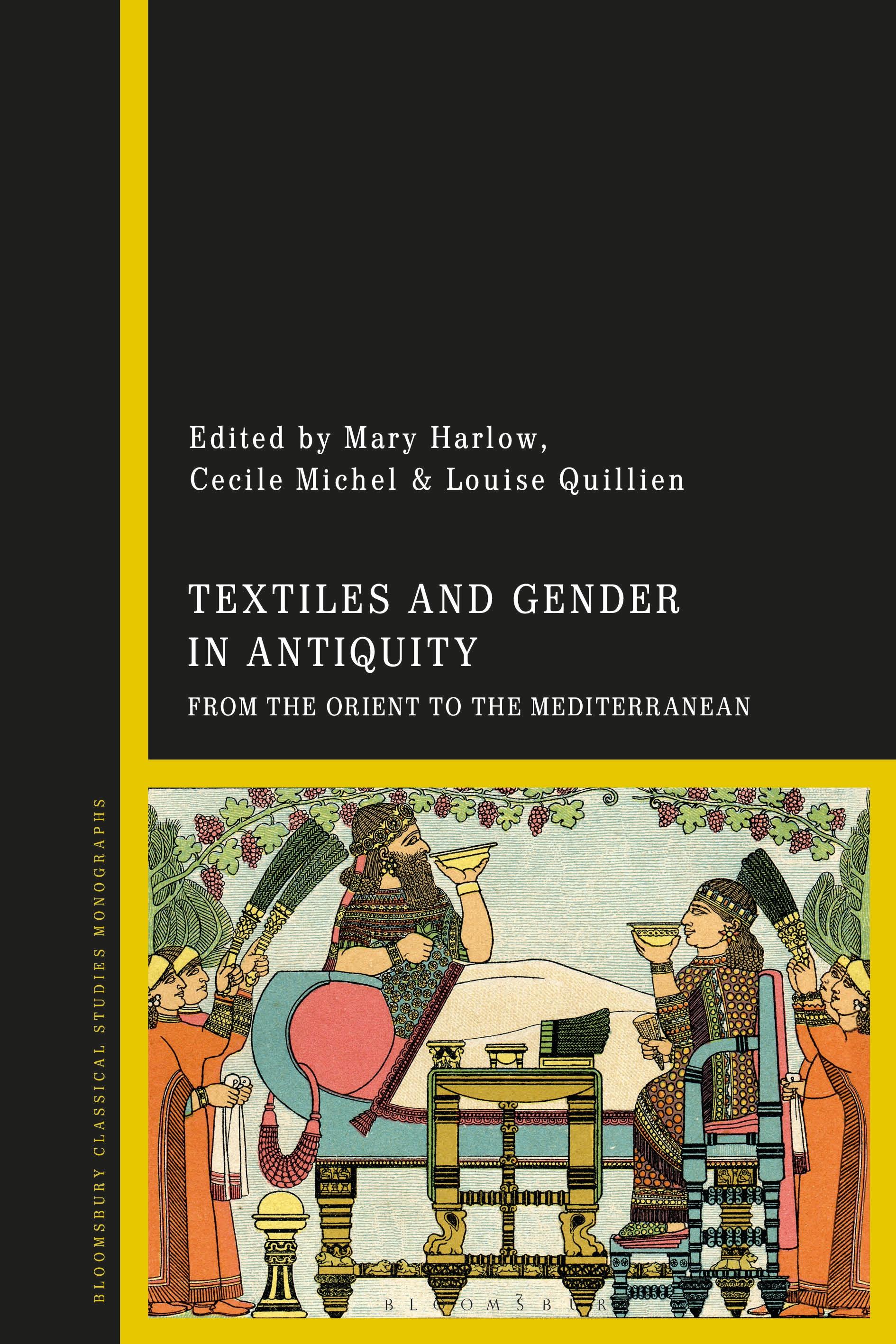
This volume looks at how the issues of textiles and gender intertwine across three millennia in antiquity and examines continuities and differences across time and space – with surprising resonances for the modern world. The interplay of gender, identity, textile production and use is notable on many levels, from the question of who was involved in the transformation of raw materials into fabric at one end, to the wearing of garments and the construction of identity at the other.
Textile production has often been considered to follow a linear trajectory from a domestic (female) activity to a more 'commercial' or 'industrial' (male-centred) mode of production. In reality, many modes of production co-existed and the making of textiles is not so easily grafted onto the labour of one sex or the other. Similarly, textiles once transformed into garments are often of 'unisex' shape but worn to express the gender of the wearer.
As shown by the detailed textual source material and the rich illustrations in this volume, dress and gender are intimately linked in the visual and written records of antiquity. The contributors show how it is common practice in both art and literature not only to use particular garments to characterize one sex or the other, but also to undermine characterizations by suggesting that they display features usually associated with the opposite gender.
Textile production has often been considered to follow a linear trajectory from a domestic (female) activity to a more 'commercial' or 'industrial' (male-centred) mode of production. In reality, many modes of production co-existed and the making of textiles is not so easily grafted onto the labour of one sex or the other. Similarly, textiles once transformed into garments are often of 'unisex' shape but worn to express the gender of the wearer.
As shown by the detailed textual source material and the rich illustrations in this volume, dress and gender are intimately linked in the visual and written records of antiquity. The contributors show how it is common practice in both art and literature not only to use particular garments to characterize one sex or the other, but also to undermine characterizations by suggesting that they display features usually associated with the opposite gender.
Paga facilmente con carta, Klarna, Apple Pay o Google Pay. Non sei soddisfatto? Hai sempre 14 giorni per il rimborso. Leggi di più nei nostri termini. Per qualsiasi domanda, scrivici a hello@memmo.org.
Memmo rende lo studio più facile, ovunque tu sia nel mondo. Qui trovi i tuoi libri di testo e strumenti di studio intelligenti, tutto in un unico posto: riassunti, quiz, podcast e flashcard. E poi c'è Ted, il tuo compagno di studio che risponde a ogni tua domanda. Oltre 50.000 studenti studiano già qui: è stato creato per aiutarti a imparare più velocemente e a stressarti meno.