
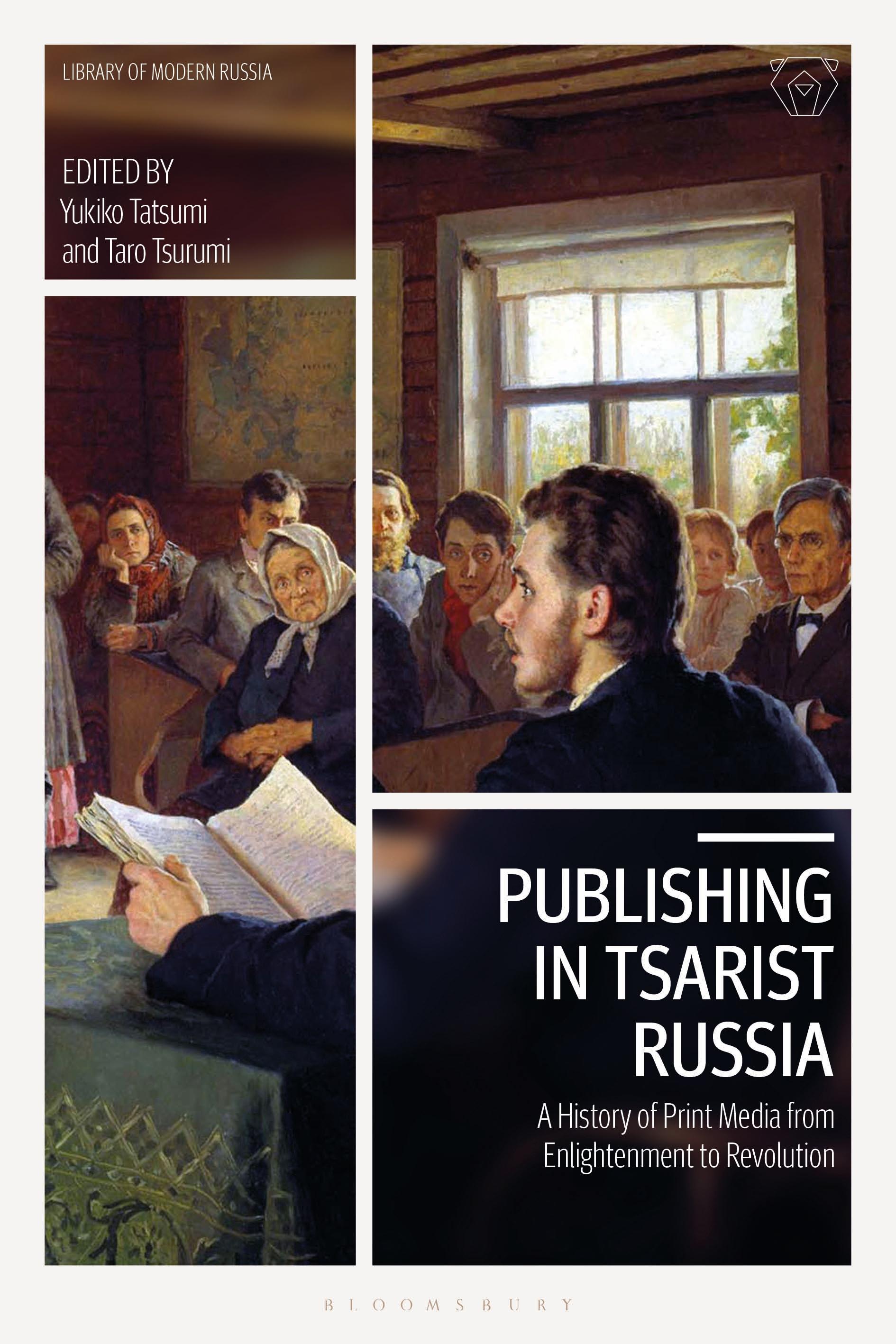
According to Benedict Anderson, the rapid expansion of print media during the late-1700s popularised national history and standardised national languages, thus helping create nation-states and national identities at the expense of the old empires. Publishing in Tsarist Russia challenges this theory and, by examining the history of Russian publishing through a transnational lens, reveals how the popular press played an important and complex Imperial role, while providing a “soft infrastructure” which the subjects could access to change Imperial order.
As this volume convincingly argues, this is because the Russian language at this time was a lingua franca; it crossed borders and boundaries, reaching speakers of varying nationalities. Russian publications, then, were able to effectively operate within the structure of Imperialism but as a public space, they went beyond the control of the Tsar and ethnic Russians.
This exciting international team of scholars provide a much-needed, fresh take on the history of Russian publishing and contribute significantly to our understanding of print media, language and empire from the 18th to 20th centuries. Publishing in Tsarist Russia is therefore a vital resource for scholars of Russian history, comparative nationalism, and publishing studies.
As this volume convincingly argues, this is because the Russian language at this time was a lingua franca; it crossed borders and boundaries, reaching speakers of varying nationalities. Russian publications, then, were able to effectively operate within the structure of Imperialism but as a public space, they went beyond the control of the Tsar and ethnic Russians.
This exciting international team of scholars provide a much-needed, fresh take on the history of Russian publishing and contribute significantly to our understanding of print media, language and empire from the 18th to 20th centuries. Publishing in Tsarist Russia is therefore a vital resource for scholars of Russian history, comparative nationalism, and publishing studies.
Paga facilmente con carta, Klarna, Apple Pay o Google Pay. Non sei soddisfatto? Hai sempre 14 giorni per il rimborso. Leggi di più nei nostri termini. Per qualsiasi domanda, scrivici a hello@memmo.org.
Memmo rende lo studio più facile, ovunque tu sia nel mondo. Qui trovi i tuoi libri di testo e strumenti di studio intelligenti, tutto in un unico posto: riassunti, quiz, podcast e flashcard. E poi c'è Ted, il tuo compagno di studio che risponde a ogni tua domanda. Oltre 50.000 studenti studiano già qui: è stato creato per aiutarti a imparare più velocemente e a stressarti meno.