
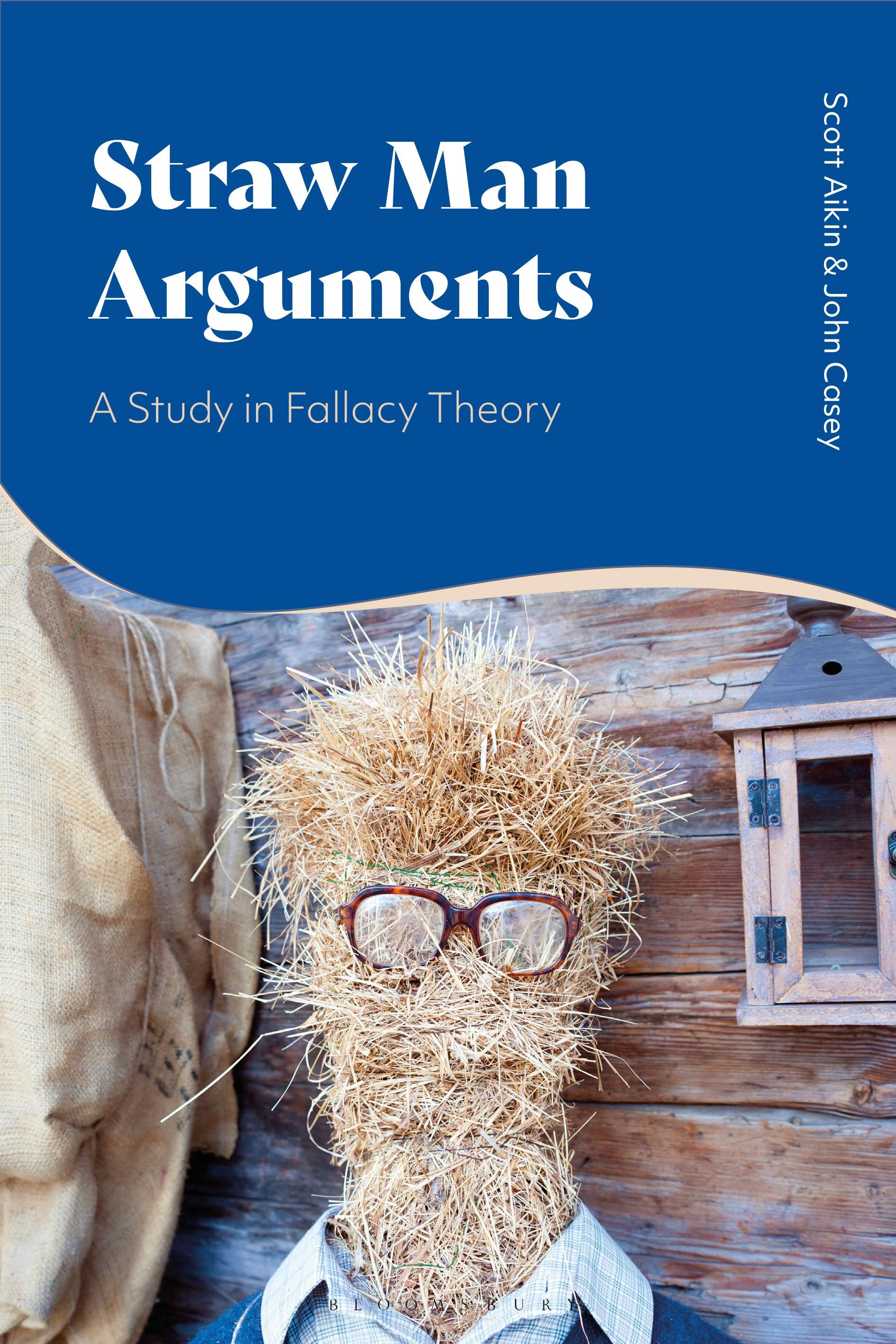
This book analyses the straw man fallacy and its deployment in philosophical reasoning. While commonly invoked in both academic dialogue and public discourse, it has not until now received the attention it deserves as a rhetorical device.
Scott Aikin and John Casey propose that straw manning essentially consists in expressing distorted representations of one's critical interlocutor. To this end, the straw man comprises three dialectical forms, and not only the one that is usually suggested: the straw man, the weak man and the hollow man. Moreover, they demonstrate that straw manning is unique among fallacies as it has no particular logical form in itself, because it is an instance of inappropriate meta-argument, or argument about arguments. They discuss the importance of the onlooking audience to the successful deployment of the straw man, reasoning that the existence of an audience complicates the dialectical boundaries of argument.
Providing a lively, provocative and thorough analysis of the straw man fallacy, this book will appeal to postgraduates and researchers alike, working in a range of fields including fallacies, rhetoric, argumentation theory and informal logic.
Scott Aikin and John Casey propose that straw manning essentially consists in expressing distorted representations of one's critical interlocutor. To this end, the straw man comprises three dialectical forms, and not only the one that is usually suggested: the straw man, the weak man and the hollow man. Moreover, they demonstrate that straw manning is unique among fallacies as it has no particular logical form in itself, because it is an instance of inappropriate meta-argument, or argument about arguments. They discuss the importance of the onlooking audience to the successful deployment of the straw man, reasoning that the existence of an audience complicates the dialectical boundaries of argument.
Providing a lively, provocative and thorough analysis of the straw man fallacy, this book will appeal to postgraduates and researchers alike, working in a range of fields including fallacies, rhetoric, argumentation theory and informal logic.
Paga facilmente con carta, Klarna, Apple Pay o Google Pay. Non sei soddisfatto? Hai sempre 14 giorni per il rimborso. Leggi di più nei nostri termini. Per qualsiasi domanda, scrivici a hello@memmo.org.
Memmo rende lo studio più facile, ovunque tu sia nel mondo. Qui trovi i tuoi libri di testo e strumenti di studio intelligenti, tutto in un unico posto: riassunti, quiz, podcast e flashcard. E poi c'è Ted, il tuo compagno di studio che risponde a ogni tua domanda. Oltre 50.000 studenti studiano già qui: è stato creato per aiutarti a imparare più velocemente e a stressarti meno.