
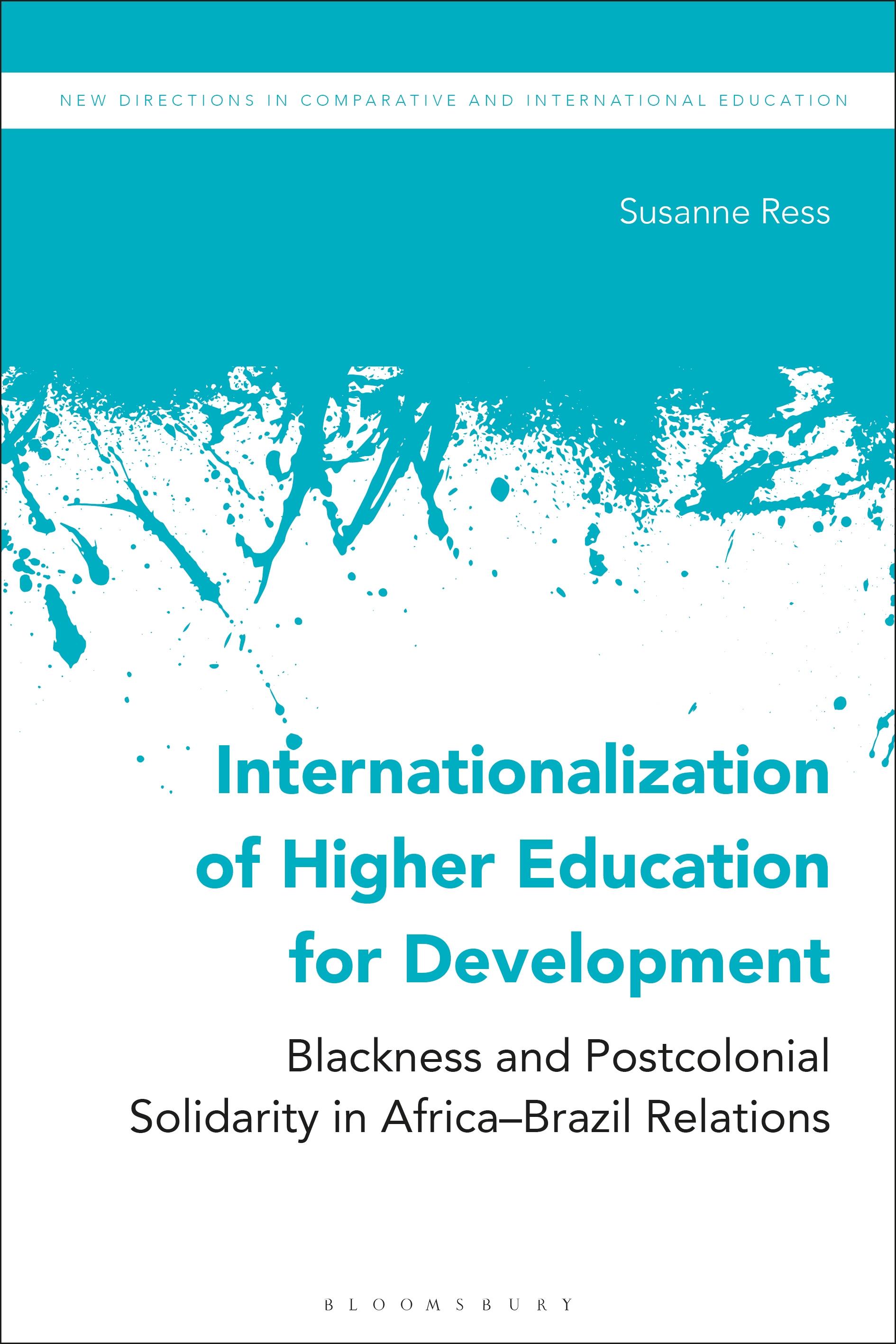
Illuminating thus far understudied international relations in global higher education, the book titled Internationalization of Higher Education for Development illustrates how the Brazilian government, under the presidency of Luis Inácio Lula da Silva (2003-2010), legitimized Africa-Brazil relations often referring to the presumably shared history of transatlantic slavery as the condition for solidarity cooperation and international integration. Ress reveals how this notion of history produces a vision of Brazil as a multicultural nation able to redress longstanding racialized inequalities while casting 'Africa' as the continent that remains forever in the past. She explores how this ambiguous notion was translated into curricula and classroom practices, and, in particular how it shaped international students' experiences at a newly-created university in the Northeast of Brazil. Ress demonstrates how the historicized framing in conjunction with the powerfully racialized class structures that characterize Brazilian society, the challenging material conditions surrounding the university, and the future aspirations of students created an environment that made solidarity an economic necessity while repeating the century-old colonial gesture of othering 'Africa' in new yet all too familiar ways – reworking and reemploying the idea of race in the name of Brazil's progress and development.
This book showcases in an innovative way the challenges and opportunities of building international relations in postcolonial education contexts. A much-needed advances over current scholarship analysing race, blackness, and solidarity, it offers a timely contribution to postfoundational and postcolonial studies in comparative and international education.
This book showcases in an innovative way the challenges and opportunities of building international relations in postcolonial education contexts. A much-needed advances over current scholarship analysing race, blackness, and solidarity, it offers a timely contribution to postfoundational and postcolonial studies in comparative and international education.
Paga facilmente con carta, Klarna, Apple Pay o Google Pay. Non sei soddisfatto? Hai sempre 14 giorni per il rimborso. Leggi di più nei nostri termini. Per qualsiasi domanda, scrivici a hello@memmo.org.
Memmo rende lo studio più facile, ovunque tu sia nel mondo. Qui trovi i tuoi libri di testo e strumenti di studio intelligenti, tutto in un unico posto: riassunti, quiz, podcast e flashcard. E poi c'è Ted, il tuo compagno di studio che risponde a ogni tua domanda. Oltre 50.000 studenti studiano già qui: è stato creato per aiutarti a imparare più velocemente e a stressarti meno.