
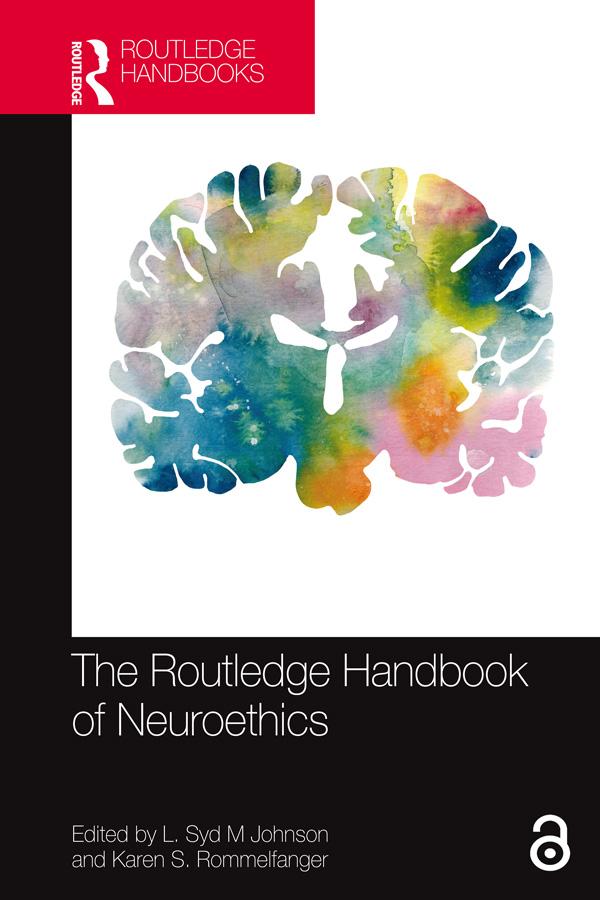
The Routledge Handbook of Neuroethics offers the reader an informed view of how the brain sciences are being used to approach, understand, and reinvigorate traditional philosophical questions, as well as how those questions, with the grounding influence of neuroscience, are being revisited beyond clinical and research domains. It also examines how contemporary neuroscience research might ultimately impact our understanding of relationships, flourishing, and human nature. Written by 61 key scholars and fresh voices, the Handbook’s easy-to-follow chapters appear here for the first time in print and represent the wide range of viewpoints in neuroethics. The volume spotlights new technologies and historical articulations of key problems, issues, and concepts and includes cross-referencing between chapters to highlight the complex interactions of concepts and ideas within neuroethics. These features enhance the Handbook’s utility by providing readers with a contextual map for different approaches to issues and a guide to further avenues of interest.
Chapter 11 of this book is freely available as a downloadable Open Access PDF under a Creative Commons Attribution-Non Commercial-No Derivatives 3.0 license. https://www.routledgehandbooks.com/doi/10.4324/9781315708652.ch11
Paga facilmente con carta, Klarna, Apple Pay o Google Pay. Non sei soddisfatto? Hai sempre 14 giorni per il rimborso. Leggi di più nei nostri termini. Per qualsiasi domanda, scrivici a hello@memmo.org.
Memmo rende lo studio più facile, ovunque tu sia nel mondo. Qui trovi i tuoi libri di testo e strumenti di studio intelligenti, tutto in un unico posto: riassunti, quiz, podcast e flashcard. E poi c'è Ted, il tuo compagno di studio che risponde a ogni tua domanda. Oltre 50.000 studenti studiano già qui: è stato creato per aiutarti a imparare più velocemente e a stressarti meno.