
Nominated for the Foundation of Sociology of Health and Illness Book Prize 2018
In the UK and beyond, Down’s syndrome screening has become a universal programme in prenatal care. But why does screening persist, particularly in light of research that highlights pregnant women’s ambivalent and problematic experiences with it?
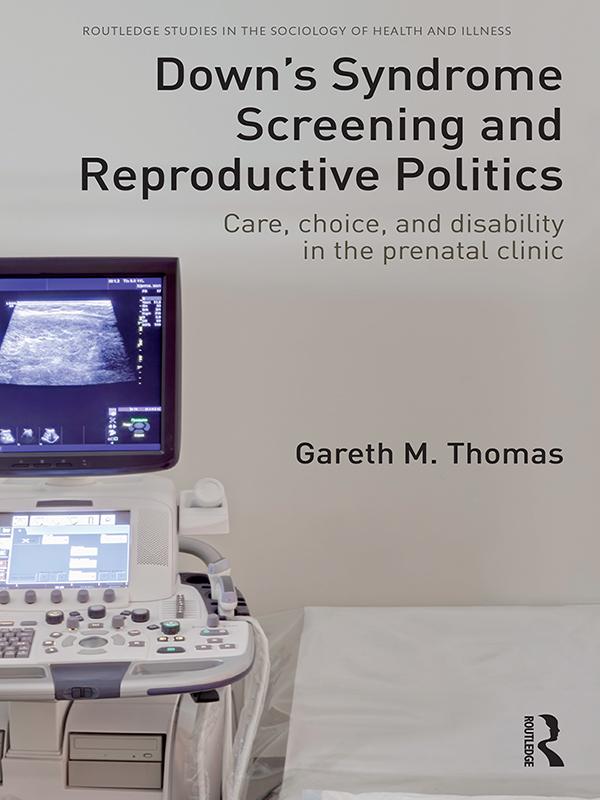
Drawing on an ethnography of Down’s syndrome screening in two UK clinics, Thomas explores how and why we are so invested in this practice and what effects this has on those involved. Informed by theoretical approaches that privilege the mundane and micro practices, discourses, materials, and rituals of everyday life, Down’s Syndrome Screening and Reproductive Politics describes the banal world of the clinic and, in particular, the professionals contained within it who are responsible for delivering this programme. In so doing, it illustrates how Down’s syndrome screening is ‘downgraded’ and subsequently stabilised as a ‘routine’ part of a pregnancy. Further, the book captures how this routinisation is deepened by a systematic, but subtle, framing of Down’s syndrome as a negative pregnancy outcome. By unpacking the complex relationships between professionals, parents, technology, policy, and clinical practice, Thomas identifies how and why screening is successfully routinised and how it is embroiled in both new and familiar debates surrounding pregnancy, ethics, choice, diagnosis, care, disability, and parenthood.
The book will appeal to academics, students, and professionals interested in medical sociology, medical anthropology, science and technology studies (STS), bioethics, genetics, and/or disability studies.
Paga facilmente con carta, Klarna, Apple Pay o Google Pay. Non sei soddisfatto? Hai sempre 14 giorni per il rimborso. Leggi di più nei nostri termini. Per qualsiasi domanda, scrivici a hello@memmo.org.
Memmo rende lo studio più facile, ovunque tu sia nel mondo. Qui trovi i tuoi libri di testo e strumenti di studio intelligenti, tutto in un unico posto: riassunti, quiz, podcast e flashcard. E poi c'è Ted, il tuo compagno di studio che risponde a ogni tua domanda. Oltre 50.000 studenti studiano già qui: è stato creato per aiutarti a imparare più velocemente e a stressarti meno.