
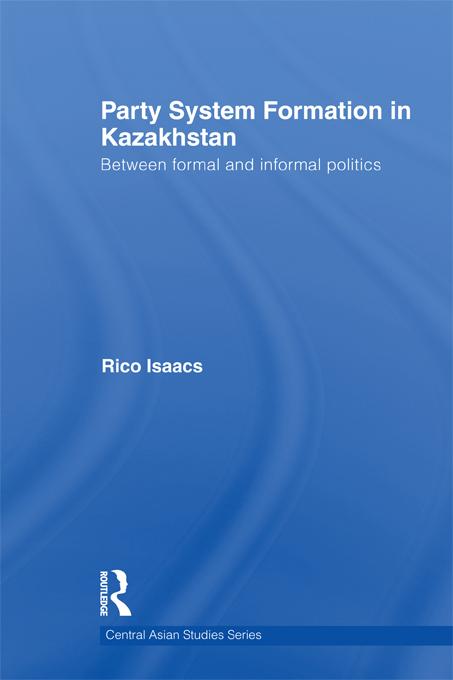
Since the collapse of the Soviet Union, Central Asian states have developed liberal-constitutional formal institutions. However, at the same time, political phenomena in Central Asia are shaped by informal political behaviour and relations. This relationship is now a critical issue affecting democratization and regime consolidation processes in former Soviet Central Asia, and this book provides an account of the interactive and dynamic relationship between informal and formal politics through the case of party-system formation in Kazakhstan.
Based on extensive interviews with political actors and a wide range of historical and contemporary documentary sources, the book utilises and develops neopatrimonialism as an analytical concept for studying post-Soviet authoritarian consolidation and failed democratisation. It illustrates how personalism of political office, patronage and patron-client networks and factional elite conflict have influenced and shaped the institutional constraints affecting party development, the type of emerging parties and parties’ relationship with society. The case of Kazakhstan, however, also demonstrates how in the former Soviet space political parties emerge as central to the legitimization of informal political behavior, the structuring of factional competition and the consolidation of authoritarianism. The book represents an important contribution to the study of Central Asian Politics.
Paga facilmente con carta, Klarna, Apple Pay o Google Pay. Non sei soddisfatto? Hai sempre 14 giorni per il rimborso. Leggi di più nei nostri termini. Per qualsiasi domanda, scrivici a hello@memmo.org.
Memmo rende lo studio più facile, ovunque tu sia nel mondo. Qui trovi i tuoi libri di testo e strumenti di studio intelligenti, tutto in un unico posto: riassunti, quiz, podcast e flashcard. E poi c'è Ted, il tuo compagno di studio che risponde a ogni tua domanda. Oltre 50.000 studenti studiano già qui: è stato creato per aiutarti a imparare più velocemente e a stressarti meno.