
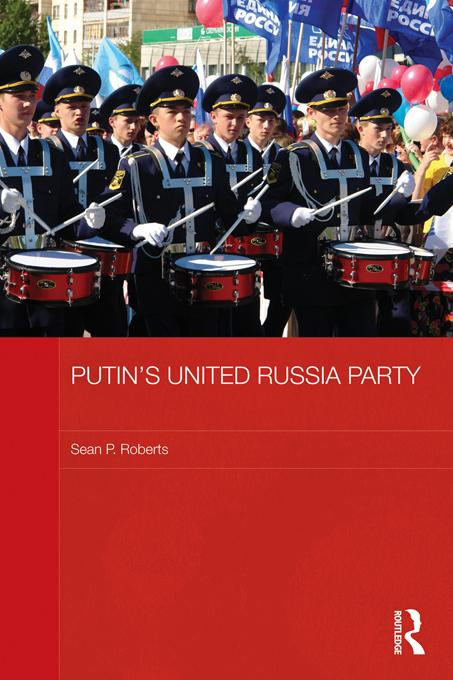
From its inception in 2001, the United Russia Party has rapidly developed into a hugely successful, organisationally-complex political party and key component of power. This book provides a much needed analysis on United Russia by exploring the role of the party in the Russian political system, from 2000 to 2010. It explores the party empirically, as an impressive organisation in its own right, but also theoretically, as an independent or explanatory variable able to illumine the larger development of dominant-power politics in Russia in the same period.
The book creates a model to understand the role of political parties in electorally-based political systems and shows how United Russia conforms to this model, and importantly, how the party also has unique features that affect its place in the political system. The book goes on to argue that United Russia represents a ‘virtual’ party hegemony, an outcome of political changes occurring elsewhere, and so a reversal of the typical relationship between parties and power found in comparative literature. This has potentially far reaching implications for our understanding of party dominance in the twenty-first century and also the sources of regime stability and instability.
Paga facilmente con carta, Klarna, Apple Pay o Google Pay. Non sei soddisfatto? Hai sempre 14 giorni per il rimborso. Leggi di più nei nostri termini. Per qualsiasi domanda, scrivici a hello@memmo.org.
Memmo rende lo studio più facile, ovunque tu sia nel mondo. Qui trovi i tuoi libri di testo e strumenti di studio intelligenti, tutto in un unico posto: riassunti, quiz, podcast e flashcard. E poi c'è Ted, il tuo compagno di studio che risponde a ogni tua domanda. Oltre 50.000 studenti studiano già qui: è stato creato per aiutarti a imparare più velocemente e a stressarti meno.