
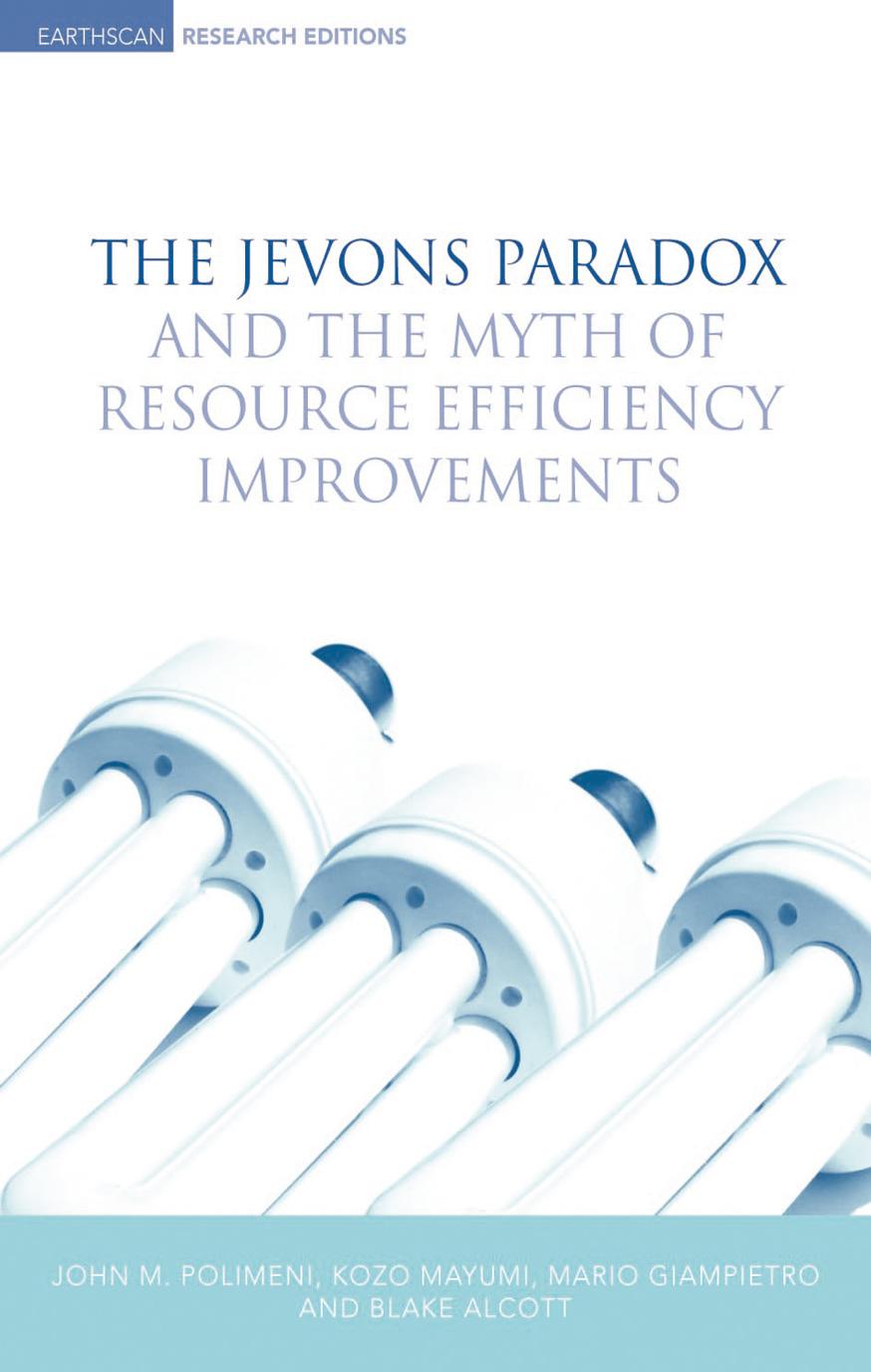
�The Jevons Paradox�, which was first expressed in 1865 by William Stanley Jevons in relation to use of coal, states that an increase in efficiency in using a resource leads to increased use of that resource rather than to a reduction. This has subsequently been proved to apply not just to fossil fuels, but other resource use scenarios. For example, doubling the efficiency of food production per hectare over the last 50 years (due to the Green Revolution) did not solve the problem of hunger. The increase in efficiency increased production and worsened hunger because of the resulting increase in population. The implications of this in today�s world are substantial. Many scientists and policymakers argue that future technological innovations will reduce consumption of resources; the Jevons Paradox explains why this may be a false hope.
This is the first book to provide a historical overview of the Jevons Paradox, provide evidence for its existence and apply it to complex systems. Written and edited by world experts in the fields of economics, ecological economics, technology and the environment, it explains the myth of efficiency and explores its implications for resource usage (particularly oil). It is a must-read for policymakers, natural resource managers, academics and students concerned with the effects of efficiency on resource use.
Paga facilmente con carta, Klarna, Apple Pay o Google Pay. Non sei soddisfatto? Hai sempre 14 giorni per il rimborso. Leggi di più nei nostri termini. Per qualsiasi domanda, scrivici a hello@memmo.org.
Memmo rende lo studio più facile, ovunque tu sia nel mondo. Qui trovi i tuoi libri di testo e strumenti di studio intelligenti, tutto in un unico posto: riassunti, quiz, podcast e flashcard. E poi c'è Ted, il tuo compagno di studio che risponde a ogni tua domanda. Oltre 50.000 studenti studiano già qui: è stato creato per aiutarti a imparare più velocemente e a stressarti meno.